TL;DR: The job title employers are told to hire for keeps changing. "Prompt engineer" was recommended by the World Economic Forum in January 2025 and written off by an economist in May. In IBM's surveys of executives, proficiency in STEM has dropped from the top of the list of critical skills to the bottom in just seven years. Cell biology offers a more useful answer than the usual advice to stay adaptable. A specialised cell keeps every instruction it started with, and two Nobel laureates showed it can be read again. Down to the cellular level, the old dog already knows the new tricks. A Dutch coal-mining company spent forty years building a chemicals business on the side, and when its mines closed that business carried it. Side projects do the same for people.
"This was the first decisive evidence that all cells of the body contain the same complete set of genes." — John Gurdon, Nobel Foundation biographical sketch, 2012
The Frog That Started Again
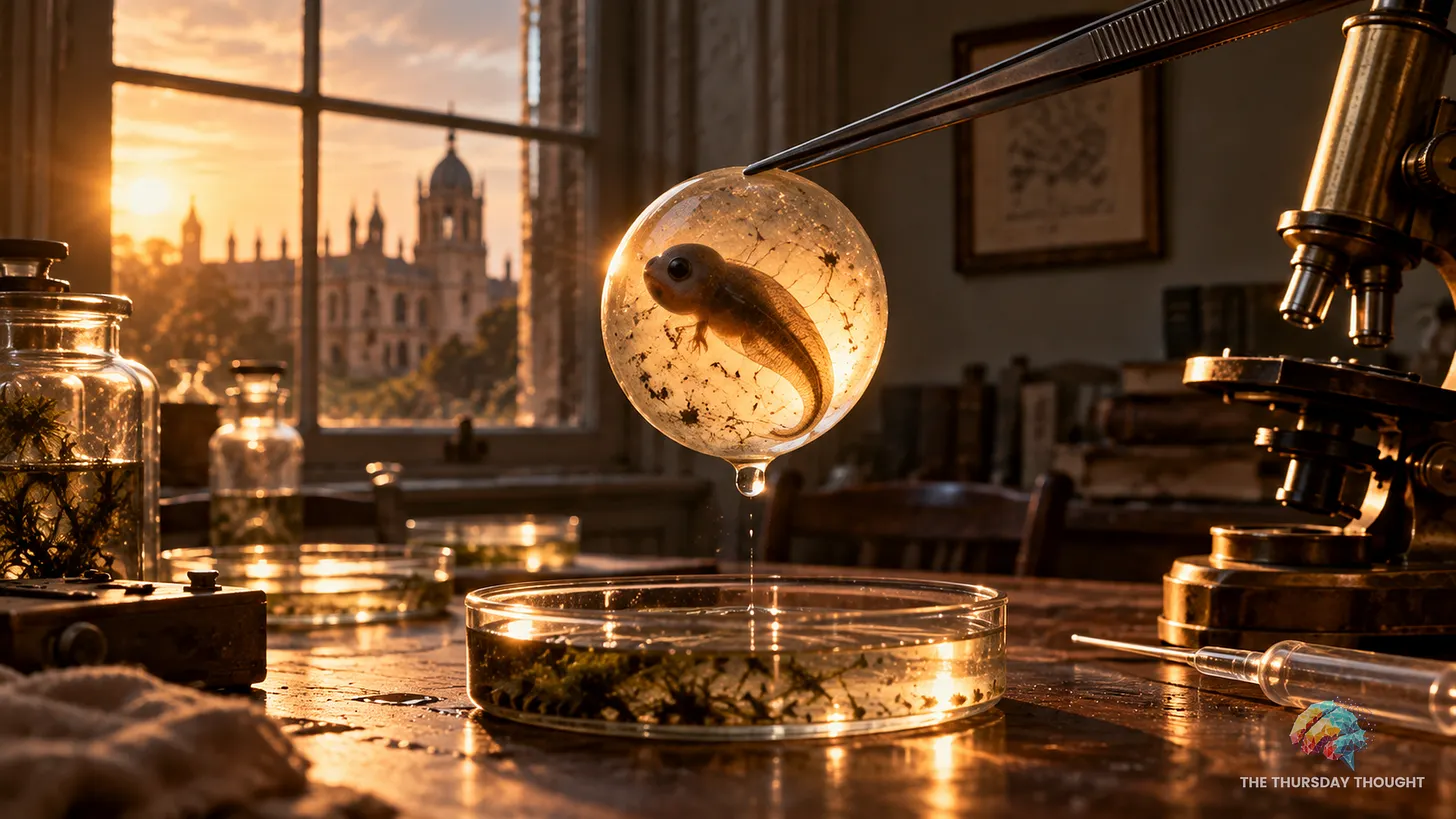
When he was a graduate student at Oxford in the late 1950s, Nobel laureate John Gurdon tried an experiment that (by the conventional wisdom of the era) should not have worked. He took a cell from the gut of a tadpole. A gut cell has one job, lining an intestine, and everything about it is designed for that one job. He removed the cell’s nucleus (the part that holds the instructions) and slipped it into a frog egg whose own nucleus had been taken out.
The egg read the old gut nucleus the same way it would have read its own, from the beginning, and grew a perfectly normal tadpole. In time some of those tadpoles became frogs, and those frogs had tadpoles of their own.
Gurdon published in 1962, and many peers doubted his findings, because the textbooks said that once a cell picked its job it threw away the instructions for every other job. Gurdon’s frogs showed that was not the case. The whole set of instructions for building an animal was still inside, just switched off, and the egg knew how to switch it back on. The nucleus itself was never altered. In the gut it had been read as a gut cell, and once it sat in an egg those same instructions were read as a whole frog.
Shinya Yamanaka trained as an orthopaedic surgeon. It took him two hours to complete an operation others finished in half an hour. He soon moved to research. In 1999 he set his laboratory a goal, to make embryonic cells from adult cells without using an embryo. Gurdon had done it with an egg in 1962, the year Yamanaka was born. In 2006 his lab reported that four genes were enough to send skin cells from adult mice back to an embryonic state, able to become any tissue in the body. Human cells followed in 2007.
In 2012 the two men shared the Nobel Prize “for the discovery that mature cells can be reprogrammed to become pluripotent”. Pluripotent is a biologist’s word for a cell that can become any kind of cell in the body.
What Employers Want
“When a man has been very successful while following a particular method, he can never be convinced that it is for his advantage to try some other.” — Niccolò Machiavelli, Discourses on Livy, Book III
IBM’s Institute for Business Value has asked executives the same question in 2016 and 2018 and in 2023, which skills they consider most critical for their workforce. In 2016 the answer was proficiency in STEM. In 2018 the top two were adaptability and time management. By 2023 STEM had dropped to twelfth of the twelve skills listed, named by 28% of executives, behind time management at 42%, working effectively in a team at 40% and communicating effectively at 38%. Emerging job titles run the same way.
In January 2025 the World Economic Forum’s Future of Jobs Report (in a section co-produced with the recruitment site Indeed) advised employers to train their people in advanced prompt-writing skills. Only four months later an economist at Indeed told Fortune that prompt engineering “is still definitely a good thing to have, but it’s not an entire title”. Searches for the role on Indeed peaked in April 2023, a mere 21 months before the WEF told employers to train for it. At almost every keynote or workshop I run now, a parent asks whether their child should study AI or learn a trade.
The skills that pushed STEM down the list belong to no discipline. Managing your time, working with other people and explaining what you are doing get used in every job, the way a handful of housekeeping genes are switched on in every tissue of the body. In seven years the IBM survey went from STEM skills to something closer to stem cells.
The usual advice is to be the cell that can still become anything. That suits a twenty-something starting out, and it tells someone with twenty years in one discipline that the twenty years may have been a waste of effort.
What Lies Beneath

Now for the case study I have been dying to reveal, no it is not Fujifilm.
For most of the last century the Dutch state owned the coal mines of Limburg, through a company called, plainly enough, State Mines. Its coal went into coke ovens, and coke ovens give off gas.
In 1929 the company started turning that gas into fertiliser. After fertiliser, it explored chemicals, and after the war it built a research laboratory and moved into plastics. None of this was the core business. Each exploration sat next to the one before it and left the company with the capabilities to do something new.
In 1959 drillers found an enormous gas field under a farm in Groningen, and within a few years the government decided the country no longer needed its coal. State Mines closed its last pit in 1973.
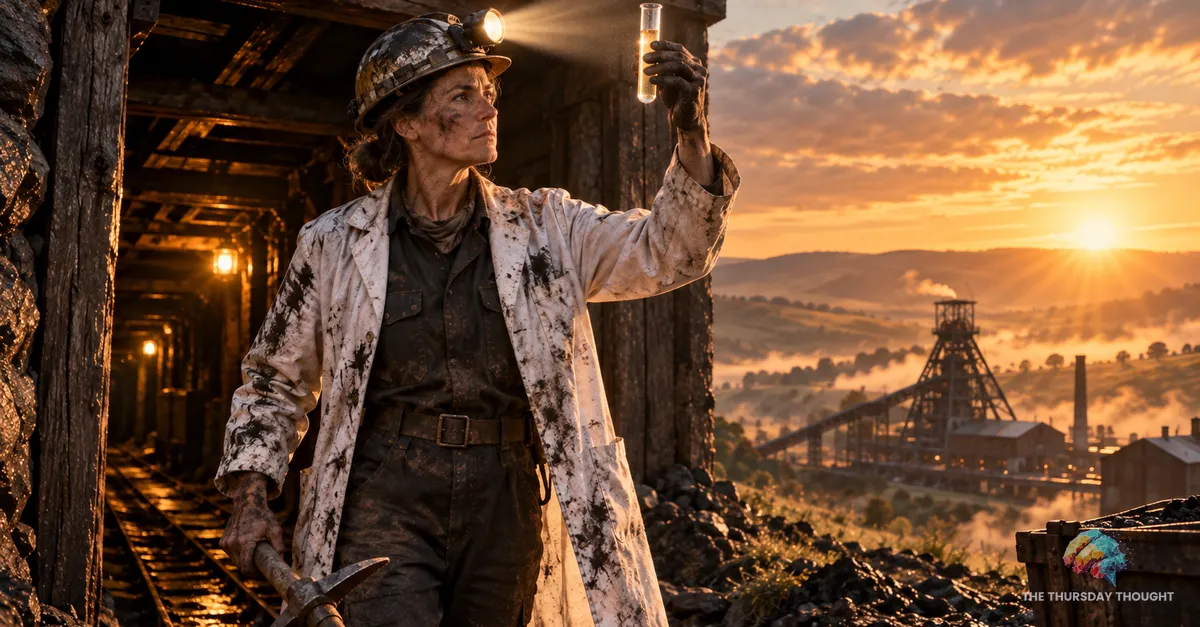
A mining company with no mines looked finished. By then it had spent forty years building a chemicals business one small exploration at a time. Nobody in 1929 could have pictured where the fertiliser would lead.
The company kept its initials, DSM, and today it sells (drum roll) vitamins, enzymes and the flavours that make food taste of something. Its annual report calls this a “tradition of radical transformation”.
Side Projects Build Capabilities
This year, with AI in almost every conversation, I increasingly hear another version of the parents’ question, “what should my kids study or work at?” The person asking is really asking for themselves, and they have usually spent decades in one discipline.
On last week’s episode, Shuo Chen told us how students are under pressure to skip the exploring phase of a career and dive straight into deep work, “which is why there are people who go work in a job for five years, 10 years, and then realize, I don’t wanna do this at all.”
Many people suddenly realise they have been starring in a life script they did not write.
Shuo sees this regularly in people in their 30s, 40s and 50s who come back to executive programmes at Stanford. Her prescription is the same at any age, side projects, in school or in a full-time job, to explore what you like and what you are good at.
If frogs could talk, they would tell us that nothing a specialist learns, however deeply, locks them out of the rest of the instruction set, and the skills employers now want most are the ones every job shares. A gut cell needs an egg or four genes to read the rest of its instructions. A person or a company can do it for themselves, a little at a time, with side projects, the way Dutch State Mines did for forty years before its mines closed.
Tomorrow on The Innovation Show
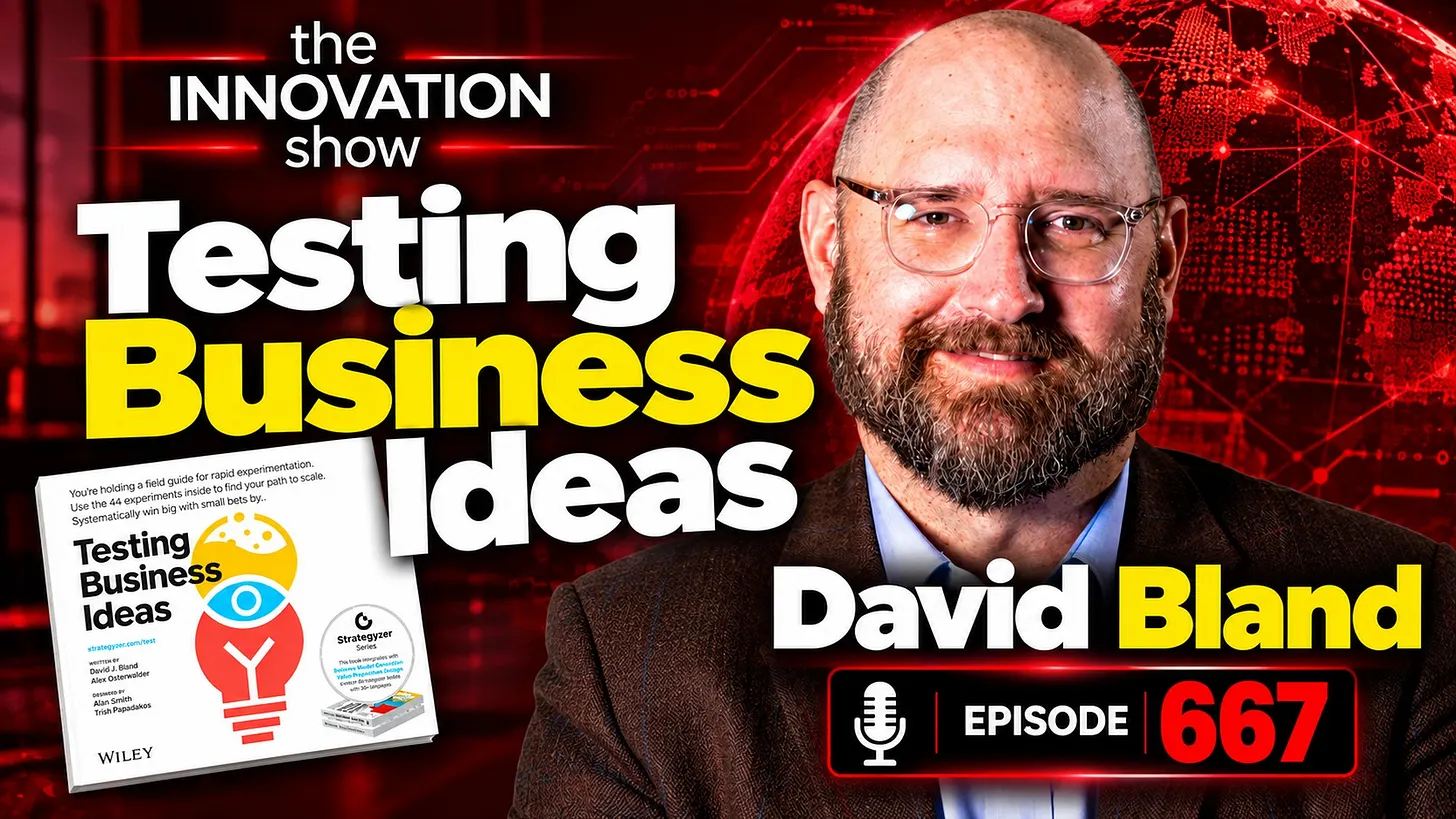
David Bland, co-author with Alex Osterwalder of Testing Business Ideas, on the DuPont case. Thirty-five real business ideas run through one process, more than $12 million saved by stopping work on the ones that weren’t going anywhere, about $24 million made on the ones that were, and a leadership team that dresses up every Halloween to explain which projects it killed and why. “A good idea and a bad idea look very similar early on,” he says, which is why he refuses to pick winners and runs every idea through the process instead.
Last week Show with Shou