
TL;DR: Ideas don’t survive on merit. They survive on co-ownership. From the deliberate flaw we leave for a meddling boss, to the architect’s “purple chair,” to the duck an artist drew, people need a place to put their fingerprints. Michael Norton named this dynamic the IKEA effect. Bruce Vojak’s research into serial innovators finds the same psychology operating at corporate scale. The breakthroughs that ship are the ones the receiving organisation feels it helped build. The inventor who refuses this work, retreating to the “outlaw area” to keep the idea pure, ends up watching it die in the drawer. The choice becomes one of cynicism or engagement and it can be a tough one.
“A leader is best when people barely know he exists. When his work is done, his aim fulfilled, they will say: we did it ourselves.” — Lao Tzu
I once worked under a manager who needed to review any communications that went out to a client. It bugged the crap out of me, until I realised he simply needed to feel some ownership, so I leaned in to offer the illusion of control. I started leaving a small, deliberate flaw in every brief, a misplaced word or an obvios typo. He would find it, mark it, and send it back with a note about how another set of eyes was always valuable. The work would then go out with his fingerprints on the cover.
Years later I learned this is a well-known psychological manoeuvre from the professional design and architecture world, often referred to as the "Purple Chair". You stage the room beautifully, place every element with intent, and drop in something the client cannot help but notice and want to change. Having satisfied their need for input, the client is much more likely to approve the remaining design (the parts the architect actually cares about) without further interference.
The same dynamic showed up in the games industry, where it has become a kind of corporate fable. An artist working on the game Battle Chess for Interplay Software was animating the queen. He knew his producer was going to want to change something. The studio assumed that if a producer didn’t add their fingerprint, they didn’t feel they were earning their pay. So the artist drew his queen the way he wanted her drawn, but he gave her a pet duck. When the producer reviewed the work, he turned to the artist, and said: “That looks great. Just one thing. Get rid of the duck.”
The duck absorbed the producer’s need for input, exactly as the typo absorbed my boss’s and the purple chair absorbs the client’s.
It would be easy to read all three as workplace tricks for managing meddling bosses, but there is something else at play. They are gestures toward a feature of human psychology.
Which Came First, The Frosting or The Egg?
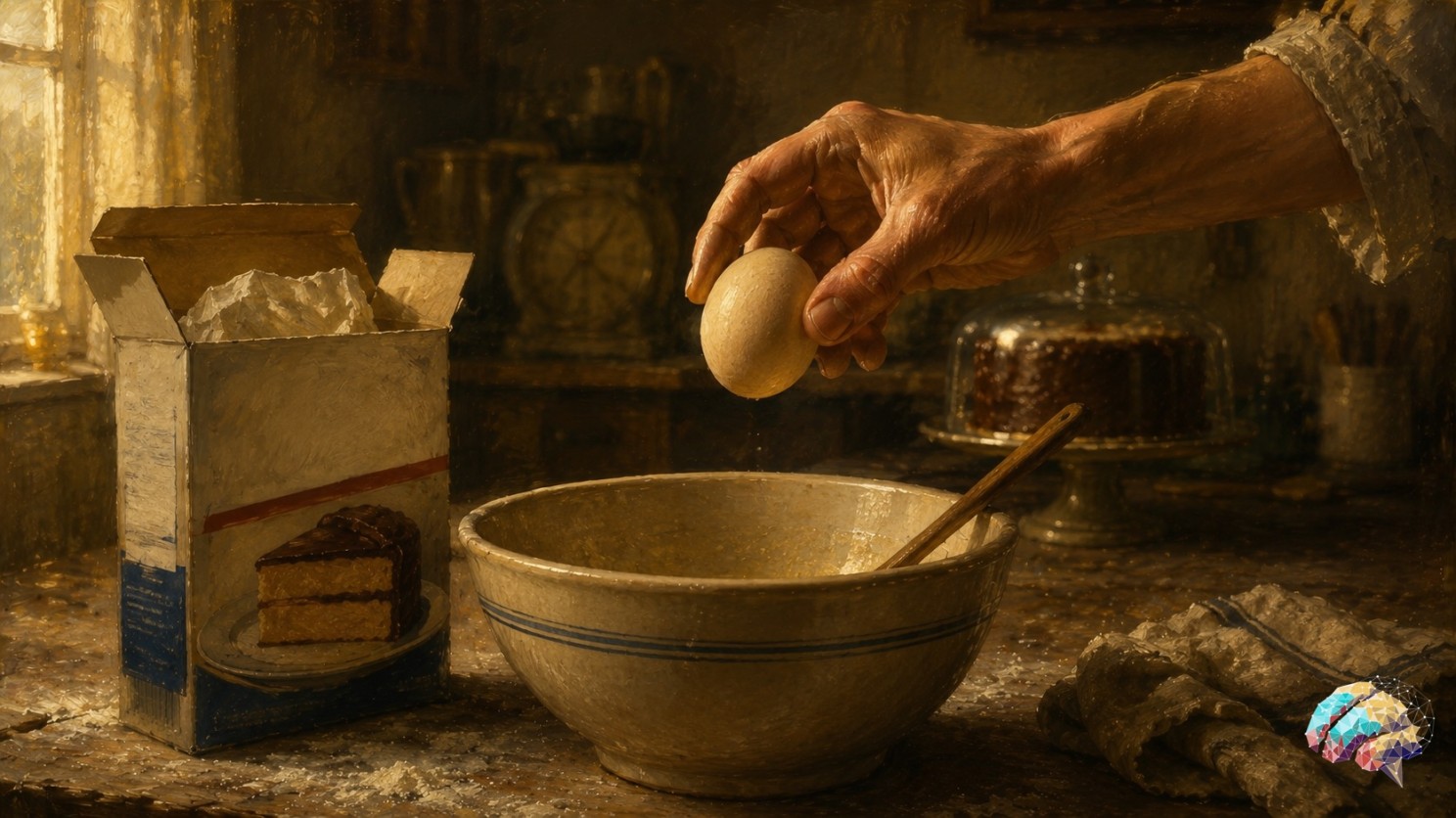
There is a story about the early days of the cake mix industry that has been retold so often it has become folk wisdom. It is more myth than history, but the kernel underneath the myth is real.
The popular version runs like this. In the 1950s, sales of Betty Crocker cake mixes stalled. The company hired Ernest Dichter, a former Freudian turned consumer researcher, who ran focus groups with young homemakers and concluded the mix was too easy. The home bakers felt guilty for saving time. Time in the kitchen, Michael Norton writes in The Ritual Effect, was a love language. Dichter’s recommendation to the executive team was general, give the homemaker more work to do. Betty Crocker reformulated the mix without the dried eggs and required the cook to crack a real one. Consumer experts cite this as the moment cake mixes took off.
The egg makes a satisfying hero, but the actual record is less tidy. Norton himself acknowledges that Betty Crocker’s just-crack-one-egg version and Pillsbury's complete mix shared the bulk of the cake mix market for the rest of the 1950s and 1960s. Pillsbury was General Mills' main rival.
Food historian Laura Shapiro argued that the deeper lever sat on top of the cake rather than inside it. The cake mix took off on the back of an enormous cultural turn toward cake decoration. The mix did the boring part, and the frosting was where the homemaker put her name. Participation moved from inside the box to on top of it.
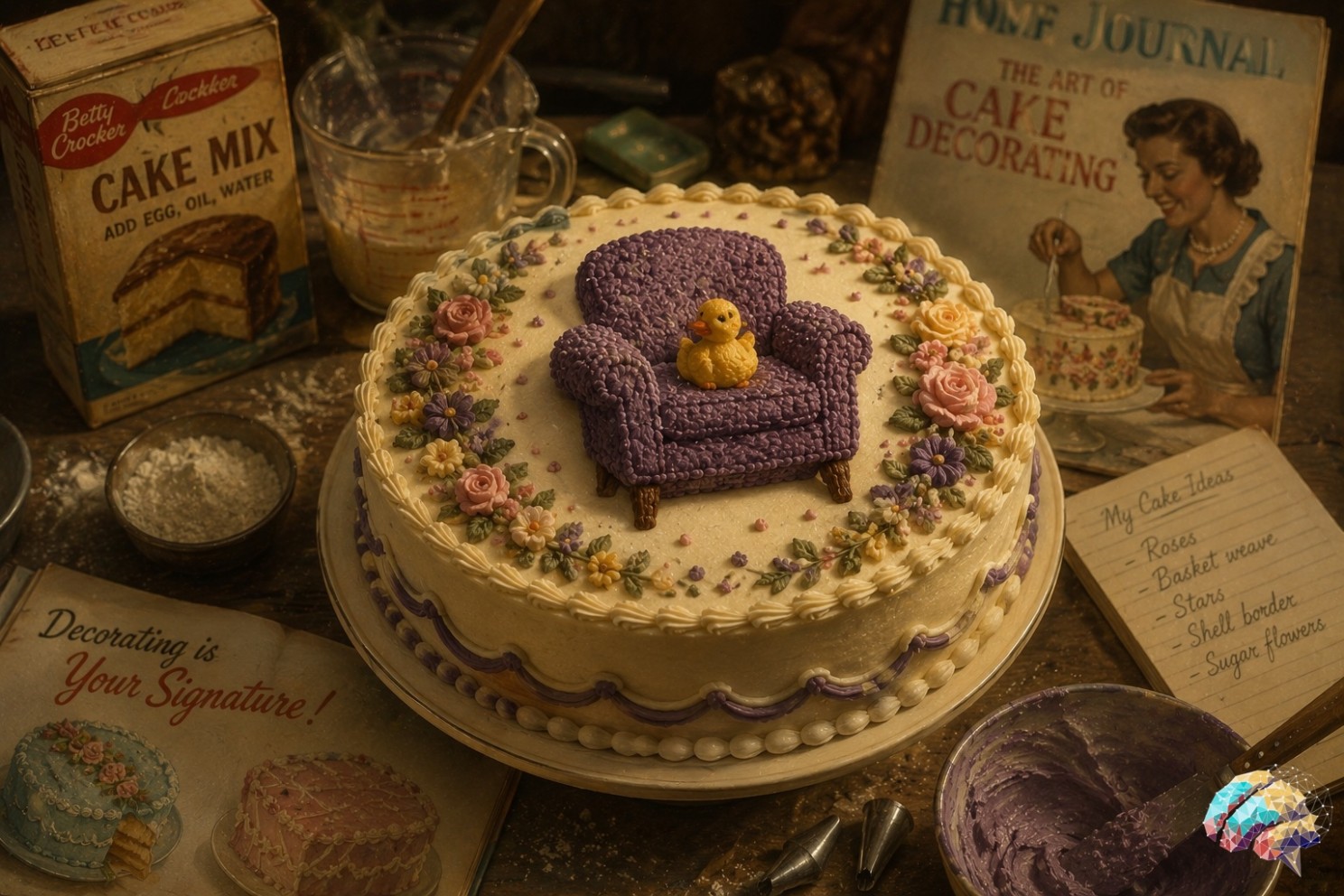
Egg or frosting, the kernel is the same. Effort, even minimal effort, transforms a finished thing into something the person feels they made.
Norton has a contemporary version of the same finding. His colleague Ximena Garcia-Rada noticed extreme online rancour directed at parents using the SNOO, a contraption that rocks babies to sleep so the parents do not have to. One commenter wrote, “If you need that device, you shouldn’t have kids.” A series of studies showed that caregivers themselves felt they were failing to show love when they chose ease over effort. What worked was a slogan rewrite. The original campaign had been “With SNOO, get ZZZs with ease.” Researchers tested an alternative that acknowledged parental investment: “You give the XOXOs, SNOO gives the ZZZs.”
Years earlier, Norton and his collaborators had given this dynamic its formal name. They called it the IKEA effect. Subjects who assembled their own IKEA storage box were willing to pay sixty-three percent more for it than subjects who merely inspected an identical pre-built box. The effect held across origami and LEGO. Participation, however small and however badly executed, was how value got assigned.
This is the deeper logic underneath the deliberate flaw, the purple chair, and the duck. Ideas survive on co-ownership, not on merit. The work that ships is rarely the best work. It is the work that the people in the room feel they touched.
The Obstacle Is The Way
“The harder the conflict, the more glorious the triumph.” — Thomas Paine
This same dynamic plays out in organizations. When an innovation is handed down from innovation team or R&D, it might be sound on paper, but the teams tasked with selling and marketing it often feel disconnected. They didn’t go through the struggle of creating it, and as a result, they don’t fully own it.
Internalisation is the key to creativity and innovation, and internalisation requires emotional connection. As regular guest of The Innovation Show, my friend Peter Compo said, “When people struggle through the design process, and if they are heard and hear others, then it becomes their design. Not only will they have internalized it, but they will also have an emotional investment in the chosen framework, loving it and preaching it.”
This is what Bruce Vojak and his collaborators found in the people they came to call serial innovators, the rare few inside large organisations who repeatedly push breakthrough work all the way through to the customer. The serial innovators in their research did not produce a finished idea and hand it over. They produced breakthrough work by making it everyone’s. They assumed leadership responsibility, Vojak writes, for creating group ownership of their breakthrough projects. They earned trust by showing concern for others, valuing others’ capabilities, and sharing credit. They preferred volunteers over people assigned by management, because volunteers came with their own reasons for being there.
The harder, slower path was the one that worked.
Brilliant Orphans
“There is nothing more difficult to plan, more doubtful of success, nor more dangerous to manage, than the creation of a new system.” — Machiavelli
Inclusion is the harder path, and many innovators refuse to take it. Creative people slip easily into a posture where the work is a sacred object, and to let another hand near it would be to dilute it.
The thinking is romantic, sometimes true, and politically naive. The outlaw move, taking the work to the edges of the organisation and building it in protected isolation, feels like the way to keep the idea pure away from “The Sucking Sound of the Core”. It is also the way most breakthrough work dies.
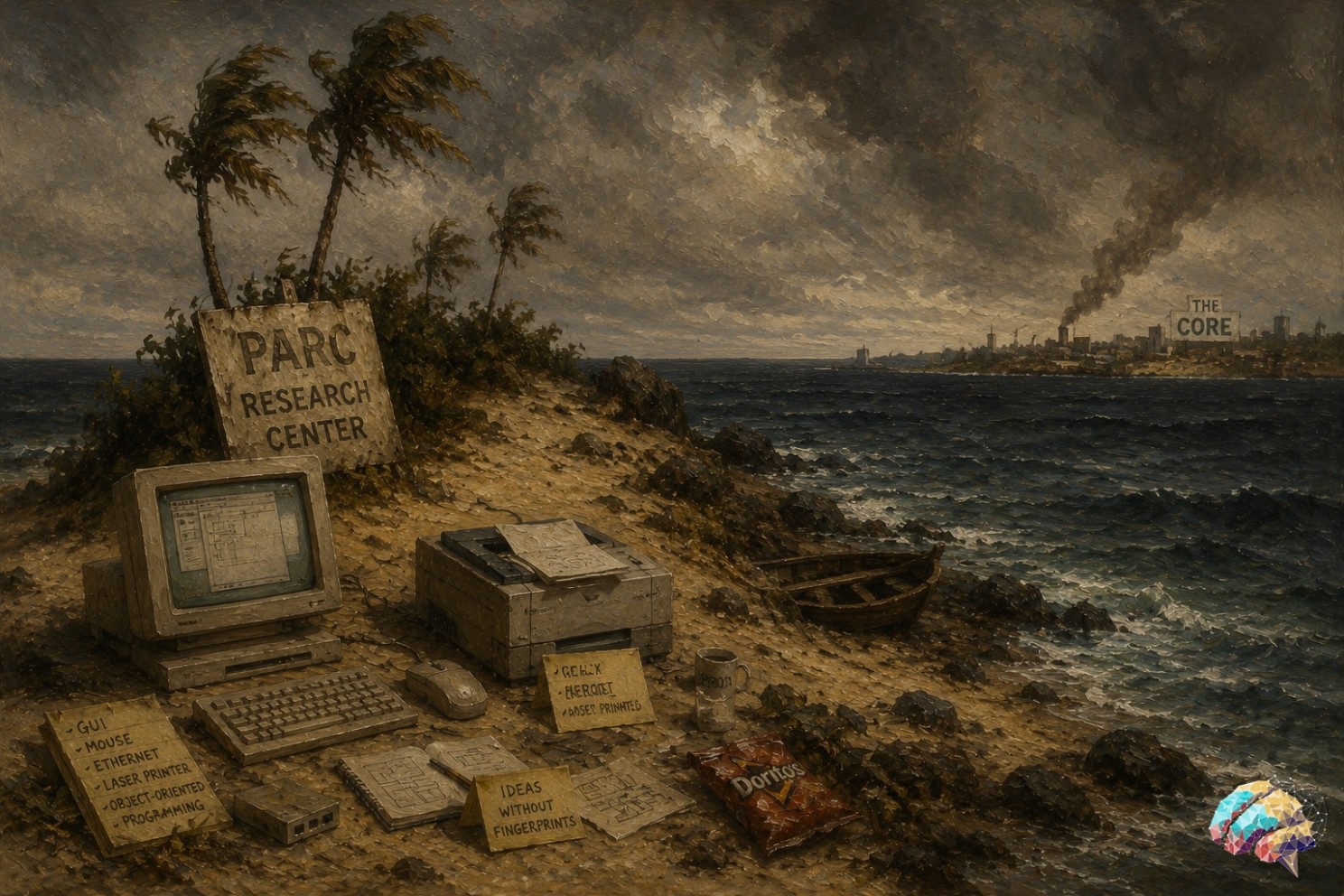
The classic case is Xerox PARC in the 1970s (I'd like to research this case more as there is always more to a story). In any case, researchers there invented the graphical user interface, the mouse, ethernet, the laser printer, and most of what would later define personal computing. Xerox commercialised almost none of it. The deeper failure was that the work had no fingerprints on it from the rest of the company. When the time came to bring the inventions across the bridge, nobody on the other side felt any sense of authorship over them. The ideas were orphans. Apple and Microsoft adopted them.
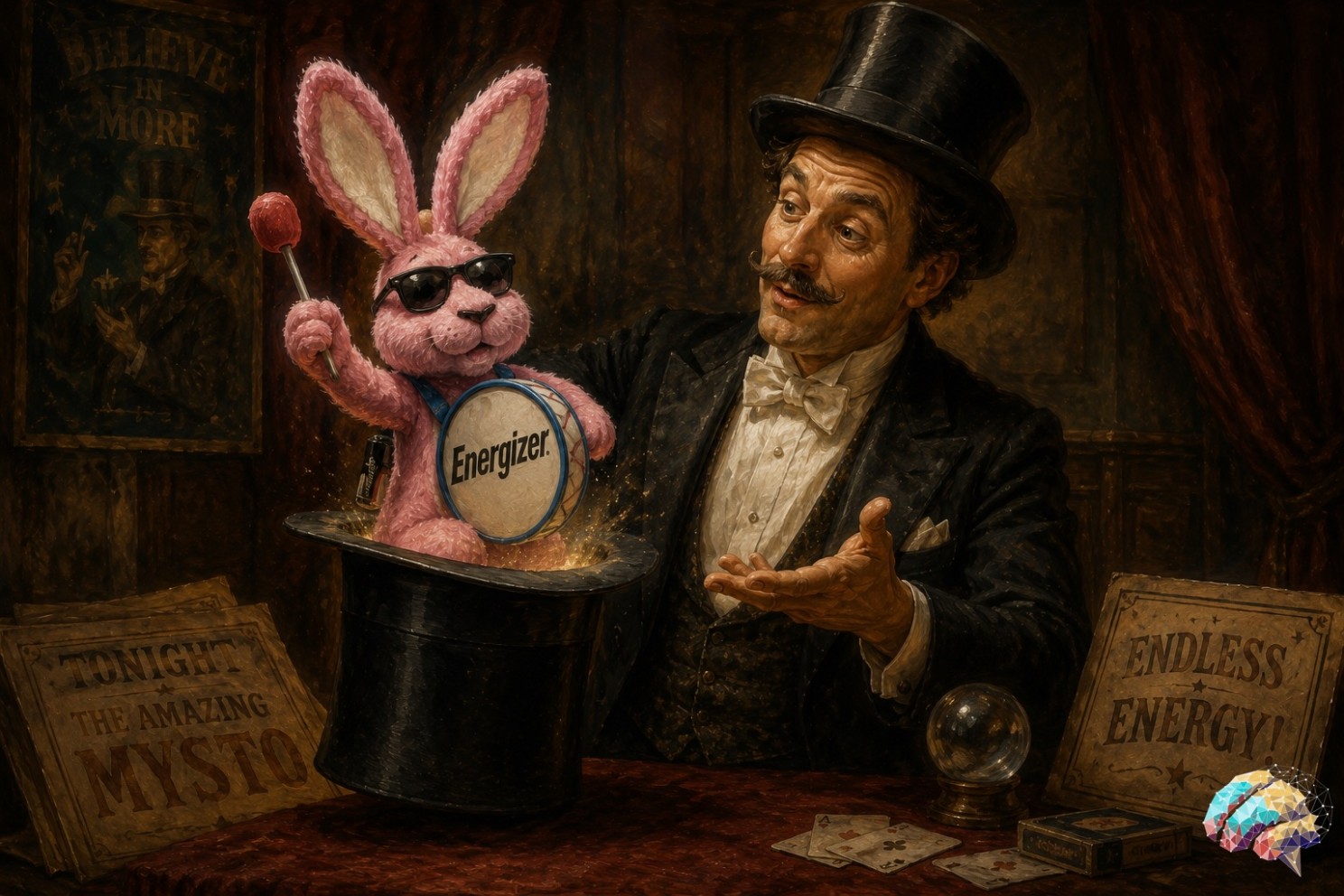
One of the serial innovators in Vojak’s research described the moment the lesson landed. He walked into his chief technology officer’s office with an idea and came out with praise and nothing else. The CTO said it was a wonderful idea, but he could not have the money. Even if I had the money, the CTO said, I wouldn’t give it to you. You need to get their sponsorship. It’s not my project, it’s their project. The innovator put it later, instead of getting one guy to buy this now, I had to pull the Energizer Bunny out of the hat for twenty people.
The CTO was teaching the same lesson Compo and Norton describe. An idea that arrives finished is an idea no one feels they made. The twenty people the innovator had to convince were the hands the project needed on it before it could belong to anyone other than him.
Every step you take to insulate the work from interference also strips the surface where someone else’s hand could go. A piece of work that arrives at the executive table with nobody in the room having touched it tends to be treated the way a stranger’s child is treated: politely, briefly, and then forgotten.
Vojak writes that the need to convince many people is sufficient reason to passively wait for someone else to recognise the brilliance and potential of their innovations. Too often, these people become cynical about management and the organisation because they see inventions languish in the lab rather than make a difference to the business. Serial innovators avoid this cynicism by accepting political interactions as part of the process of creating breakthrough innovations.
That is what I call “the choice”, not between purity and compromise, but between cynicism and engagement. The inventor who refuses the political work does not get to keep his integrity intact in some quiet corner of the organisation. He gets to watch his work die in the drawer and grow bitter about the people who failed to recognise him. The serial innovator pays the tribute, leaves room for the other hand, and watches the work get into the world.
There is a thoughtful version of this and a corrosive one. The corrosive version is when managing perceptions becomes the whole game and the actual work is starved of attention. The thoughtful version treats co-authorship as an engineering problem. Where in this work can someone else’s hand land without breaking what matters? Who needs to feel they shaped it, and what is the smallest, most honest concession that gives them that?
The outlaws never learn this. They tend to leave with a portfolio of brilliant orphans and a story about how their organisation did not deserve them. Sometimes that story is true. More often, the work was simply too finished. Nobody else’s signature was on it.
Leave room for the other hand. Thus, you make it theirs.
On This Week’s episode of The Innovation Show
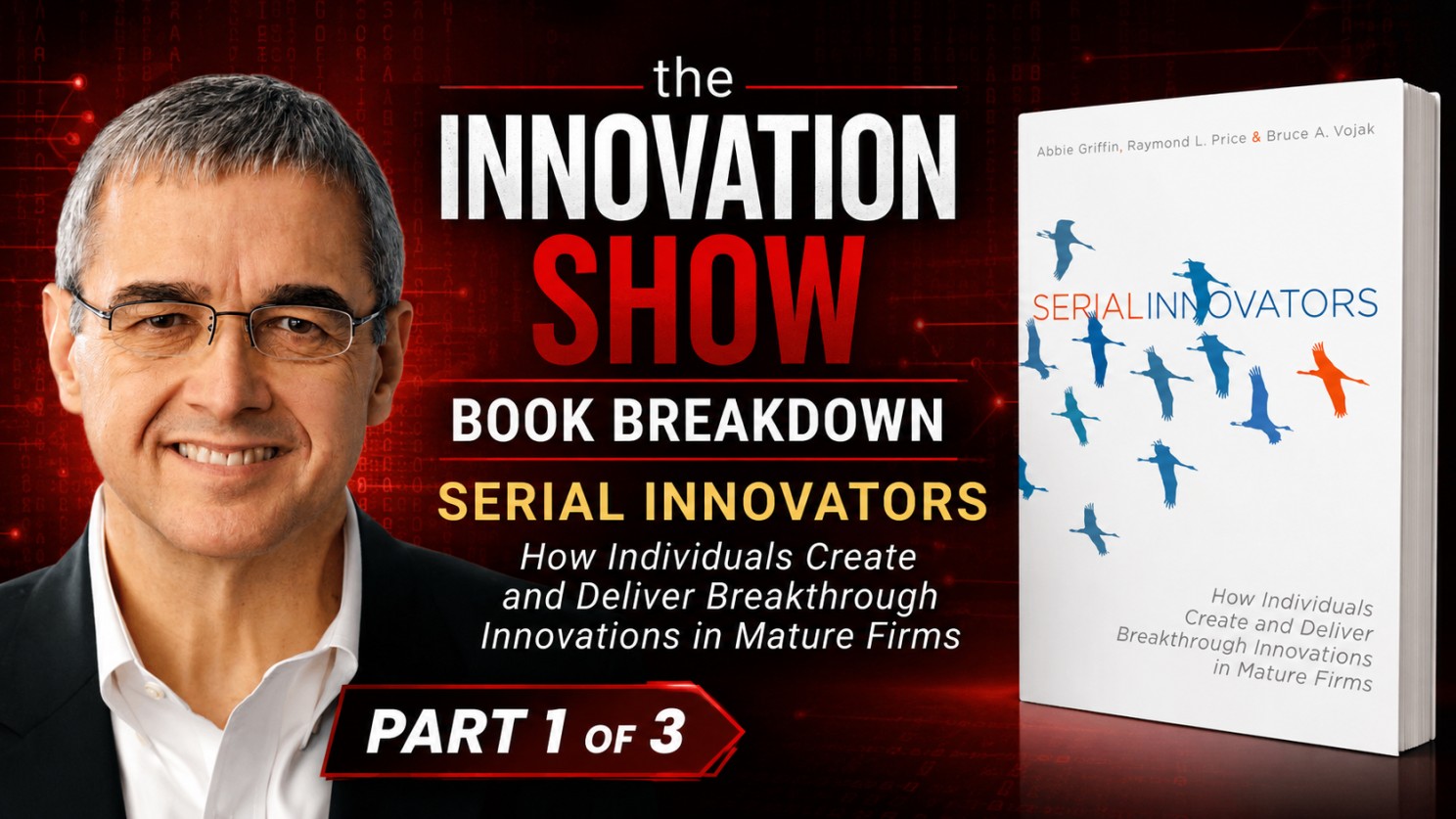
I spoke with Bruce Vojak in the first of a three-part series on his book Serial Innovators: How Individuals Create and Deliver Breakthrough Innovations in Mature Firms. We discuss who Serial Innovators actually are, why they matter to mature firms, and how they differ from typical inventors. We cover why the Stage-Gate process that drives incremental innovation fails at the Fuzzy Front End of breakthrough work, and the Valley of Death between technology development and commercialisation. Bruce shared the story of Tom Osborn at Procter & Gamble, the chemist whose conviction about a thinner sanitary pad eventually became Always Ultra, despite the organisation trying to terminate him three times along the way.
Part 1 of 3 drops later today Thursday May 7th.