
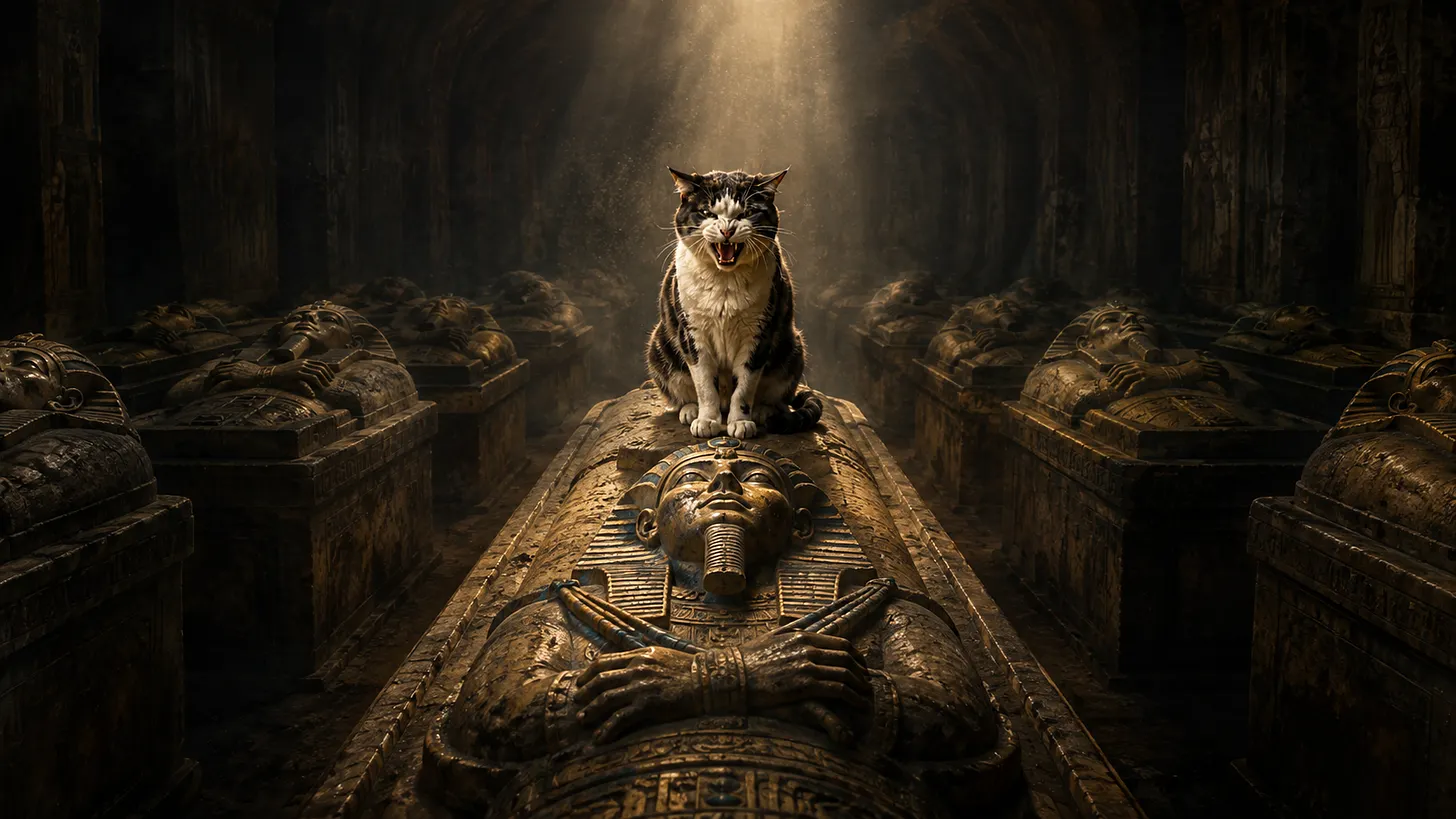
TL;DR: There was once a cat in a Rhode Island nursing home who knew a patient was dying before anyone else, including the doctors. It turns out animals can smell death and some animals are better at sensing it than others. Organisations emit similar signals of decline in business models and projects they have backed. They dismiss the obvious signals because of shame, fear of admitting mistakes or belligerence. There are ways to sense projects are dead and there are means to empower people to call it out. That work begins before any project does.
“There is nothing as difficult and as expensive, but also nothing as futile, as trying to keep a corpse from stinking.” — Peter F. Drucker
The Cat Calls
The staff of a Rhode Island nursing centre adopted six cats in 2005. One of them was Oscar.
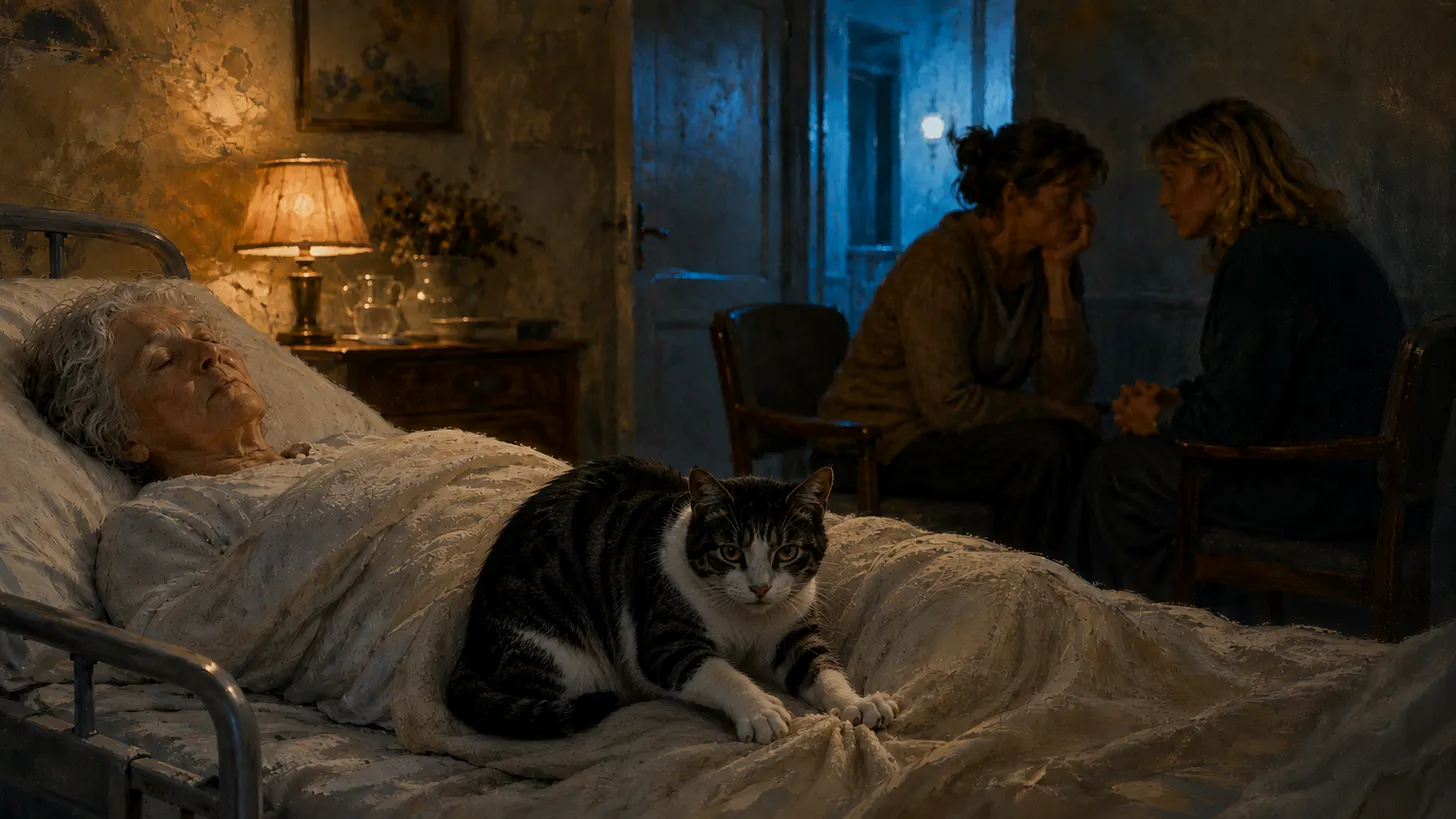
He was not the friendliest of the six. Staff described him as aloof and he’d hiss at people when he wanted to be left alone. Around six months after his adoption, they noticed something strange. Oscar would choose a particular patient, jump onto their bed, stamp out a place beside them and curl up. Within hours, that patient would die.
One family member told their story in detail, prefacing it by saying that being there was the only reason she believed any of it. Rita’s mother had several false alarms before she passed and each time Oscar came in to check on her. He never stayed. On some visits he would simply smell her feet and leave again. The daughters were not surprised by this, because other families on the unit had described the same behaviour.
Then came her mother’s last day. Rita and her sister were sitting by their mother when they heard scratching. They looked at each other puzzled, checked the corridor, saw nothing at the door, but heard it again. This went on for quite some time before an aide knocked and asked whether they would mind leaving the door open. Oscar had been pacing outside their room for hours. When nobody opened the door, he went into the next room and scratched the adjoining wall.
Once they left the door open, Oscar sprinted through, jumped onto the bed, stamped out a place beside their mother, looked at the two daughters with an expression Rita read as satisfaction, curled up and went to sleep.
The same aide returned later to change the linens and tried to lift Oscar off the bed. He hissed and swatted at her hand, and she eventually gave up. He stayed where he was until their mother died, and then until the undertaker arrived. As the body was wheeled out, he stood up. “Like a sentry,” the sisters said, and then as if he had finished his shift, he left his post.
After 25 accurate calls, the staff stopped arguing with him. They began ringing families as soon as they found Oscar on a bed, so people had a chance to say goodbye. By 2015, he had been right about 100 times.
The doctor who wrote about Oscar is David Dosa, a geriatrician at Steere House in Providence, who first documented him in the New England Journal of Medicine in 2007. Dosa wrote the book, Making Rounds with Oscar. In the book, Dosa shares how he was a sceptic of Oscar’s abilities. He admits that his faith in science and his own intellectual vanity made it easier to reject the idea that a cat could sense something the trained medical staff could not.
One plausible hypothesis is that Oscar was detecting necromones. Akin to pheromones, necromones are biochemicals released by dying cells. Another is that he was sensing stillness rather than smell. Maybe it was both and Oscar had perfected a dashboard for death.
Even while they remained uncertain, the staff, however expert, treated Oscar’s calls as information and rang the family just in case.
And the Oscar Goes To…
"No one loves the messenger who brings bad news." — Sophocles, Antigone, c. 442 BC
Organisations emit necromones of their own, and the striking thing is how many people can detect them.
These cats are the engineer who has stopped truly believing the platform will scale. The account manager who can no longer remember what the initiative is for in the first place. The team whose weekly updates have gone gradually quieter, or grown into a list of excuses. Scratch on the door of any large company and you will find people who could name three initiatives that stopped mattering eighteen months ago but still drain budget, attention and the will to live.
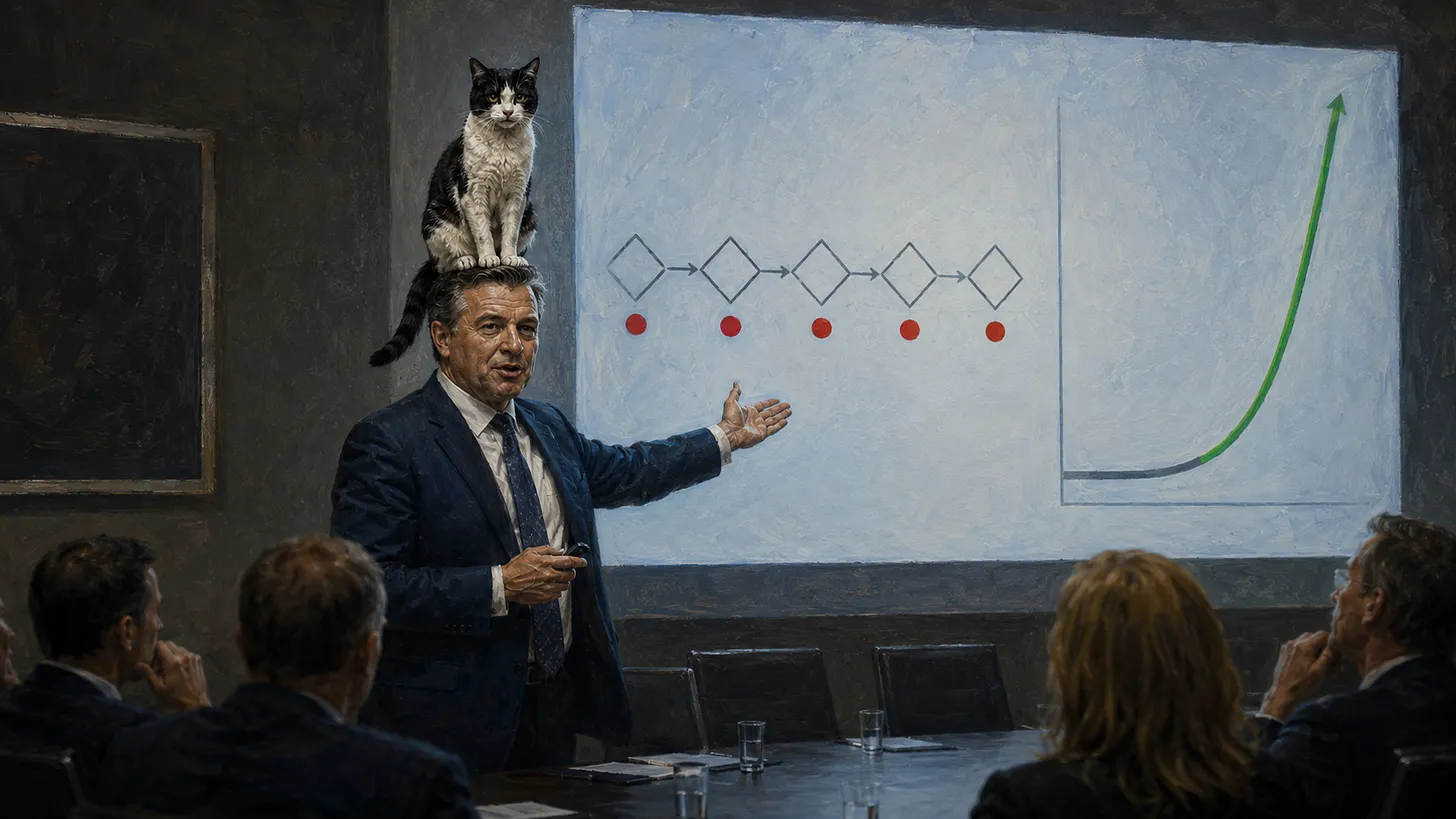
David Dosa is the geriatrician who wrote the book about Oscar. His admission about his own reaction is the useful part. Intellectual vanity makes it easier to reject the notion that some errant feline could know more than the medical staff did. Swap the feline for a junior analyst, a delivery lead, or a contractor three levels down, and you have described a common operating condition in most senior teams. The signal reaches the room on time, but it is carried by someone the hierarchy has decided could not possibly know better. There it sits, in abundance, waiting for a moment at which somebody is permitted to turn it into a decision.
Oscar had one advantage that nobody in our buildings do. He was free to be wrong. He settled on beds where the patient went on to recover, and Dosa says so plainly, and not one of those false calls cost him anything. No review, no quiet word afterwards, no requirement to account for the last one before anybody would take the next one seriously. The junior analyst who says the platform will not scale is making a prediction against her own name, and if the thing limps along for another two years she wears it. Being right early looks identical to being disloyal or contrary or negative, right up until the moment it looks like foresight, and by then somebody else is presenting it!
Antonio Nieto-Rodriguez, our guest on last week’s Innovation Show, suggested a way to expose this phenomenon. He asks a leadership team how often they launch new initiatives, and the answers arrive with some pride. “One a month.” “Every four weeks.” We are a machine of launch! Then he asks how often they finish or kill projects, and the room goes quiet while people look at each other and try to remember the last time they did that, if ever.
He put it this way: "if you just as a leader launch more projects than you finish, you're a bad leader." The role was never the launching.
Sixty Billion Dollars of Not Deciding
“But this isn’t the end of the line.” — Mark Zuckerberg, Founder’s Letter, 2021
Meta’s Reality Labs division has consumed more than sixty billion dollars since 2020.
The number is remarkable, but the mechanism is everywhere, and it operates in organisations at every scale. Emotional investment in something you announced yourself as the boss, as the so-called visionary. Sunk cost sucks. Internal politics can make cancellation feel like accusation. And the reputational risk, where the person best placed to make the call is the person who can least afford to make it. The company that told its investors to move fast and break things moved slowly and broke nothing, least of all the news.
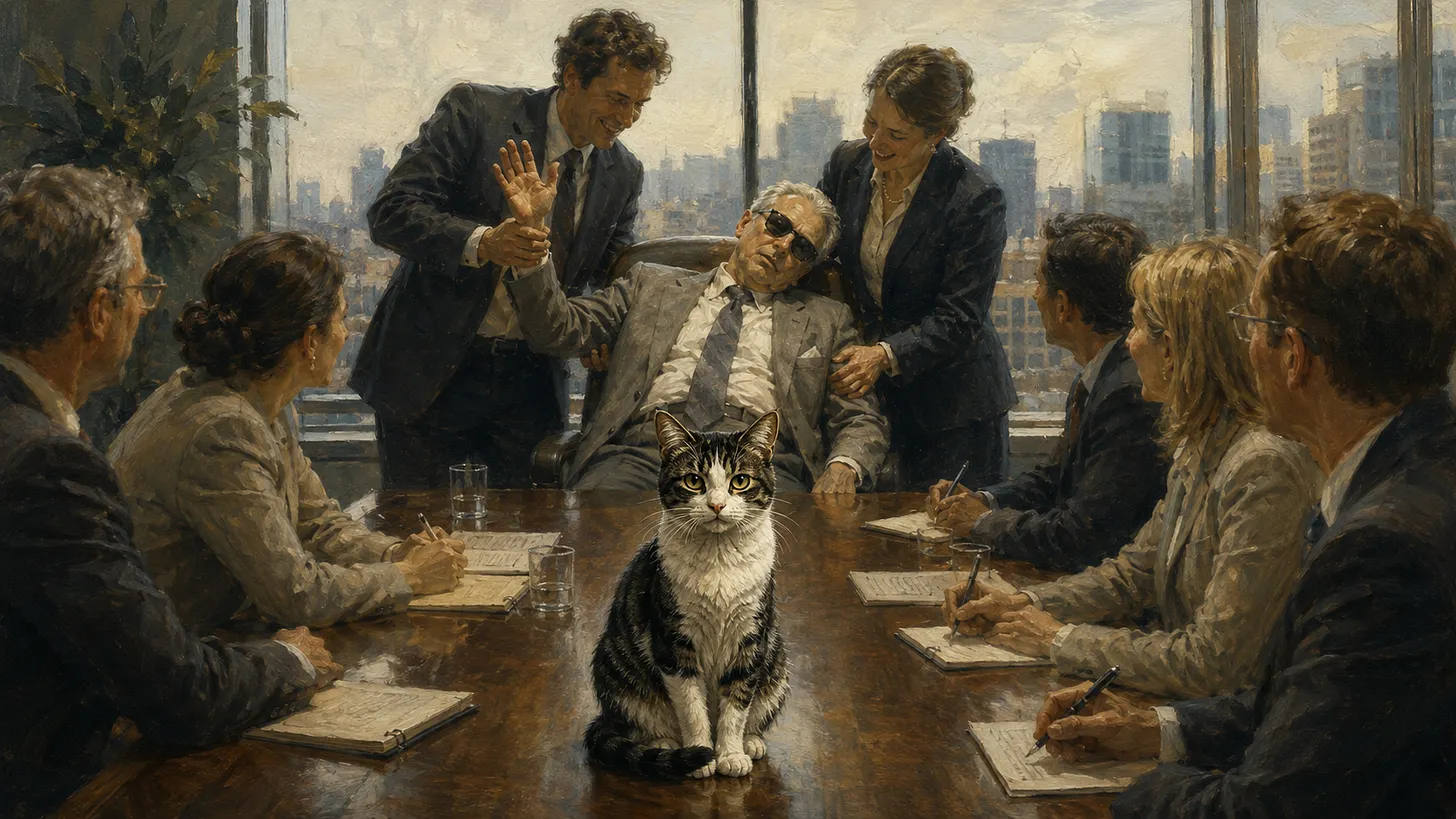
So the corpse continues, propped up between two colleagues like Weekend at Bernie’s, and the costs compound in a particular order. People and budgets stay locked inside work that has stopped creating value. Morale drains, because teams know when a project has lost its pulse and working on a corpse is corrosive in a way that spreads to everything else those people touch. Then comes strategic drift, where the organisation cannot move toward what it needs now because its capacity is still committed to what it needed then.
The deepest cost is cultural. As Antonio put it, organisations that routinely delay project closures send a clear message that tough decisions can wait, and that lesson generalises far beyond the portfolio.
Pulling the Cord

Toyota gave every worker on their assembly lines an andon cord. Anyone who saw a defect could halt production, no seniority required, no permission sought. The genius lay in the guarantee that pulling it would be treated as a service to the line rather than a mark against you. No receipts kept, only positive ones.
Haier runs a version of this at the level of the business itself. Its micro-enterprises operate with real autonomy and are held to measurable user value, and a venture that fails to reach its predefined goals within three months is restructured or terminated. Three months, which comes around long before anybody’s reputation has become fused to the outcome.
What makes it work is the same thing that made Toyota’s cord work. Nobody has to be brave. The decision point arrives on the calendar rather than requiring an act of courage from whoever happens to notice first.
Antonio extends the principle upward, and this is where it gets uncomfortable for the people reading this who lead transformations. If you are running one and you do not have what you need from the top, you have the right and arguably the obligation to stop what you are doing. Tell the boss you are pulling the transformation cord unless they dedicate two hours per week to it. Continuing without sponsorship spends resources and carries risk on the company’s behalf while looking like diligence.
Show Me the Evidence
Alexander Osterwalder joins us this week, and he would start the questioning long before a project starts looking like Bernie.
His interest is in investing in the few ideas that can survive, which he describes as running a “funnel rather than a tunnel”. Everything above is still a way of correcting a decision that has already been poorly made. Alex believes the correction becomes far easier if the original decision was made on something other than faith, a guess or the boss’s favourite.
He tells us that in most companies people operate in an exploit mindset, and they evaluate a genuinely new idea through that exploit lens. What that lens asks for is a business case, and a business case for something nobody has tested yet is an invention. He calls it out, like Oscar jumping on a bed, “Spreadsheets are a fantasy made explicit.”
He suggests we replace the guess with scored evidence. Teams arrive at the Honeywell growth symposiums his firm runs with a scorecard rather than a pitch deck. The cards are graded from what customers say in an interview at the low end of the funnel up to what they actually pay at the high end. They are scored separately for whether people want the thing, whether it can be built, and whether anyone will hand over any money. The idea itself cannot be judged. What can be judged is whether there is evidence worth another round of funding.
The part that connects it back to Oscar is what happens when the evidence is absent. Alex has no objection to a company backing something on conviction alone, provided the conviction is recorded with a name and a date attached. Leaders asked to put their name to “we just know” tend to reconsider once that is going on the record.
Set the evidence bar at the start and the terminations largely take care of themselves, because a project running on nothing is visible to everybody in the room long before you sink sixty billion.
What Oscar Was Really For
"The greatest error is not to move. The greatest error is to be paralysed by the fear of failure." — Dr Michael Ryan, World Health Organization, March 2020
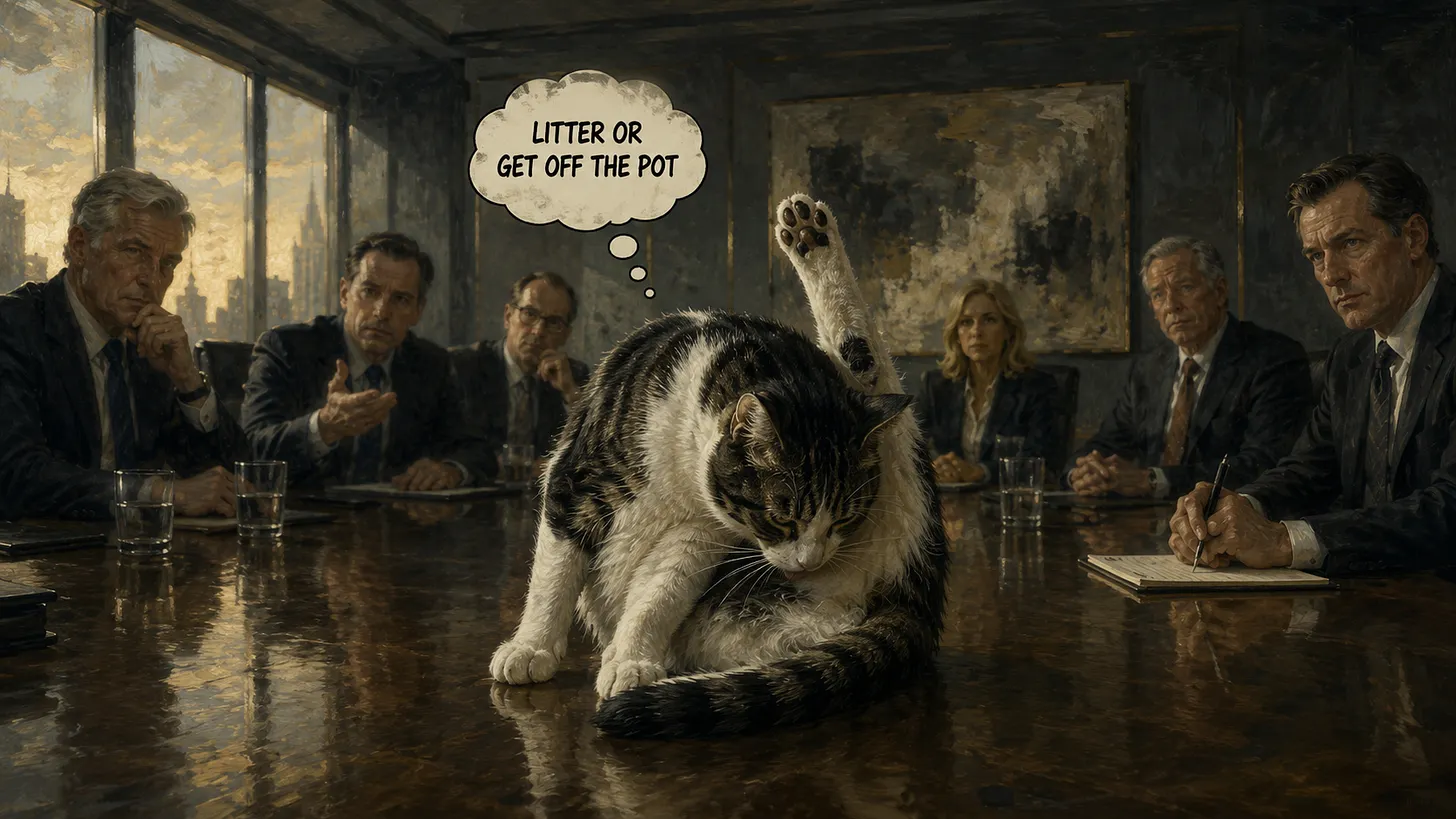
Oscar never diagnosed anything. He arrived, he settled, and he made sure nobody died alone. He got it wrong sometimes, but the staff acted on his calls anyway. A signal that is right most of the time and available hours early beats a certainty that arrives too late to ring anybody.
Every organisation has its Oscars, more often outweighed or overruled by the HIPPO (highest paid person in the room) and a sprinkle of intellectual vanity. The signal is almost always there, and it almost always arrives early enough to matter.
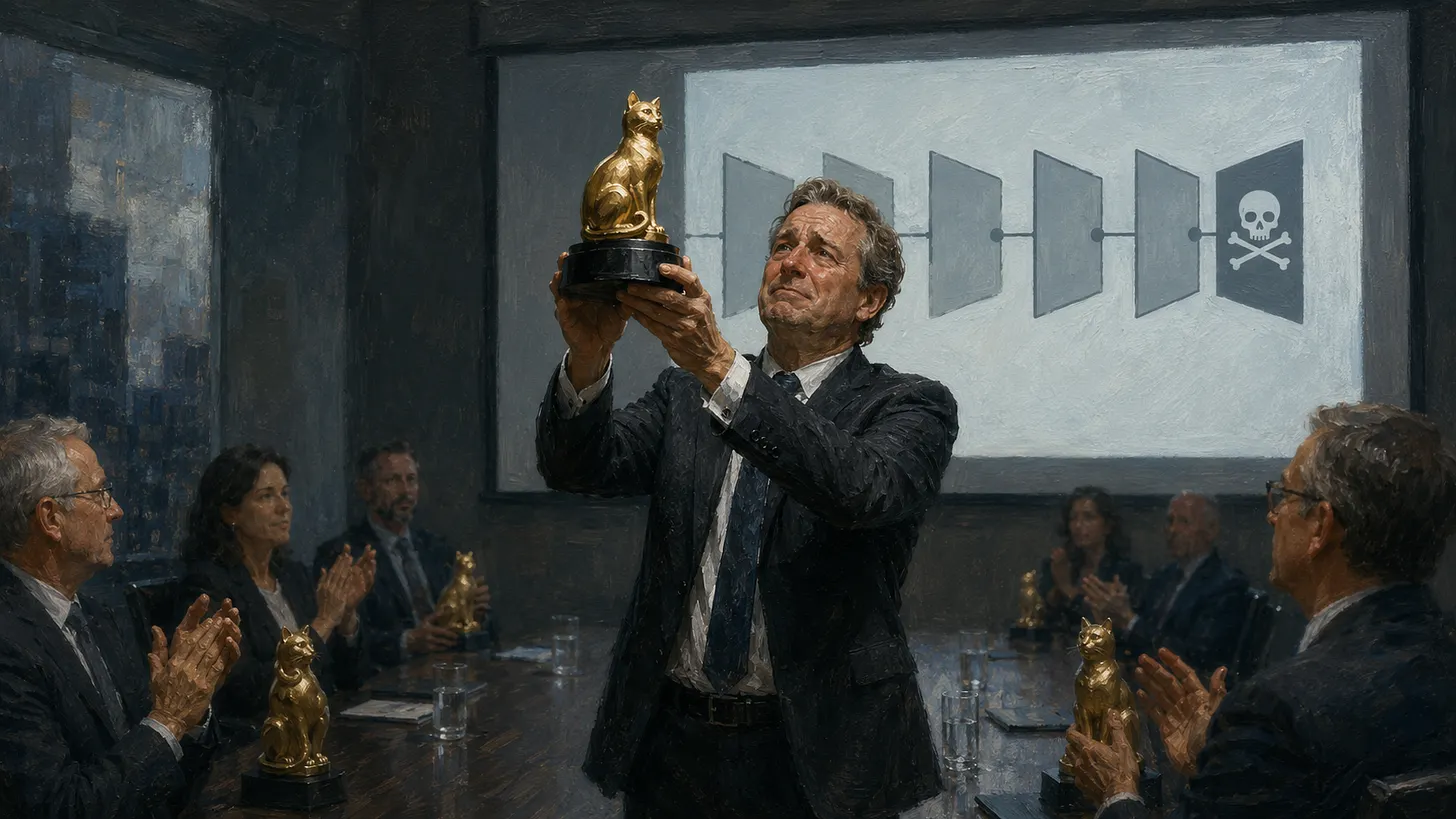
What most signals wait on is an agreement, made while everyone was still optimistic, about what would count as evidence that the project is dead. Set that before the work starts, while nobody’s reputation is attached to the answer, and give somebody in the room the standing to say the words out loud. In fact, give them an (ahem) Oscar.
When it ends, stand up, tell the story properly, and let people go home.
Oscar’s whole advantage was that nobody ever made him defend the call.

Alex Osterwalder joins us on The Innovation Show tomorrow. The playbook he walks us through is in the Strategyzer library, and he has given Innovation Show listeners 20% off it with the code innovationshow20 at strategyzer.com.
If you missed last week's episode with Antonio Nieto-Rodriguez on Powered by Projects, it is worth going back for. We have copies of the book to give away: sign up at kyndryl.com/institute and send us a screenshot to enter.