

TL;DR Growing companies, and the investors and boards behind them, bring in professional managers the way doctors prescribe antibiotics, to clear an infection. The drug clears it, and takes the healthy flora with it. Repeat the course often enough and the organisation loses the entrepreneurial population that made it worth treating in the first place. When the market turns uncertain, the company needs exactly the people the treatment removed.
One Course
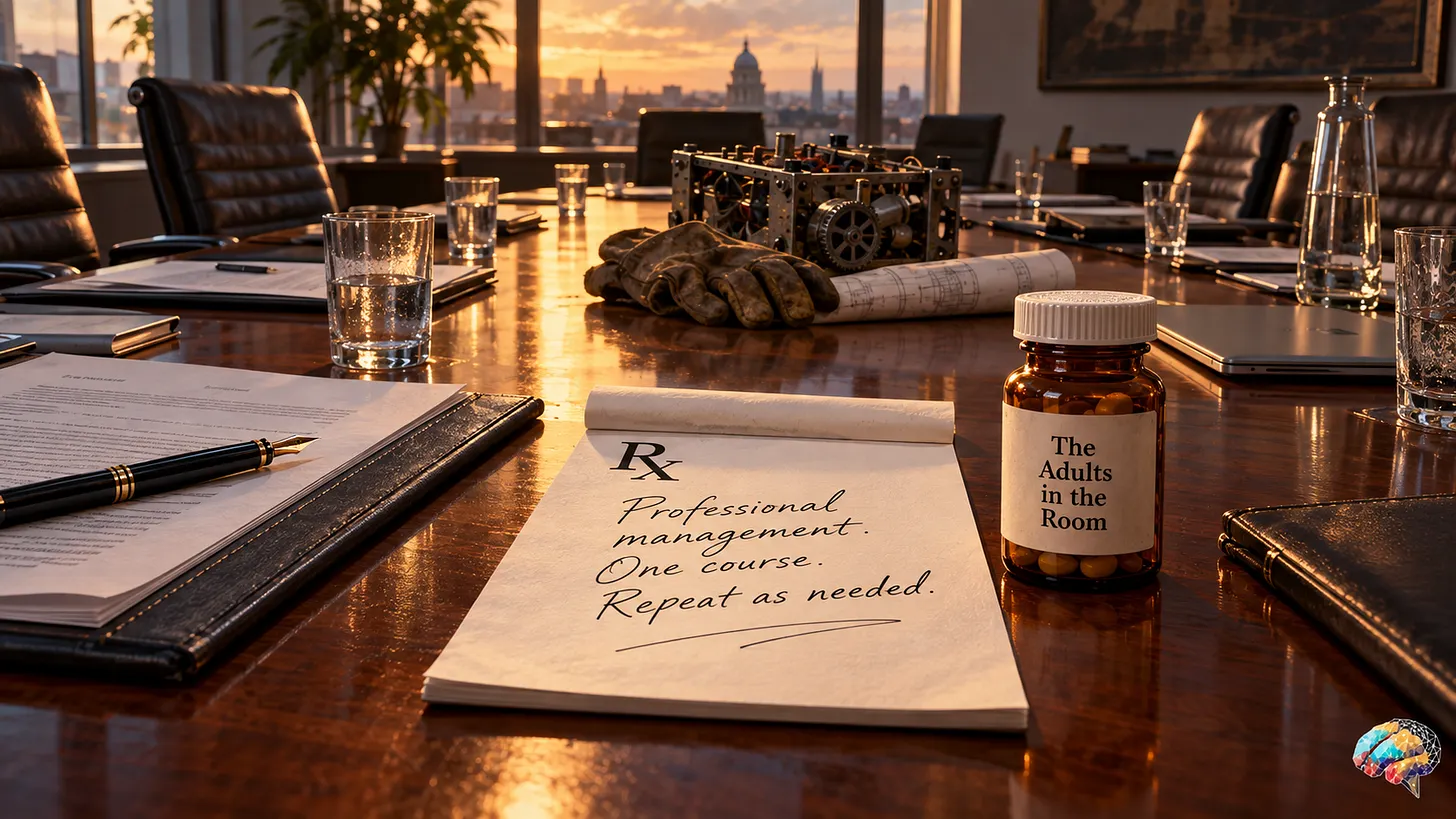
Anyone who has taken antibiotics for a chest infection and then spent a week or two with an upset stomach has viscerally felt the problem. Steven Gundry, author of The Gut-Brain Paradox and a former guest of the show, explains that even one course of antibiotics can change the bacteria in the gut for as long as two years, and each repeat prescription of the same drug makes the disruption more severe and the return to balance a steeper climb. The drugs kill beneficial gut bacteria along with the ones causing disease, which leaves us living with an imbalance called dysbiosis.
Gundry also describes keystone species, bacteria that notice when another strain starts to overgrow and change the chemistry of the gut to keep opportunistic bacteria in check. When we lose the keystone species, there are no guardians left to hold the overgrowth back. And even when the gut does settle, patients’ microbiomes can look profoundly different, with whole populations of beneficial bacteria missing.
Growing companies receive the same prescription. The early years are chaotic, with few or no systems and a founder who decides everything. Soon enough the board and investors interpret that apparent chaos as an infection. Their cure is to prescribe a professional manager, often from their own stable. Plenty of the staff, tired of the scramble, welcome the appointment. The new manager brings order, and the founder and inventive people who were the company's good bacteria are wiped out along with the early disorder. The company is left with organisational dysbiosis. Now it runs smoothly, but years will pass before anyone notices that it produces nothing new.
Killing Off the Keystone

“First, it became a good deal more formal, with written policies and plans.”
David K. Hurst, on Russelsteel, quoted in Lawrence M. Miller, Barbarians to Bureaucrats
Russelsteel, a Canadian distributor of steel and industrial products, went public in 1962 with five branches and $14 million in sales. Its president was the last member of the founding family still in the business, and he wanted growth. Deciding that his hard-nosed operations manager was the wrong person for the job, he introduced a new strain in the shape of a Harvard MBA who had spent fifteen years at Procter & Gamble. David Hurst, a manager there at the time, described what followed. The company gradually split into the operating managers who ran the branches and a head office that saw itself as an investor in a portfolio of divisions. The president and executive vice president moved their offices away from the steel.
The acquisitions came next, 27 companies in 40 different businesses, most of them small family firms. Russelsteel put its own managers into the key positions to bring in organisation and control, and many of the people who had built those businesses left, the keystone species of each firm killed off one by one. The first four acquisitions failed within a few years, and Russelsteel itself, in Miller’s telling, collapsed and was sold to the conglomerate Federal Industries in 1984.
The Relay Race

In Managing Corporate Lifecycles, Ichak Adizes accepts that the antibiotic prescription is sometimes exactly what is required. In his lifecycle model, a young company reaches a point where it needs systems and someone willing to tell an organisation that has only ever heard yes from its founder that the answer is no. He describes the handover as a relay race. The pathology begins when the founders and the administrators lose respect for each other. The entrepreneurial people get paid off and walk away, and in his words “the numbers people take over.” The founders were the keystone species, and without them nothing holds the administration back. Profits can rise for a while as sales flatten. Adizes calls the condition premature ageing, and it reads like a set of CliffsNotes on Russelsteel as it fell off a cliff.
Adizes also describes boards that, once a founder’s results start to slip, side with the professional manager until the entrepreneur is squeezed out and the administrator takes the chief executive’s chair. Some venture capital firms, he notes, make a living from exactly this. They buy businesses stuck in what he calls the founder’s trap, install an organiser to systematise them and take them public at a profit. Noam Wasserman put numbers on the pattern at Harvard Business School in “The Founder’s Dilemma”. Among 212 American start-ups he studied, 50% of founders were no longer chief executive by the third year and fewer than 25% led their company to its IPO. Most were pushed, usually by investors at the moment fresh money arrived, and Wasserman sums up the message they hear as “Congrats, you’re a success! Sorry, you’re fired.” Sometimes that is exactly the right medicine, and Wasserman’s own data show founders who give up more equity end up with more valuable companies. For Adizes, everything turns on whether the founder steps back by choice, keeps some sense of control and returns later to help the company reinvent itself. A founder who is shown the door leaves the company on the road to premature ageing.
Simple Sugars
Gundry explained on the show that harmful bacteria thrive on simple sugars, and the beneficial ones cannot use them. As the bad bugs multiply they send signals to the brain asking for more of what they eat, and the host develops a craving for the food that feeds the overgrowth. (Yet another reason to eat our greens.)
Once the finance people dominate a company, it rewards what they can digest, and a cost saving is their sugar hit, quick to absorb and easy to measure. Every quarter it arrives on time strengthens the appetite for the next one. Gary Hamel told me on the show that “cutting is just easier than building every single time,” and an executive expecting three or four years in the job will rarely be around for “the consequences of cutting out muscle along with the fat.” A ten-year R&D bet is fibre. Only the old flora had the enzymes to break that down, and most of the old flora were paid off or pushed into exile during the restructuring.
The Care Home
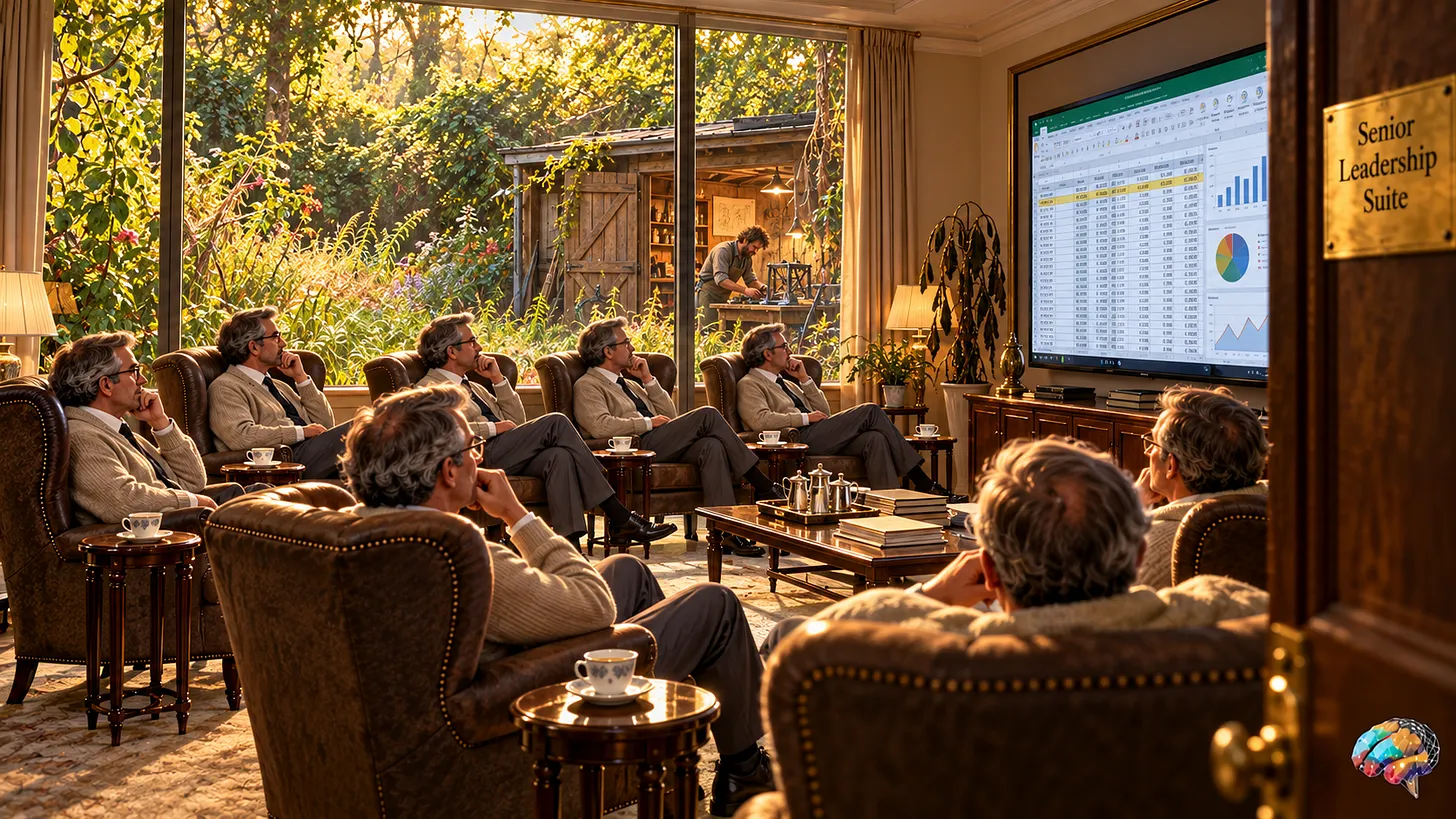
Here in Ireland, researchers at Teagasc and University College Cork ran the ELDERMET study. They found that older adults living in long-term care have markedly less diverse gut bacteria than those still living in their own communities. They traced the difference mainly to diet. Habitual diet controls the population of gut bacteria, and residents in long-term care were eating far less fruit and vegetables than recommended. The loss of diversity tracked with frailty and inflammation.
During our 18-part series on his work, I put it to Gary Hamel that founders often get fired from their own company, or somebody gets brought in to put manners on them. He described how a young company is run by its engineers and technologists, but as it grows it goes looking for “the adults in the room.” Within a few years the analysts and finance people (invasive flora) are running it. He also points out that the pyramid itself is administrative, so in most organisations the only route to a bigger salary is a move into management. A company that fills the top floor from one track, with one training and one way of reading a business, builds itself a care home. Everyone in it is well managed and well-intentioned, but drawn from the same small pool. Its gut becomes a monoculture, and eventually the company grows frail without any single decision to blame.
A Separate Gut: A Tale of Two Prescriptions

When Clark Gilbert, co-author of Dual Transformation, took over the Deseret News in 2010, the paper had lost 70% of its print classified revenue in two years, a widespread infection. He was forced to lay off 43% of the workforce, and the digital businesses he was building at the same time ran autonomously, out of the antibiotic’s reach. Clark told me on the show that the new venture needs its own organisation, “otherwise the incumbent organization will crush it.” By 2015 net income was up by almost 25% on 2010, amidst a media industry in free fall.
Blockbuster got a different prescription. In 2004 its chief executive, John Antioco, assigned $200 million to launching Blockbuster Online and another $200 million to scrapping late fees, the charge his customers hated most. In November 2006 he launched Total Access, which let subscribers rent online and return discs to any store.
Greg Satell, who interviewed Antioco at length for his book Cascades, told us on the show that within a month new subscriber sign-ups flipped from 70 to 30 in Netflix’s favour to 70 to 30 in Blockbuster’s. The spending hit earnings and the share price, and activist investor Carl Icahn, by then in control of the board, cut the bonus Antioco’s contract promised him. Antioco agreed to leave in 2007, telling Satell he had “little desire to fight it out anymore.” He urged Icahn not to hire Jim Keyes, a former 7-Eleven colleague he did not get on with, but the board went with Keyes anyway. Keyes reinstated late fees, cut investment in the online business and turned the company back towards its stores. Blockbuster filed for bankruptcy in 2010. The new doctor had treated the new business model growth as the infection.
As for Russelsteel, it never built a separate gut. In one case, the employees of a firm it had bought walked out, borrowed capital and started their own company, which within a few years had outgrown the business they left in both size and profit. The founding flora found a different host. One course of professional management rarely kills a company. The repeat prescriptions, written after every disappointing quarter, leave it frail.
One more prescription, for next week. For most of the last century the appendix was written off as a useless leftover, and surgeons took out healthy ones while they were in there for something else. Researchers now think it keeps a reserve of good bacteria to reseed the gut once the flora is wiped out. You can probably guess which part of the company it brings to mind.
On This Week’s Innovation Show
Nintendo launched the Wii as an inferior console and still won a market nobody else had touched. Alex Osterwalder explains why, and shares a world first with us, the Value Stack, built on six patterns of value creation. Henry Ford priced the Model T so his own factory workers could buy one. Diners Club invented a proposition that had never existed before. Alex walks through all six in under fifteen minutes, with a trigger question you can put to your own team on Monday.
Win a digital copy of The Invincible Company. One of Alex’s slides shows a gentleman standing beside him, a co-author of one of Alex’s first books. Reply with his name and you go into the hat, with thanks to Kyndryl.
Alex has also given readers 20% off Strategyzer’s new playbooks with the code INNOVATIONSHOW20 at strategyzer.com.
Steven Gundry explains how a single course of antibiotics can reshape the gut for up to two years, and why losing the keystone species leaves nothing to hold the overgrowth back.
Clark Gilbert, in our series on Clayton Christensen, on rebuilding the Deseret News with a digital business kept well away from the newspaper’s reach.
Gary Hamel on why growing companies go looking for “the adults in the room,” and how an administrative pyramid leaves management as the only route to a bigger salary.
Gary Hamel on why cutting is easier than building, and why an executive on a short tenure rarely sees the cost of cutting muscle along with the fat.
From Our Friends at the Drucker Forum
Our friends at the Global Peter Drucker Forum have given Thursday Thought readers a special discount on this year’s Forum in Vienna in November. Its theme is leading innovation, which sits well beside this week’s piece, and the programme runs panel discussions alongside in-depth workshops, with speakers from around the world. I can’t make it this year because I’m giving a keynote at the same time, so go in my place and use the code Partner2026 when you register.
Aidan McCullen is a keynote speaker and 2025 Thinkers50 Innovation Award winner. Book him at aidanmccullen.com