
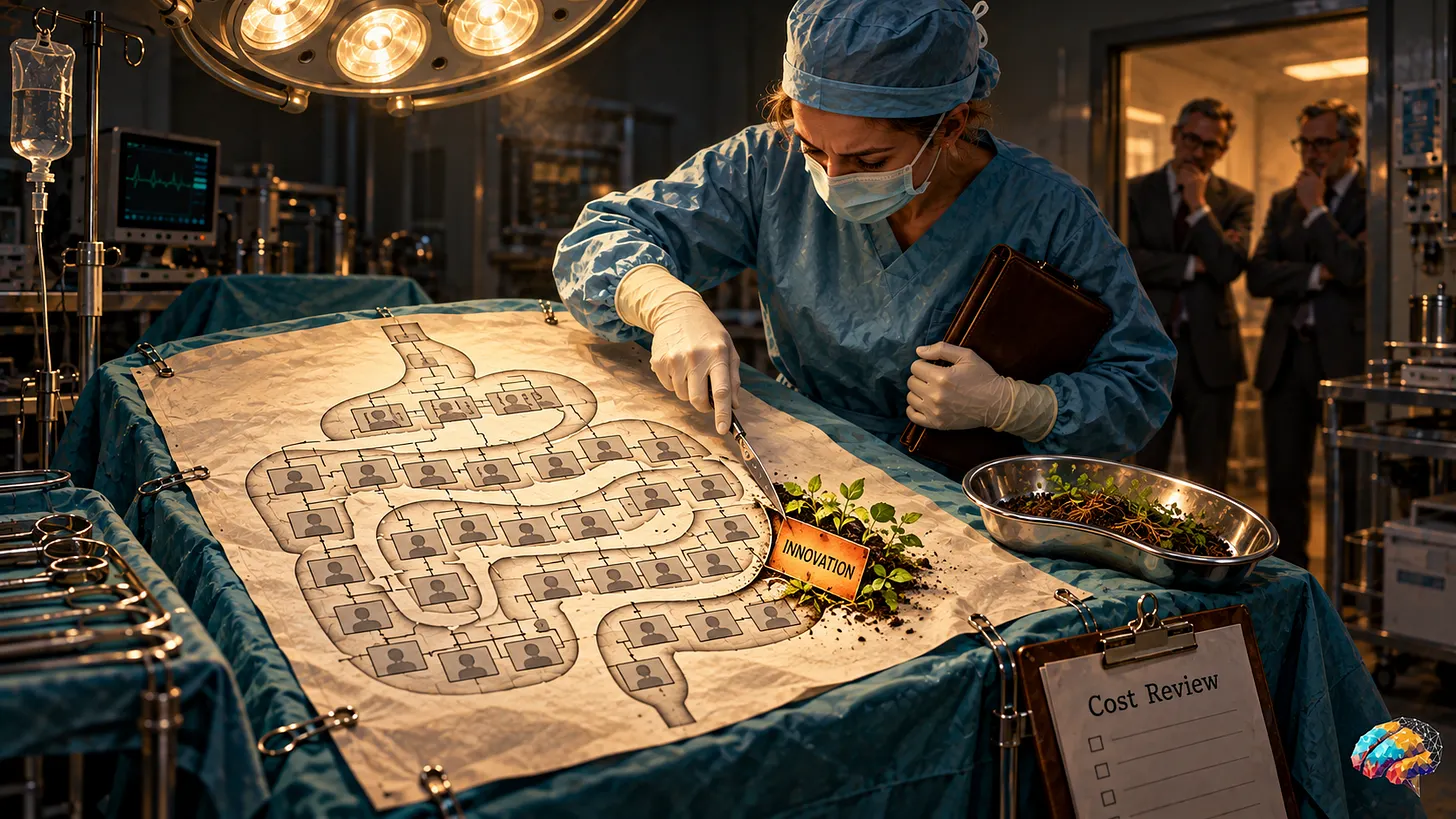
TL;DR From Darwin onwards, the appendix was written off as an evolutionary leftover. Today, some researchers think it shelters the bacteria that reseed the gut after an illness has depleted it. Other parts of the body are indeed dead weight, and in times of good health the appendix can quite easily be categorised with what is no longer needed. Companies cutting costs in good times often confuse their dead weight with the intrapreneurs who build value slowly, and those intrapreneurs rarely show their worth before a crisis arrives.
Useless, and Sometimes Fatal
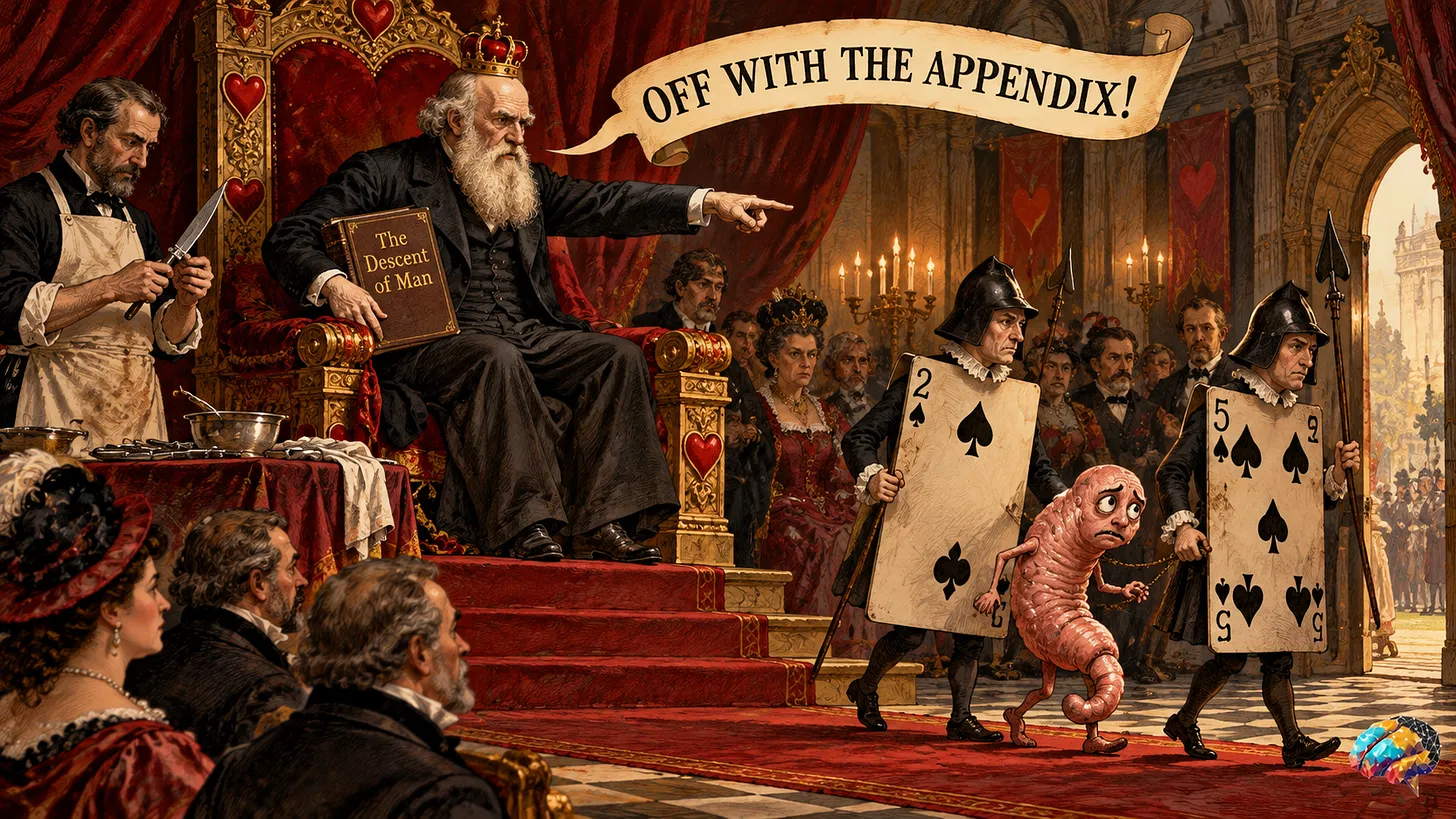
“Not only is it useless, but it is sometimes the cause of death.” Charles Darwin, The Descent of Man, 1871
Like many people, I assumed the appendix at the back of a book took its name from the one in the gut, but the literary world used the word first. From the 1540s English writers used “appendix” for the pages added after the main text (from the Latin appendere, to hang upon), and around 1610 anatomists borrowed it for the small pouch that hangs off the large intestine. Nobody reads a book’s appendix unless they set out to, and the same is true of the innovation work in most companies. For more than a century after Darwin, textbooks held up the organ as the classic evolutionary leftover, a dead end that did nothing except occasionally become inflamed and kill its owner. Surgeons treated it accordingly, and some still take out a healthy one while they have a patient open for something else, considering it a favour to the patient.
In 2007 researchers at Duke University proposed that the appendix guards a dense film of bacteria and sits off the main flow of the gut, where a bout of severe diarrhoea that flushes the intestines cannot reach. Once the illness passes, the bacteria protected there can emerge and repopulate the lining of the intestine. The researchers called their evidence circumstantial, and later studies have added to it. When doctors at Winthrop-University Hospital in New York followed 254 patients treated for C. difficile, a gut infection that tends to come back, the infection returned in 18% of those who still had an appendix and in 45% of those who did not. The appendix has also evolved independently at least 32 times across mammals, which is hard to explain if it no longer serves a purpose.
“Apparently, evolution can duplicate bones when needed. It seems it’s not as good at deleting them when they’re no longer needed.” Nathan H. Lents, Human Errors
The coccyx fits the description of a bone that is dead weight, the fused stump of a tail. The rare people who have it removed after an injury or illness get on just fine without it. Nathan Lents, a forthcoming guest on the show, includes it in Human Errors, his catalogue of the body’s mistakes, but he leaves the appendix out.
In a healthy body the appendix and the coccyx may both appear surplus to requirements. Neither does anything you can easily measure, so both are considered safe to remove.
Analysts looking for fat when a company is in fine health easily find people who don’t appear to contribute to the quarterly numbers. While some of them genuinely are dead weight, others are the intrapreneurs, the link people and tinkerers who know how to catalyse something new. They are the people the company will need when a market shifts. Much of their work happens behind the scenes, connecting people across the company and with partners outside it.
What intrapreneurs build pays back slowly, often over years, which makes them hard to justify in a quarterly review. On a spreadsheet they can look worse than the dead weight. Cutting either changes nothing while times are good, and the cost only shows when the market turns and nobody is left to reseed the organisation. Last week’s piece followed the professional managers who arrive to clear a growing company’s chaos. The appendix is often the first thing they remove, because on the day they arrive it looks exactly like the tailbone.
Protect the Appendix
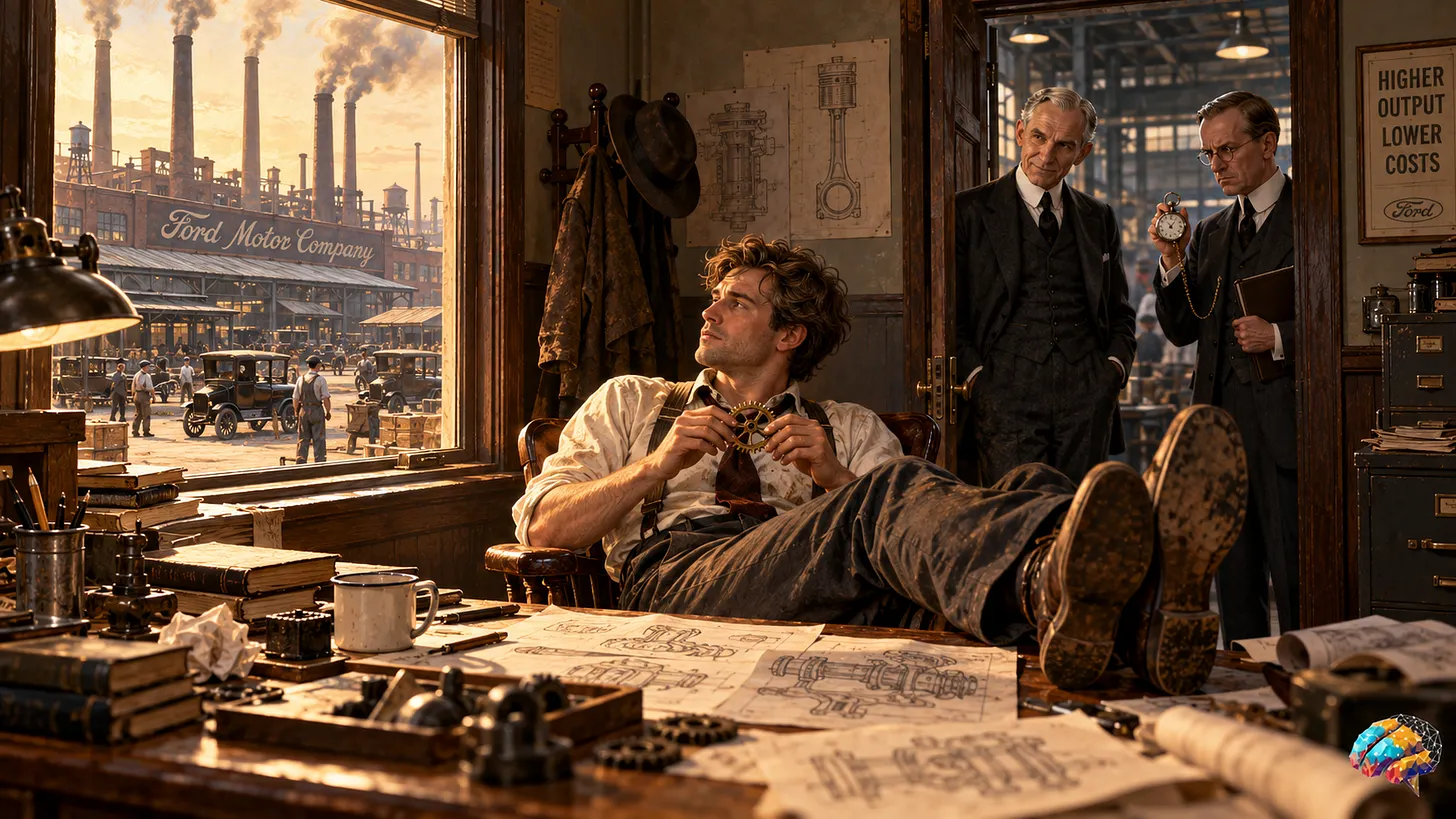
“Corporate managers are likely to send their Prophets into exile.” Lawrence M. Miller, Barbarians to Bureaucrats
There is an often-cited story about Henry Ford (though never in print in his lifetime). In it, Ford gave an efficiency expert a tour of the company, and the expert questioned a man who sat with his feet up on his desk, looking a lot like dead weight. Ford is said to have replied that the man had once had an idea that saved the company millions, and that his feet had been in the same place at the time. The people a company relies on for new ideas need slack, and Ford’s man with his feet on the desk was that slack.
Paul Nunes, a regular guest on and friend of the show, describes what usually occurs. A founding chief executive gives way to a scaling one who sets about taking out the costs to prove their worth in the short term. The board, shareholders and employees watch the share price climb, and the entrepreneurs who built the company are jettisoned as surplus to requirements. When the market moves and the board goes looking for new ideas, many companies realise too late, as Paul put it, that “we grew this company and created all this shareholder value by getting rid of all of our innovation.”
Consider Howard Schultz, who ran Starbucks from 1987 to 2000. Once the flywheel was running, he stepped back to become chairman, working on global strategy while others ran the business. By 2007 the chain had more than 15,000 stores but was struggling. On 7 January 2008 the board named Schultz chief executive again, and he stayed in the job until April 2017.
Starbucks had kept this corporate appendix connected, and when the business faltered, he was there to revive the processes that built it in the first place. Ichak Adizes, whose lifecycle model featured in last week’s piece, goes a step further. While a growing company builds its systems, he argues, the entrepreneurial role he calls E should step aside, and then “E should reappear, institutionalized instead of personalized.” Schultz was Starbucks’s E in reserve. Adizes is describing what the body already has, an appendix built into the organisation that keeps entrepreneurial talent on hand to reseed the company when required.
To the Appendices Reading
Many of you who listen to the show are these people. You built capability your organisation does not yet know it needs, and in every budget round someone asks what exactly you do. It is frustrating, lonely work, and holding a reserve is hard to defend in times of plenty. This show salutes you. The companies that come through the next crisis will be the ones that kept you within reach, but tragically many of you will no longer be in the companies you helped save by the time they realise you did so, if they do at all. Further still, many of them will co-opt your work, the projects you stressed over, the people you brought together and the ideas you dragged into existence, and never even know your name. That is the work, and it is why I find solace in the old proverb. A society grows great when old people plant trees whose shade they know they shall never sit in.
On This Week’s Innovation Show
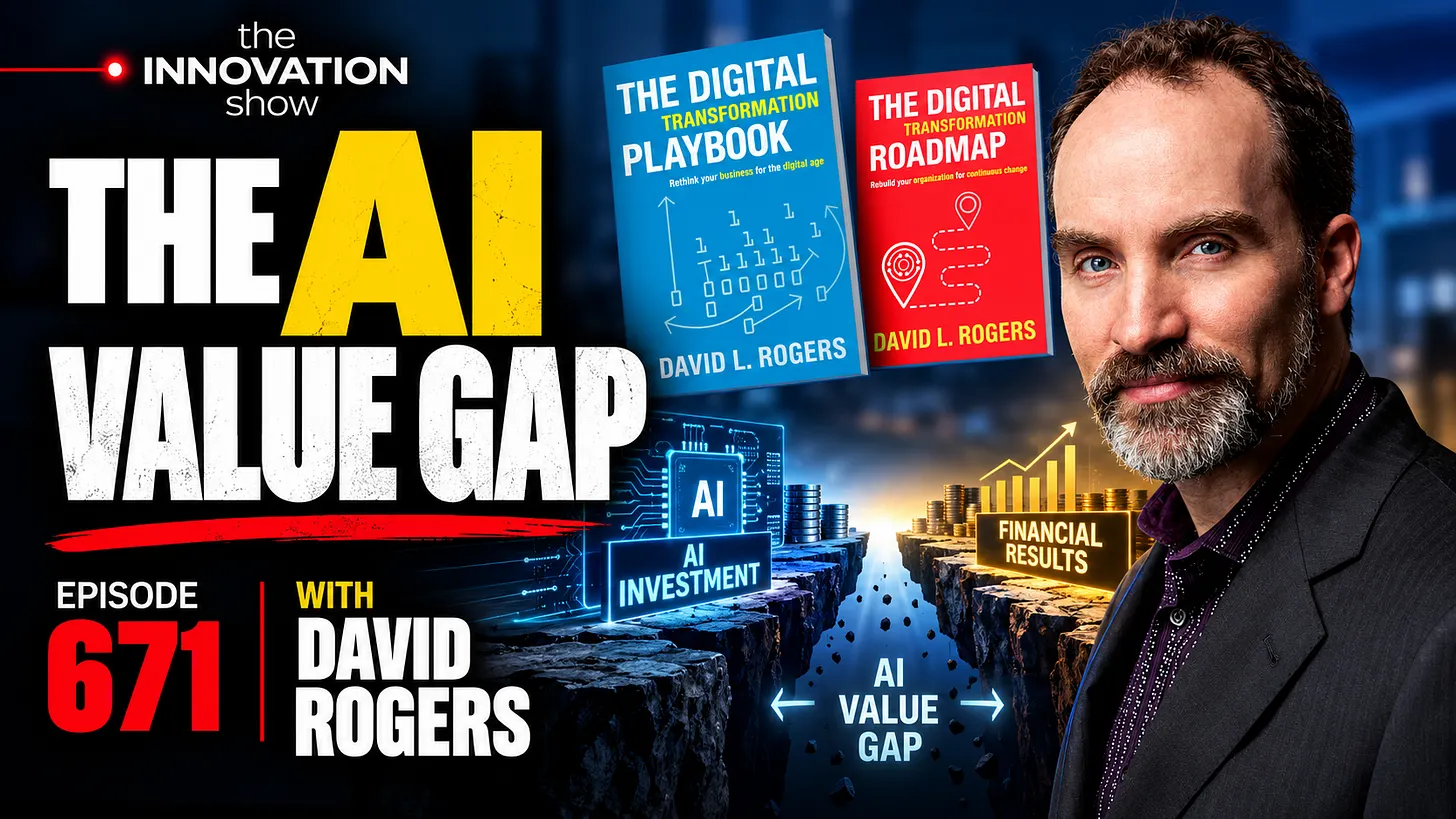
Companies are now spending real money on AI, and when the CFO asks what it has returned, the conversation gets awkward. David Rogers, author of The Digital Transformation Roadmap, explains why most of that gap comes down to strategy. A minute saved on a routine task disappears into the working day, and the same minute saved at a bottleneck can change the economics of a business. David shares his AI value equation, in which technology, adoption and strategic alignment multiply, so if any one of them falls to zero the value collapses. He explains why Netflix aims its AI at keeping customers, and why Westlake, which makes chlorine, and Givaudan, which makes fragrances, need completely different AI strategies even though both are chemical companies. He closes with four steps that tie any AI project to the income statement before it starts.