

TL;DR: Palaeontology has a name for creatures that turn out to be alive after we have written the obituary, and a second name for the lookalikes that fool us into thinking the original came back. Nokia portrayed both at the same time, which is why so many of us get the Nokia story wrong.
“More than a third of all mammals that allegedly were lost to time in the past five hundred years have since been rediscovered.” — Samuel Arbesman, The Half-Life of Facts
All Aboard the Banana Boat

On 15 June 1918 the SS Makambo struck a rock off Lord Howe Island, a speck of Australian territory about 600km east of the mainland. The ship sat wedged there for nine days while the crew made repairs. To lighten the load, the crew threw a cargo of bananas overboard, and the ship’s black rats made it ashore amidst the floating banana crates.
The island had never had a mammalian predator. Within a decade the rats had wiped out five bird species and at least thirteen species of insect.
One of those insects was the Lord Howe Island stick insect, once so abundant that fishermen used it for bait. Flightless and slow, it made easy prey, and by 1920 the species was declared extinct.
About 20km away from the island is a bare volcanic sea stack called Ball’s Pyramid. Almost nothing grows there. In 1960 climbers found the dried remains of what looked like the extinct insect, and nobody followed it up for four decades. When researchers finally went out in 2001 to verify their existence, they found twenty-four living stick insects on a single shrub.
Here is the part of the story that matters most for the business application. The survivors on Ball’s Pyramid looked slightly different from the museum specimens collected on Lord Howe a century earlier. Nobody could yet say whether these were the genuine descendants of the Lord Howe population or a related species that evolved to resemble the original. It wasn’t until 2017 that researchers confirmed that they were the same species. Palaeontologists have a term for this.
A Lazarus taxon refers to a species that vanishes from the fossil record, sometimes for millions of years, and then reappears, either in later rock or as a living animal.
Palaeontologists have a second term, a much more amusing one, and one we can also use for business.
The Impersonator
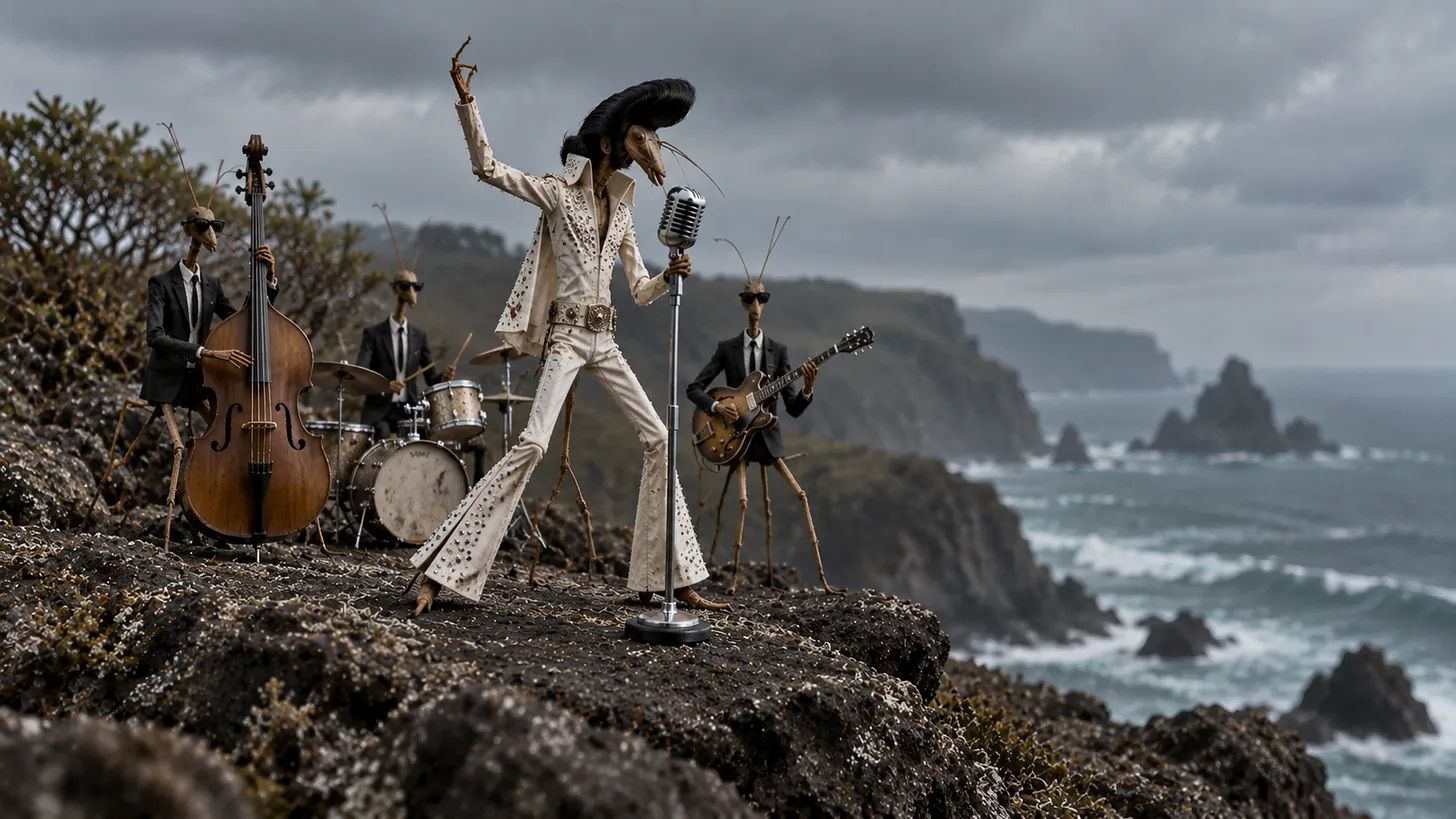
In 1993 palaeontologists noticed that some apparent resurrections in the fossil record were nothing of the kind. A species would disappear, and something that looked very like it would show up later. On closer inspection the later creature turned out to belong to a different lineage entirely. It had evolved the same shape through convergent evolution, so the original extinction was real and the reappearance was a lookalike.
They called it an Elvis taxon, because the King is dead (baby) and the man in the white suit at the wedding is not him.
So palaeontology gives us two questions to consider when anything appears to have come back from the dead. Is this the descendant, or is it an impersonator?
Nokia: Both at Once
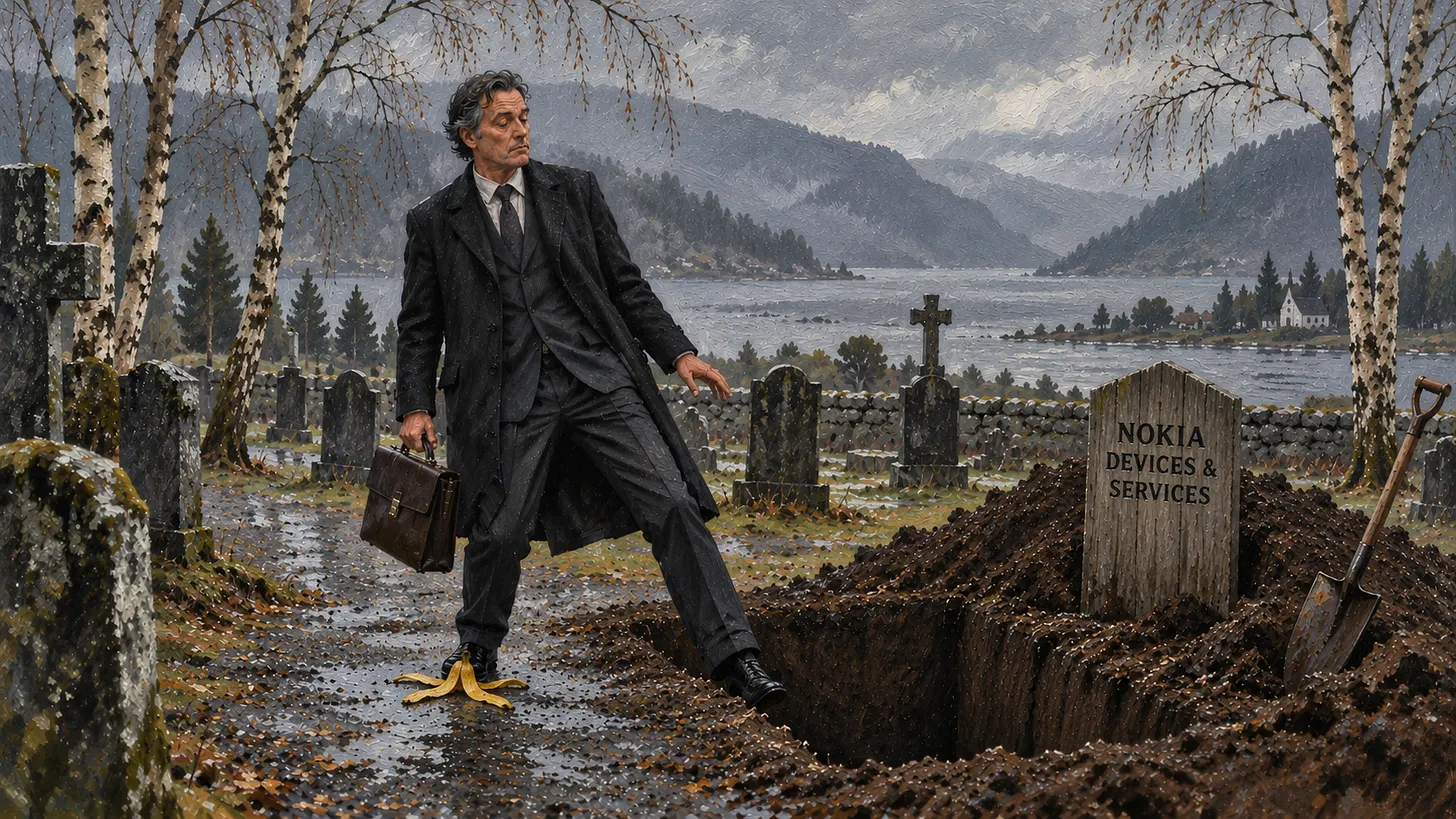
“We had one foot in the grave and the other on a banana peel.” — Risto Siilasmaa, Transforming Nokia
Most of us remember how the Nokia story ended. Apple launched the iPhone in 2007, Nokia bet on the wrong software, and the handset business bled to death. Over the nine quarters before mid-2013 the company posted operating losses of some €4.1 billion. In 2014 Microsoft bought the devices and services business for around $7.2 billion, roughly €3.79 billion for the operations plus €1.65 billion for a patent licence, and then wrote most of it off within two years. That was the funeral, and most of us assumed Nokia was six feet under with Blockbuster and the graveyard of disruption poster children.
When I wrote Undisruptable, I included that as the story of Nokia, another giant that misread the smartphone and paid for it, and that’s where I left it. The story was accurate as far as it went, but it did not track the company past the point where the headlines stopped. That is the ordinary way these narratives circulate. A case study hardens into a cautionary tale and almost nobody goes back to the company a decade later to ask what happened next, so let’s do that now.
“Nokia hasn’t made a phone in over a decade, and it’s still making billions from every one sold.” - Rob LeFebvre
On 1 July 2013 Nokia bought out Siemens’ half of Nokia Siemens Networks with borrowed money, and nine weeks later, on 3 September, it announced the sale of the phones to Microsoft. Risto Siilasmaa, the chairman who did both deals, shares in his book, Transforming Nokia, that his finance director had floated the idea that the networks business could become the core of a new Nokia if the devices business was sold off. Microsoft bought that failing part, because it too missed the smartphone revolution, and the networks business became the whole of Nokia. But that was far from the end for Nokia.
By 2024 mobile networks was Nokia’s largest segment, selling radio access and 5G equipment in direct competition with Ericsson and Huawei. Alongside it sits Nokia Technologies, which licenses the patents accumulated during the years of handset dominance and collects a payment from nearly every smartphone maker on earth including Apple. The Nokia that survived is a descendant of the original, a true Lazarus taxon, living in a habitat almost none of its old customers ever look at.
And then there is the Elvis Nokia. In May 2016 a group of former Nokia executives founded a company called HMD Global, in Espoo, and took out a ten-year exclusive licence to put the Nokia name on phones. For a decade Nokia handsets were back on shelves.
It was a corporate Elvis taxon. The phones carried the name and the look, and were built by Foxconn to HMD Global’s designs. HMD eventually ended Nokia-branded smartphones in March 2026 and launched its own brand, keeping the Nokia name on feature phones under an extended licence.
Nokia, then, gives us both taxa at the same time, which is exactly why so many of us got the story wrong. We looked at the shelf and saw the impersonator, and presumed the impersonator’s fortunes to be the original’s.
We are prone to write the obituary at the moment a consumer product disappears, because the consumer product is what we could see in our consumer world. The lineage often walks off in the other direction towards B2B, the enterprise, the infrastructure, the licensing, the government contract, like the twenty-four surviving stick insects on a rock where nobody was looking.
Before we file a company alongside Blockbuster, it is worth checking whether we are mourning the descendant or the costume.
Ahem, thank you very much!
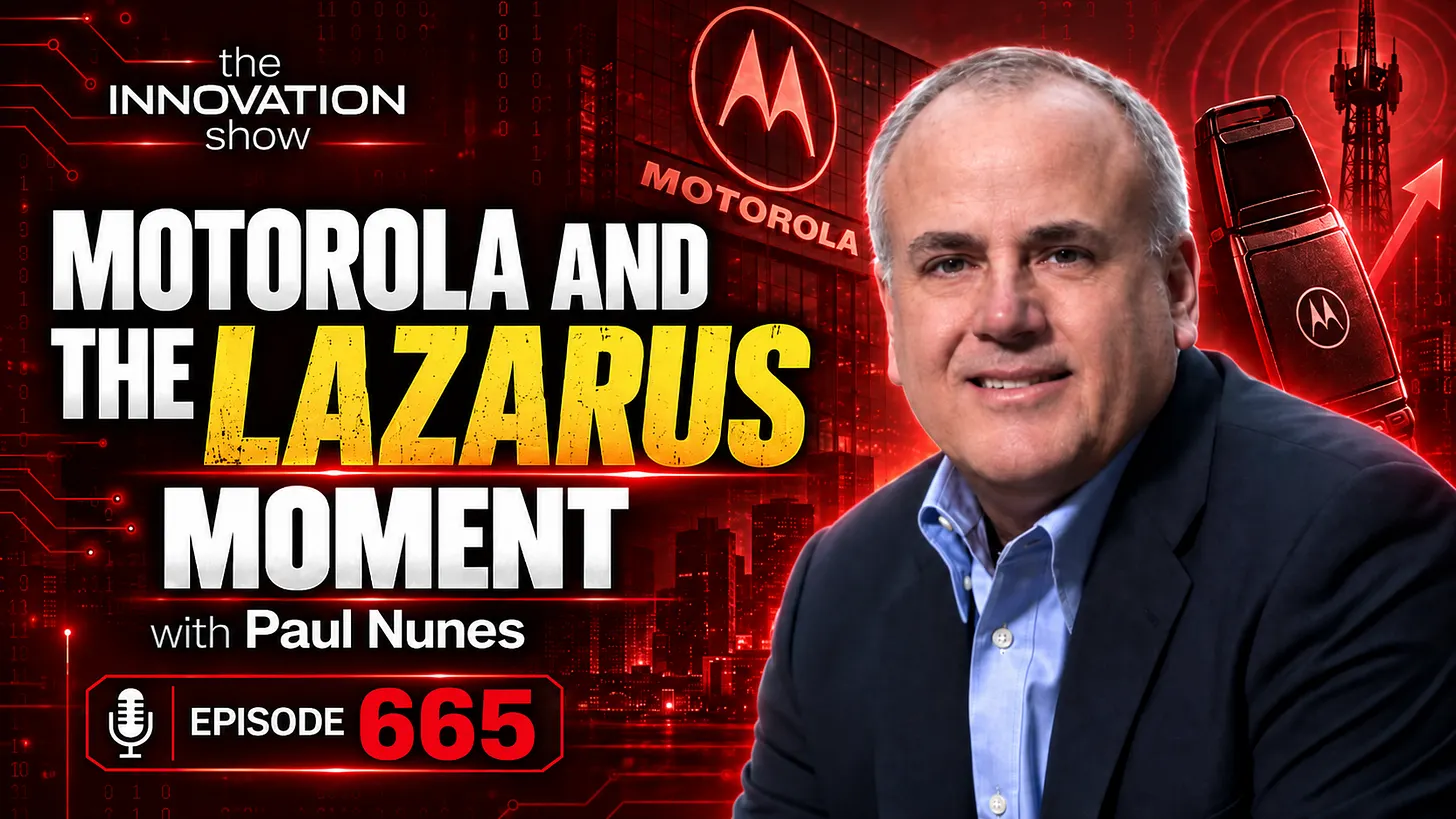
On this week’s Innovation Show we are joined by Paul Nunes, co-author of Jumping the S-Curve and Big Bang Disruption. It drops Friday.
Paul has been collecting the corporate case studies for decades, and the one he brings us is Motorola, a company most of us buried long ago. Along the way he offers a definition of a failed company worth carrying around, one that loses more in its afterlife than it ever made in profit, explains why restoring a company is like restoring a classic car, and argues that the talent curve is the S-curve companies notice last.
We close with a disagreement about whether companies are losing the white space where innovation lives. Tell us who you side with at admin@theinnovationshow.io and we’ll send the best answer one of Paul’s books.