

TL;DR: The greatest risk in strategy is rarely missing a signal, but acknowledging the signal but then deciding you've seen something like it before. Past success doesn't just shape how organisations act, it also shapes how they interpret. When a new signal arrives, it gets filed under an existing category. And once it's filed, the urgency disappears. Nokia didn't fail because it was blind to new trend, but because it was experienced. This Thursday Thought is inspired by our long-form series on Nokia and studies on Blackberry.
The Lenses We Stop Seeing
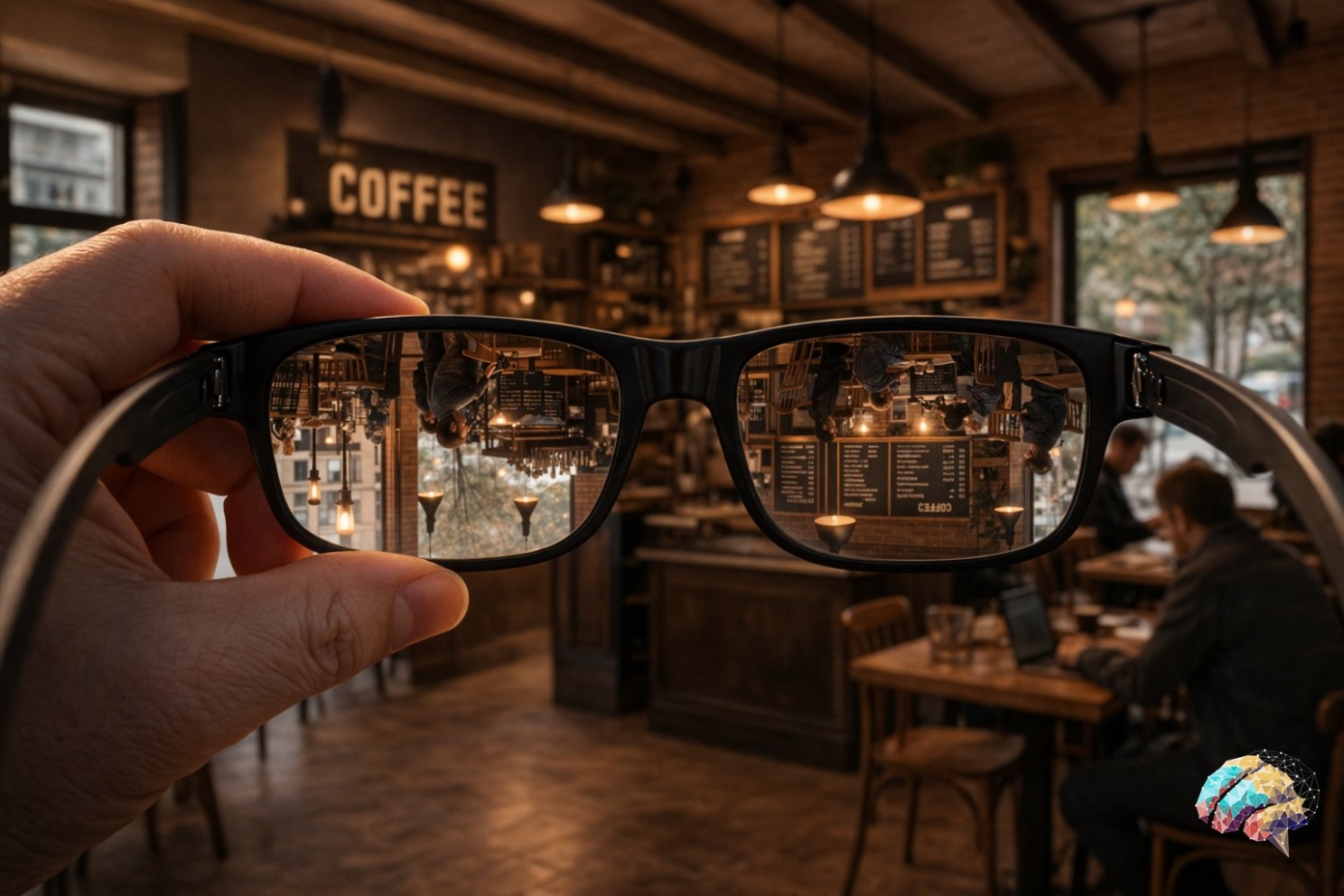
“Rather than being an interpreter, the scientist who embraces a new paradigm is like the man wearing inverting lenses.” - Thomas Kuhn
In the late 19th century, a psychologist named George Stratton wore a set of glasses that inverted his vision, flipping the world upside down. At first, he couldn’t function and even the simplest of tasks were disorienting.
But after only a few days, his brain adjusted. He settled into the inverted world and it began to feel normal. His movements corrected and what had once felt disorienting became familiar.
When he removed the glasses, the real world felt wrong again.
In what is known as prism adaptation, people wear lenses that shift their visual field sideways. At first they misreach and misjudge. Then, within a short timespan, the brain recalibrates and the distortion settles.
Colour perception adapts in a similar way. Participants wearing tinted lenses initially see the world as heavily red or blue. Over time, the shift disappears into the background because the brain has learned to compensate.
We like to think we see the world as it is.
We see it through filters our brain has learned to trust. Those filters are constantly adjusting, quietly correcting, making the strange feel normal.
Over time, we stop noticing we are wearing a lens at all. And once the lens disappears, we stop questioning and start assuming and there can be a real danger in that.
What’s true for visual perception is also true for organisational perception.
The Experience Trap

“Today’s success may actually increase the chances of tomorrow’s failure.” — Michael Tushman and Charles OReilly, Winning Through Innovation
The filters through which an organisation interprets new information are not neutral. They are shaped by everything that has worked before from the decisions that paid off, or the moves that were vindicated, to the competitive threats that were absorbed.
Tushman and O’Reilly called it the Tyranny of Success. The very alignment that makes an organisation efficient (strategy, structure, people, culture and processes all pulling in the same direction) can become the very trap that eventually snares it. Decline is rarely due to complacency, nor laziness, but through the quiet, compounding logic of doing what has always worked.
Experience and pattern recognition save time, compress complexity and help leaders cut through noise.
Then one day, the environment shifts in a way the familiar pattern can no longer account for.
The dangerous moment is rarely ignorance. Let’s call it confident misclassification.
Nokia learned that the hard way.
A Pattern That Worked
“One theme common to all these failures is that the decisions that led to failure were made when the leaders in question were widely regarded as among the best companies in the world.”— Clayton Christensen, The Innovator’s Dilemma
The easy version of the Nokia story is that they missed the iPhone. Caught asleep. Blindsided. That version is comforting because blindness is a tidy explanation, but it lets us off the hook and we can’t learn from it.
Recent guests on the Innovation Show, Timo Vuori and quy huy interviewed over a hundred Nokia insiders from board members to middle managers and what they found is where the lessons lie. Nokia didn’t miss the signal, they clearly saw it.
Last week’s guest on the show, Timo Partanen was a strategy and market intelligence executive inside Nokia from 2001 to 2009. This was exactly the period when the iPhone arrived. He was one of the executives who presented the threat of Apple to Nokia’s leadership team.
“The announcement of the iPhone wasn’t the big news as such,” he told me. “It was very much expected. Something like this is coming one day.”
To understand what happened next, you have to go back a few years.
The Razr File
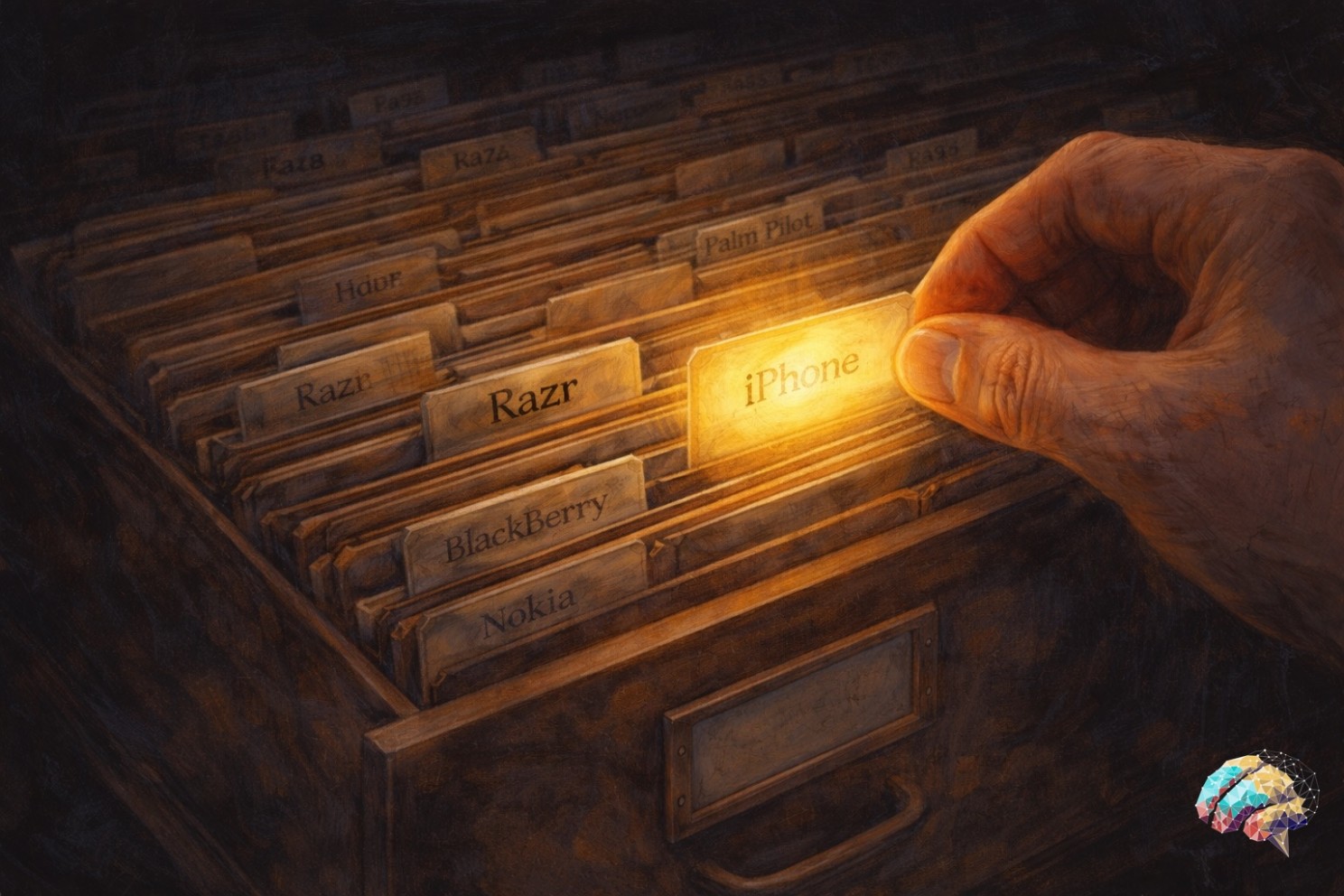
“It's not bringing in the new ideas that's so hard. It's getting rid of the old ones.” – often attributed to John Maynard Keynes
Before the iPhone, there was the Motorola Razr. It didn't redefine computing like the iPhone, but it did change what people valued in a handset. Thinness signalled status and design said class.
Timo shared exactly what happened: “Nokia had identified the miniaturisation trend, but we misinterpreted it.” Nokia interpreted that people wanted smaller phones, but as it transpires it was thinner phones they wanted, not smaller ones! Once Nokia realized their misinterpretation of that trend, they quickly created a portfolio of thin phones across different price points. They could move fast and had existing partnerships, capability and distribution and they quickly killed off the Razr threat.
That Razr experience didn’t just solve the problem. It added a new set of lenses. When the iPhone arrived, Nokia recalled the Razr pattern. “We might be late with this kind of product,” Timo recalled, “but we have something in our pipeline. We are able to use our scale, our distribution, and Apple will not be growing as fast as predicted.”
Historically, whenever Nokia had been a second mover, they relied on its scale and efficiencies to fast follow. They had successfully dampened the Razr revolution, so when they saw the iPhone, they looked for the Razr file.
With previous shifts, they had time to react. But this shift was different. The iPhone wasn’t a better phone (in fact it was a worse phone). The iPhone changed the basis of competition entirely. It was a shift in form factor from hardware to software, from product to ecosystem and from device to experience.
Nokia filed the future under the past and used whatever lenses had been successful in the past. Clayton Christensen called the instinct cramming, taking something genuinely new and forcing it into an existing model rather than letting it reshape the model itself. The result feels like progress. Resources are deployed, activity increases, but the underlying frame doesn’t change. The new thing gets domesticated and crammed into the existing frame.
Mike Lazaridis co-CEO at BlackBerry saw it too. When he cracked open the original iPhone, he told his engineers, “they’ve put a Mac in this thing”. He understood exactly what he was looking at and he knew it was a new frame.
Yet the response that followed was shaped by the same lenses Nokia wore. They saw their strength in the physical keyboard, the secure network and the enterprise customer. A model that had been so right, for so long, that it had stopped feeling like a model at all.
It had become simply the way things were and it had become the way they saw the world.
Filing the Future Under the Past
“We don’t see things as they are. We see things as we are.” — Anaïs Nin
We tend to think failure comes from not seeing. More often it comes from seeing, but misclassifying. Recognising something new, but processing it through an existing lens. This is what I mean by filing the future under the past.
What makes Timo’s account so striking is not just what Nokia saw, but how they saw it. The intelligence team had prepared a detailed document on the iPhone threat and distributed it widely. But it got read through the existing lens. “Nokia being a hardware-focused company,” Timo told me, “middle management read that document and thought, okay, iPhone’s hardware is not that great, we are doing well here. They picked the message they wanted to hear from that.”
This is not a failure of intelligence or information. The Nokia engineers had the information. So did BlackBerry’s. What was missing was a new frame that could hold the data without domesticating it.
Timo described what it felt like to carry signals that didn’t fit. “If you are telling messages that don’t resonate with the managers, they listen to us because we are the institutionalised bearer of that message. But they don’t act on those.” And when someone promised a fix (on touchscreen UI, on the app store, on usability) the intelligence function accepted that reassurance.
The future arrived in the building, but it got edited on the way in.
The risk isn’t that we miss a signal. It’s that we recognise it and collectively conclude, without anyone quite saying it out loud, that we’ve seen it before.
We’ve been here. We know how this plays out.
The Thursday thought worth sitting with is not whether you’ve seen something like it before, but if you’re seeing it through the right lenses.
Speaking of new lenses, this week’s guest offers a new set of lenses on negotiation.
Barry Nalebuff is a professor at Yale and co-founder of Honest Tea, which he eventually sold to Coca-Cola. His book Split the Pie argues that most negotiations fail not because people are greedy or difficult, but because they’re negotiating over the wrong thing entirely. They’re arguing over the price when the real question is how to divide what’s only created if both sides agree. He calls that the pie.
Once you see it, you can’t unsee it.
For those interested in the Nokia series, the latest is with Timo M. Partanen