
TL;DR: When armies couldn’t break a wall head-on, they dug under it instead. The tactic is called undermining. Companies get undermined the same way, and often by their own people. Intel's shift from memory chips to microprocessors was dug out by middle managers following the company's own budgeting rule, years before the top adopted it. When Intel later attacked video conferencing from the front, in full view of the industry, it spent $750 million the way an army wastes stone on a wall that will not break.
"No enterprise is more likely to succeed than one concealed from the enemy until it is ripe for execution." Niccolò Machiavelli, The Art of War (1521), Book VII
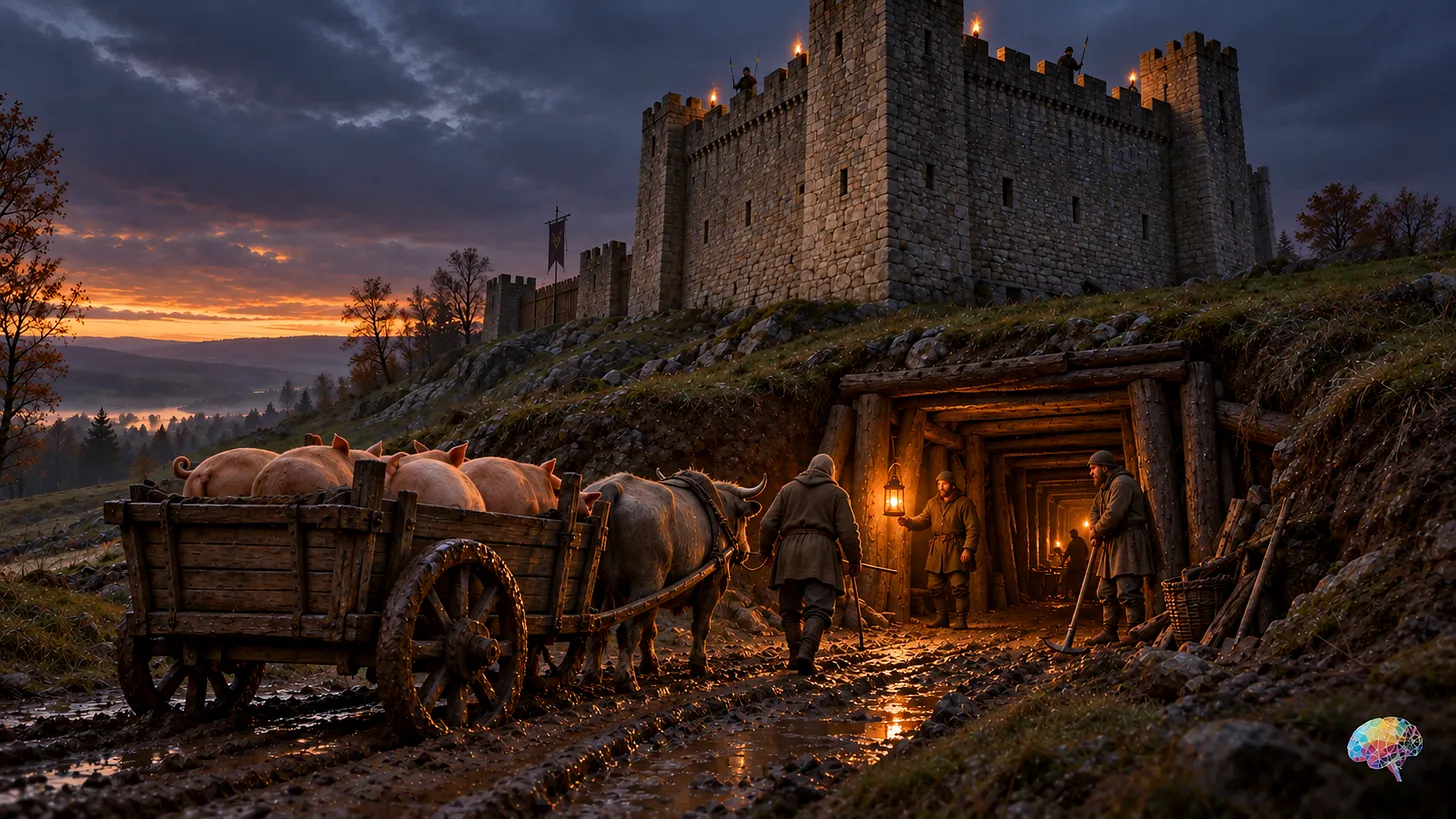
In 1215 King John of England launched an attack on his very own Rochester Castle. The castle had fallen prey to barons who had turned against the King. John’s catapults broke the outer wall, then pounded the inner tower for weeks, but the tower stood firm, as it had for nearly a century. So the army turned to undermining. While the defenders fixated on the army in front of them, the King’s miners dug underground towards one corner of the tower, carrying away the soil that held it up and propping the weight on timber.
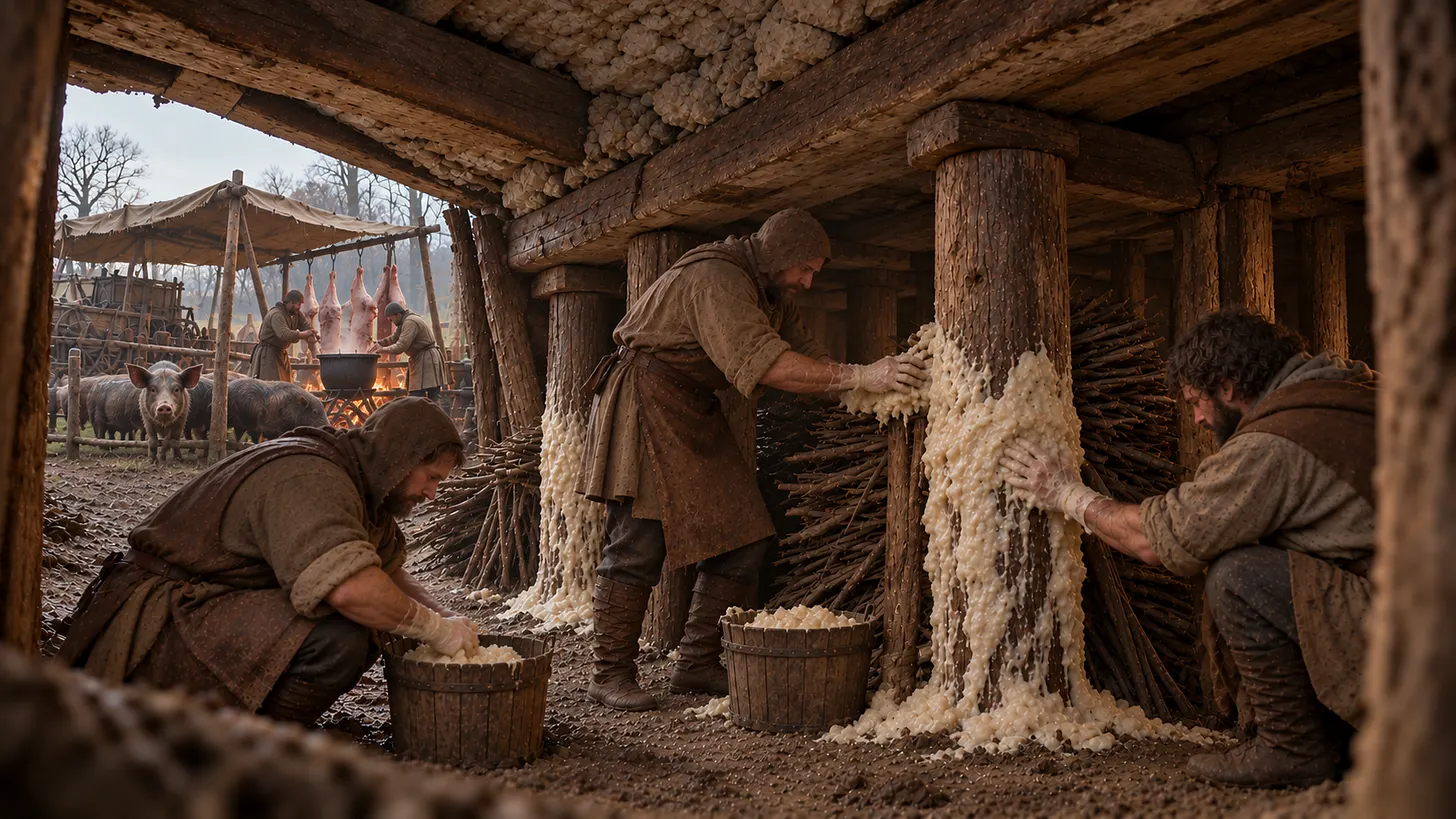
Weeks later John wrote to his chief minister for forty of the fattest pigs, “of the sort least good for eating.” The troops packed the pig fat around the props and set them alight. When the timber burned through, the corner of the tower came tumbling down, after weeks of frontal assault that had left no mark on it. Most retellings remember the sacrifice of the pigs. A handful of men had done the work underground and unseen, until the ground gave way.
The Origin of the Word Undermining
The word undermine entered English around 1300 and meant exactly what John’s miners did, to dig beneath a wall and bring it down from its foundation. In a figurative sense, it means to weaken someone by stealth. That version followed about a century later, and it is the only sense most of us know today. The literal variety never went away. Anything is undermined when it is weakened from below.
Companies get undermined the same way, and often by their own people. Business undermining is strategy changed from below, by people with no authority over the official plan. They dig out of frustration, or because they believe they are doing right by the company, and they do it through the decisions they already control.
Robert Burgelman, our guest on last week’s Innovation Show, has studied Intel from the inside for decades. Intel’s own people have undermined it from below more than once. When its leaders went on the attack, they went from the front.
The Tunnel Under Intel
“Who gets the money and who gets promoted.” Robert Burgelman, on how he reads a company’s real culture, The Innovation Show EP 668 (2026)
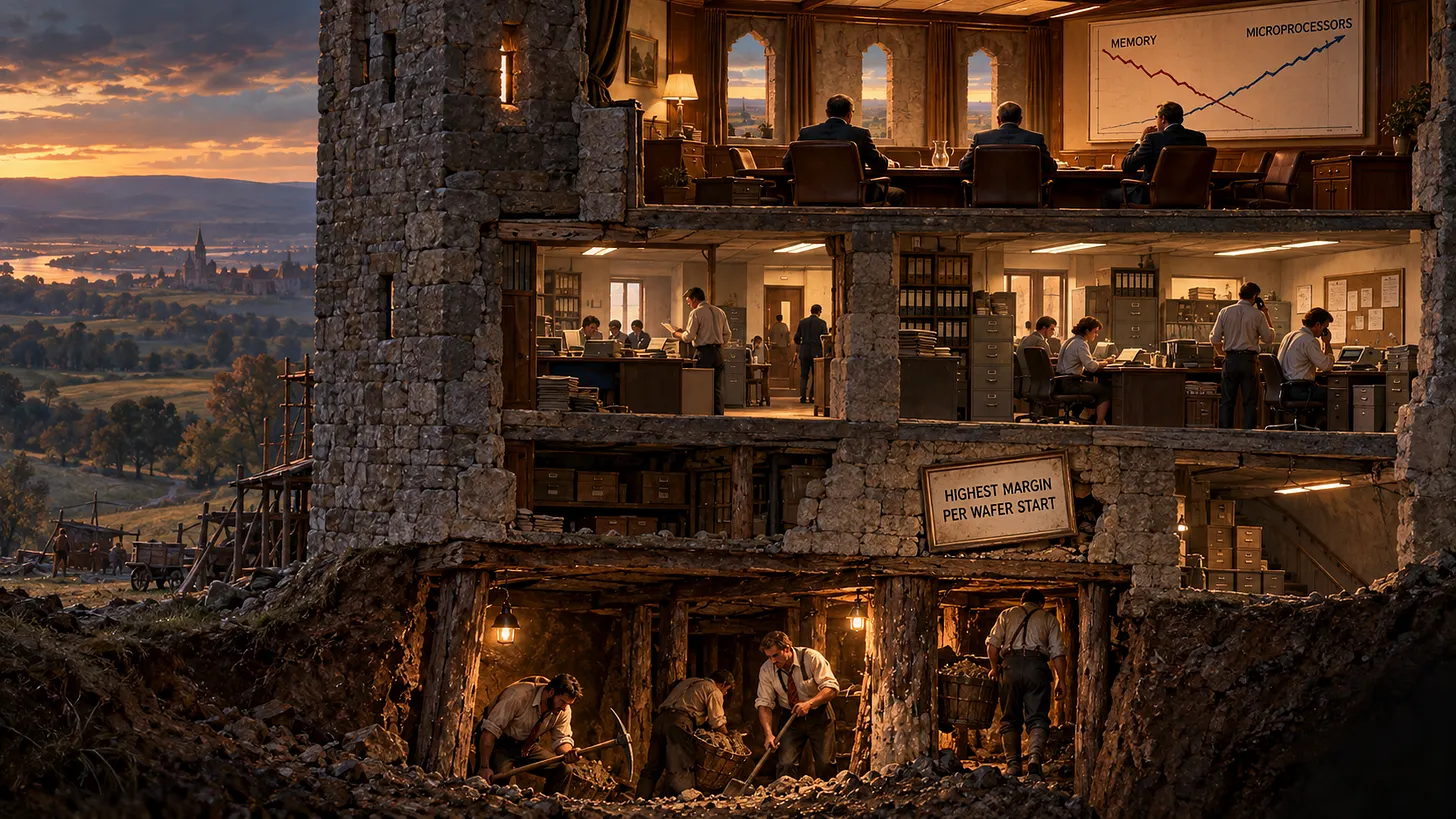
Middle managers dug the largest strategic mine in Intel’s history the same way. In the 1970s Intel was a memory company. Its mainstream business was memory (DRAM), and its microprocessor began as a side tunnel, a chip for a desktop calculator made by the Japanese firm Busicom. One senior executive later admitted they had taken the work on because they thought it would help them sell more memory.
Intel had a rule for allocating factory resources. Chips are made in batches on discs of silicon called wafers, and whichever product earned the “highest margin per wafer start” got the next batch. As memory chips turned into commodities and their margins fell, microprocessors continued to sell as specialty products at higher prices. Middle-level product planners and finance people applied the resource allocation rule, and the memory business kept losing out to microprocessors. For four generations of memory chips the memory people promised to win the capacity back next time but never did.
Top management, meanwhile, kept allocating research money as though Intel were still in the memory business, and kept the best manufacturing engineers on memory. By 1982 the gap between what the executives believed and what the factories were doing was enormous. Even after the revenue lines crossed, it took two or three years for the leadership to accept that microprocessors had become the new mainstream. In 1993 Fortune quoted Grove saying that “there is at least one point in the history of any company when you have to change dramatically”, an idea he and Burgelman would later develop into the strategic inflection point. “Miss the moment”, Grove said, “and you start to decline.” Intel’s moment had come and gone on the factory floor years before the boardroom realised.
The rule had a history of its own. A company that sees itself as a leading-edge technology firm measures that by the premium customers will pay over cost, so margin per wafer start was Intel’s culture in a budgeting formula. The company’s identity dug a tunnel under the memory business, applied faithfully by people in the middle who were doing exactly what the rule guided them to do. Nobody was hiding this tunnel the way King John’s miners hid theirs. The barons defending the castle fixated on the threat in front of them and never looked down, and a budgeting formula is the last place a chief executive thinks to look for a change of strategy.
The Landing in Normandy
“The worst policy of all is to besiege walled cities.” Sun Tzu, The Art of War, Chapter III, translated by Lionel Giles (1910)
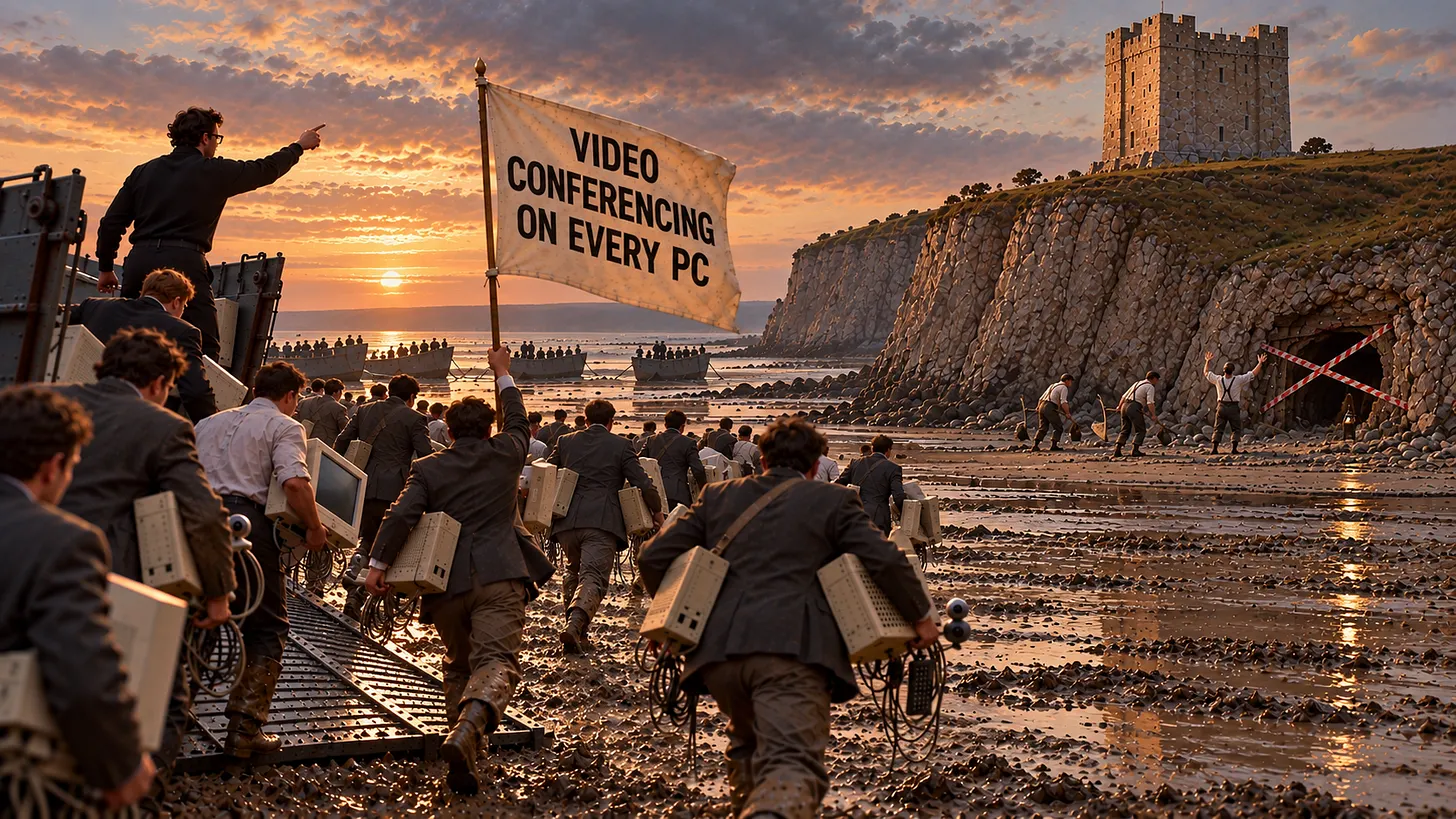
Less than a decade after its memory exit, Intel attacked a new market from the front, in what Grove himself would later call “the landing in Normandy approach”. In 1993 Andy Grove became convinced that video conferencing on the PC was going to be enormous. He took Pat Gelsinger, who would later run Intel, out of processor development and put him in charge of a venture called ProShare. Gelsinger soon found buyers in healthcare and mortgage lending who wanted exactly what ProShare offered, and he wanted to win the business one niche (tunnel) at a time.
Grove, for his part, wanted every PC maker to adopt video conferencing at once. This was the frontal assault that had brought the 386, the 486 and the Pentium processors to dominance, while the whole industry watched. Gelsinger ended up running a skunk works inside his own venture to gather evidence on the markets his chief executive had ruled out, digging under Grove in order to dig under the market.
The assault went ahead without the ground it needed. Video conferencing on a PC depended on fast lines that the telecoms companies controlled and were slow to lay. After five years and about $750 million, Intel scaled ProShare back, and it never brought in more than roughly $30 million. Grove admitted afterwards that, given another go, Intel would have focused on vertical markets rather than staging an invasion. It had “brought a style and conceptual approach to an area in which it did not work.”
A leader usually arrives with his strategy already formed and runs the place with it, since the job leaves little time to build another. When a leader like that accepts a new idea, the method that made him successful tends to come along with it.
Don’t Let Them See You Coming
“Don’t get too cocky, my boy. No matter how good you are, don’t ever let them see you coming. That’s the gaffe, my friend. You gotta keep yourself small. Innocuous. Be the little guy.” John Milton, played by Al Pacino, in The Devil’s Advocate (1997)
The show has just passed its tenth anniversary, and I have worked in change roles for almost twice as long. The thing you learn is that the idea is never enough. You cannot afford to be cocky, and you trade in favours and in credit built up over years of unseen slog. Howard Aiken, who designed one of the first computers, told a student, “Don’t worry about people stealing your idea. If it’s original you will have to ram it down their throats.”
Burgelman says the same thing in his own way. The burden of proof sits with the people doing the digging, and the rest of the organisation is entitled to ask why resources should move from a unit with certain returns to a fledgling one that will probably fail. Burgelman calls such intrapreneurs “tragic heroes”, in the Greek sense. To keep going they sometimes have to break the operating model, and they mostly pay for it later (often dearly). They are the pigs in this story as much as the miners. The fire that brings the wall down runs on their fat, and no pig gets to enjoy the sight of the tower falling.
He shared one more detail, from a manager he once spoke with. The best indicator of autonomous initiatives in a company, the man told him, is the car park on Friday nights and Saturday mornings. That is where the miners are, in the hours nobody at the top is watching, and by the time a chief executive notices the corner of the tower coming down they have usually been digging for years.
This Week on The Innovation Show
Alexander Osterwalder is back, and this time the subject is how to use AI to augment value proposition design without turning out slop. His rule from the field is to do the human work first. Build the customer profile, the value stack, the differentiation and the buying decision map, test each one against real customers, and only then hand the ingredients to the machine. Feed it high-level fuzz and you get high-level fuzz back. Watch the full episode here.
There’s a digital copy of Value Proposition Design up for grabs. On the canvas behind Alex in the video there is a mountain. What sits at the top of it? Email admin@theinnovationshow.io with your answer and you’re in the hat.
Alex is also giving listeners 20 per cent off the Strategyzer platform with the code INNOVATIONSHOW20.
If you missed last week’s episode with Robert A Burgelman, the conversation this piece grew out of, here it is.
Aidan McCullen is a keynote speaker and 2025 Thinkers50 Innovation Award winner. Book him at https://aidanmccullen.com