TL;DR: The ideas that change organisations rarely arrive from where anyone expected them. A product manager who cold-called Apple on a hunch. A CFO who said the unsayable in a boardroom full of people who already knew it. The signal is usually already inside the building. The question is whether the organisation is built to hear it.
“Games are won by players who focus on the playing field - not by those whose eyes are glued to the scoreboard.” - Warren Buffet
In 1996, NeXT Computer was losing badly on every scoreboard that existed.
Steve Jobs had burned through tens of millions of dollars of his own money. He had burned his relationships with investors, co-founders, and just about everyone. The company had shipped beautiful, overpriced hardware that almost nobody bought. Jobs had spent eleven years trying to prove he was better than Apple, the company he founded, the company that fired him, the company he was watching flounder just like NeXT.
His personal vendetta against John Sculley, the Apple CEO he had recruited and who had ultimately ousted him, had fueled his drive to build NeXT. But Sculley was long gone now and Jobs’s attention had shifted to Pixar. NeXT, meanwhile, was on the verge of ruin, having given up on Hardware, it was focused on building what it called Web Objects.
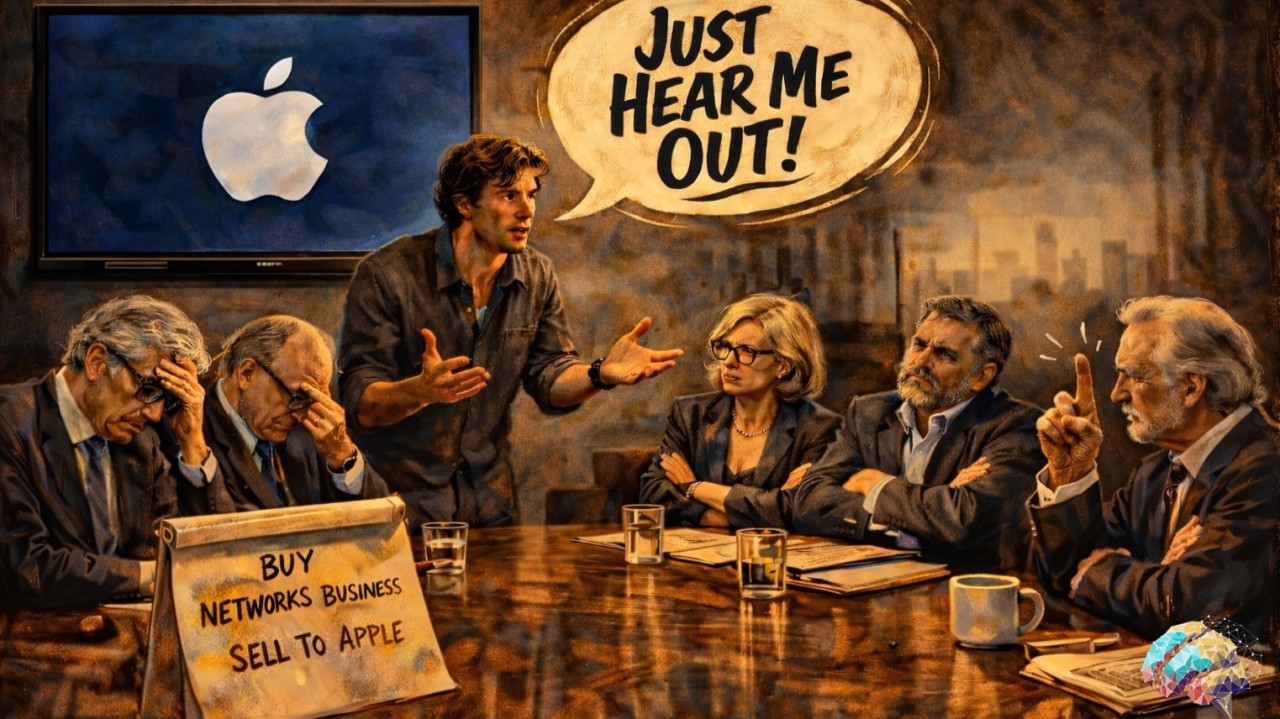
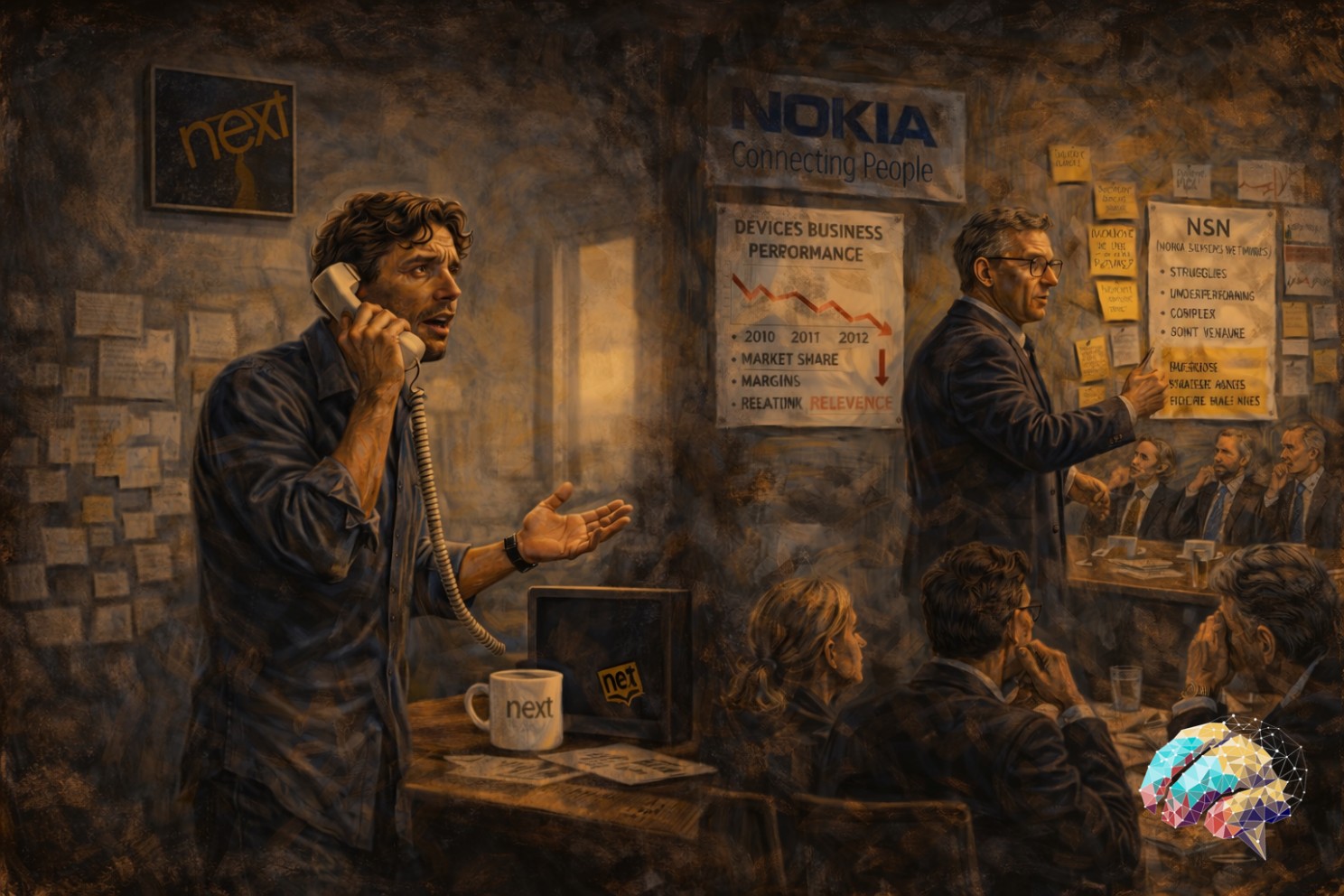
It was in this context (a struggling start-up, a founder who had checked out, a team watching the walls close in) that a product manager at NeXT named Garrett Rice piped up in the lavish common space of the Redwood City offices and said what nobody else had thought (or perhaps dared) to say.
“Why don’t we just frickin’ call Apple?”
A Dragon’s Hoard
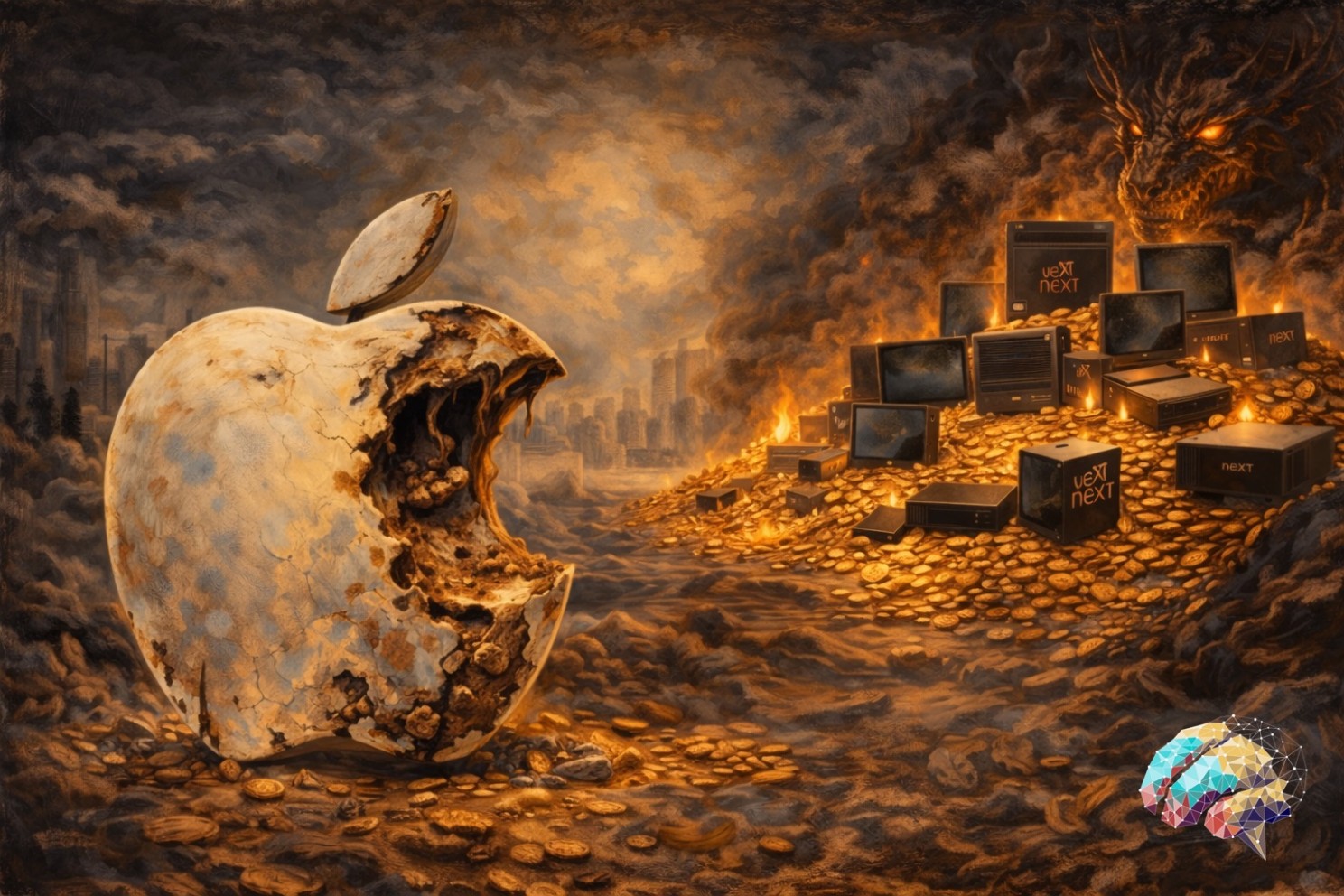
“That ship is loaded with treasure, but there’s a hole in the ship. And my job is to get everyone to row in the same direction.” — Gil Amelio
Apple was in dire straits of its own.
It had lost its edge, its market share, and its sense of direction. Gil Amelio, Apple’s beleaguered CEO, had tasked Ellen Hancock, his Chief Technology Officer, with a mission that felt close to impossible. She had to find Apple a new operating system before the company ran out of road. Ellen had months to evaluate the options and save the platform that millions depended on.
Her frontrunner was BeOS, the operating system built by former Apple executive Jean-Louis Gassée. Gassée, sensing he had leverage, played hardball and reportedly told negotiators, “a man in the desert doesn’t bargain on the price of water.”
Inside NeXT, the team watched this unfold with a mixture of disbelief and indignation. They had spent a decade building something they believed was genuinely extraordinary (what Garrett Rice called “a dragon’s hoard of technology”) and Apple was about to spend tens of millions on what they saw as a pale imitation.
Garrett was an English major who had once volunteered to work at NeXT for free just to be near it. He had no title that gave him the right to do what he did next. He walked back to his office, picked up the phone, and called Apple. He left what he later described as “one of my more inspired sales pitches” on the head of software’s voicemail. No mention of Steve. Just the technology, and a simple argument that if Apple was going to be thorough, it owed itself a look at NeXT.
The executive rang back. He was leaving Apple, he said, but gave Garrett Ellen Hancock’s number.
Garrett called Ellen and left the same pitch.
Ellen called back.
“I hadn’t even thought about that,” she later told journalist Jim Carlton.
The most consequential acquisition in the history of the technology industry had just been set in motion. By a product manager. On a hunch!
Nobody at the top had thought of it. A product manager had.
The CFO Who Said the Unsayable
"The most courageous act is still to think for yourself. Aloud." — Coco Chanel
A few years later and a world away, Nokia was staring at its own kind of ruin.
By 2012, the devices business was bleeding. The Microsoft Windows Phone strategy was unravelling in public. The operating losses were mounting quarter by quarter. And the option that would eventually save the company did not arrive from a strategy team, an innovation lab, or an expensive consultant.
It came from the CFO.
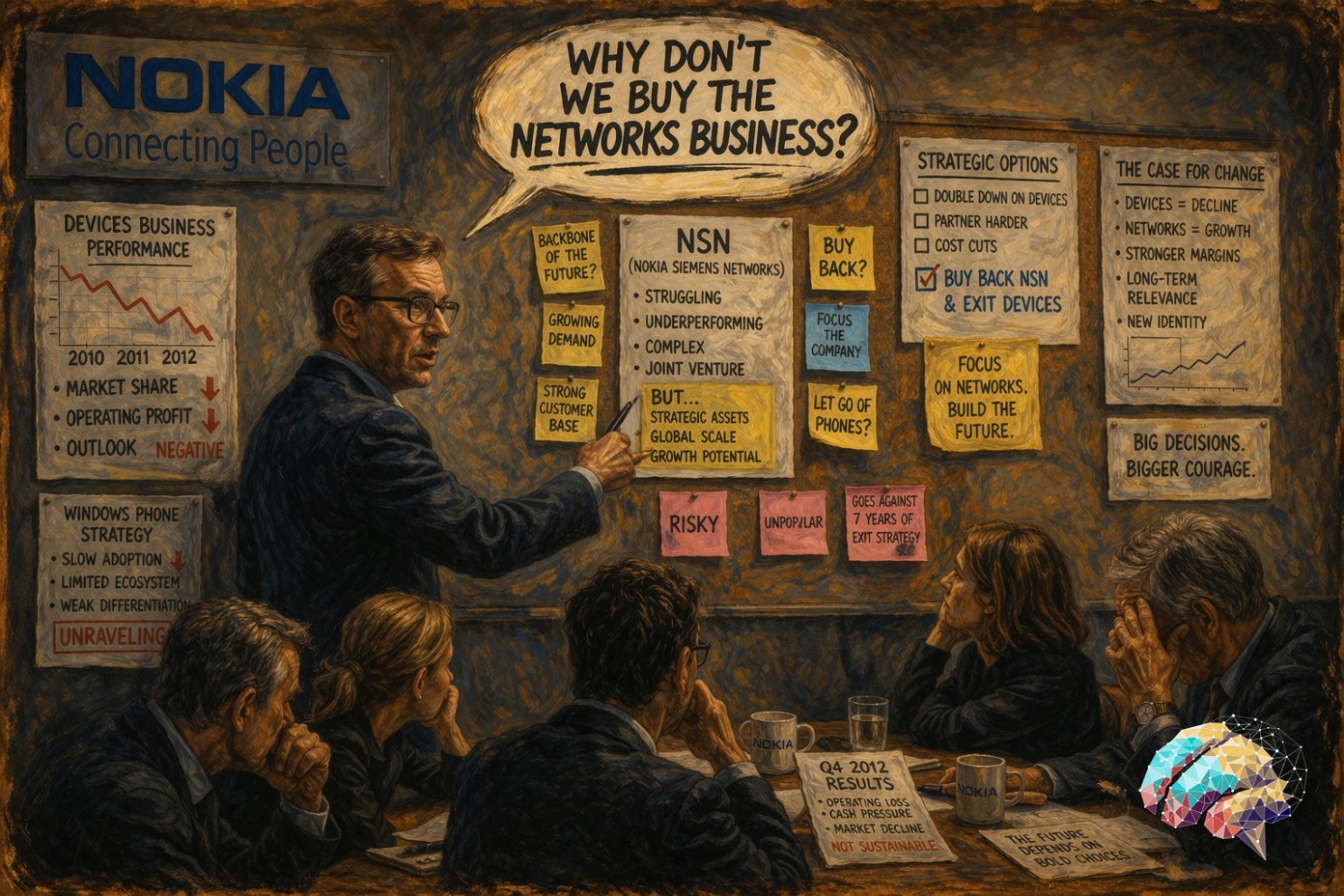
He was the first person to say, “what if we bought back the Nokia Siemens Networks (NSN) business and let go of the phones entirely?”
It was the least popular idea imaginable. NSN was struggling. The Nokia board had spent seven years trying to exit the joint venture, not double down on it. But once the question was on the table, it could not be unheard.
Professors Timo Vuori and quy huy spent years interviewing over a hundred Nokia insiders to understand how the organisation moved and failed to move during its most critical years. What they found was a culture so saturated with fear that middle managers routinely filtered out reality before it ever reached the top. One manager described knowing his deadline was impossible and staying silent in the meeting because, in his own words, “the thought of challenging them made my heart race.”
In that environment, the CFO’s question was not a strategy. It was an act of courage.
This is exactly the problem that Jonathan Brill and Stephen Wunker set out to solve in AI and the Octopus Organization. As you will find out, both have the scar tissue to prove why it matters.
What These Two Stories Share
When Stephen Wunker was at Psion in 1999 (the company that had invented the PDA) there was a lone industrial designer on the team who kept raising the same suggestion. Forget the high-spec device. What if you just made a basic phone with a keyboard? Stephen and the team were chasing a glamorous, full-featured idea of a “smartphone” for big demanding clients. The designer was largely ignored. That ignored idea became the BlackBerry, which went on to dominate the smartphone market for seven years.
Jonathan Brill’s experience at HP was similar, except he was the one ignored this time. In 2009 he brought the case for capacitive touchscreen technology to the president of the PC group and the CTO. The response was decisive. HP’s strategy was to fast follow Apple, let them build the market, then take it. The people on the ground could see the sea change coming. Leadership was disincentivised to look beyond their personal revenue windows. HP got caught out, scrambled to buy Palm’s WebOS, and it didn’t work.
Two companies, two ignored signals and two very expensive lessons in what happens when the people closest to the playing field have no way to make the scoreboard move.
The octopus, Brill and Wunker explain, solved this problem 300 million years ago. It does not centralise its intelligence in a single brain. Each arm has its own neural processing, sensing, adapting and acting without waiting for permission from the centre. When a shark bites off a tentacle, that tentacle attacks the shark on its own. The arm does not stop to seek permission from headquarters.
Jonathan draws a sharp parallel with how the US Navy is rethinking command. For decades it operated on what it calls kill chains, the president speaks, the admiral speaks, orders travel down to the sailor on the deck. Now it is shifting to kill webs, where the person closest to the action, with the information and the capability, has the right to make the call. The question every organisation needs to ask, Jonathan argues, is how do you build that same capability before the shark arrives?
The answer is not just technological. It is human. The difference between organisations that thrive with AI and those that don’t will not be which tools they bought. It will be whether they made the human transitions, through the culture shift, the process shift, the incentive shift. These shifts allow the tentacles to act independently and the octopus to navigate treacherous waters.
Nokia had the data. The iPhone threat document existed inside the company a full year before the device launched. NeXT had the technology Apple was about to buy elsewhere. Psion had the designer who described the BlackBerry. HP had the people on the ground who could sense the sea change. The signal was there every time. What was missing was the infrastructure to share it without being filtered, silenced, or edited into something palatable for the boardroom table.
Jonathan Brill and Stephen Wunker join us on The Innovation Show to explore the Octopus Organisation, distributed intelligence and how AI changes what is possible when companies are actually built to listen.
Available now wherever you get your podcasts.
The Nokia story and that insight about the CFO comes from our episode with researchers Timo Vuori and Quy Huy, who spent years interviewing over a hundred Nokia insiders to piece together exactly what happened. That series is also available on The Innovation Show.
And hear from Timo M. Partanen on the iPhone Threat Document he presented in Nokia
The NeXT story comes from a forthcoming episode of the show held for release all about Steve Jobs and his NeXT years, it is with the author Geoffrey Cain
You can preorder it here: https://amzn.to/4sjzPnZ