

TL;DR: Your competitors and critics are not always your most dangerous adversaries. The greater threat arrives wearing the face of an ally. In 1968, Stephen Karpman mapped the psychology. The 36 Stratagems named the tactic two thousand years before that. Sears, Toys R Us, and Nokia all discovered it the hard way. Eric Ries documents the pattern in Incorruptible, he joins us on this week's Innovation Show.
“Nothing is as dangerous as an ignorant friend; a wise enemy is to be preferred.” — Jean de La Fontaine

A little bird was flying south for the winter. The cold hit suddenly, and the bird froze mid-flight, tumbling into a field. A cow ambled past and dropped a pile of dung directly on top of it. The warmth began to thaw the bird out. Comfortable and reviving, it started to sing. A passing cat heard the song, dug the bird free, and ate it.
Three morals:
Not everyone who shits on you is your enemy.
Not everyone who gets you out of shit is your friend.
And when you’re in deep shit, it’s best to keep your mouth shut.
This Substack is reader-supported. To receive new posts and support my work, consider becoming a free or paid subscriber.
I’m Only Trying to Help You
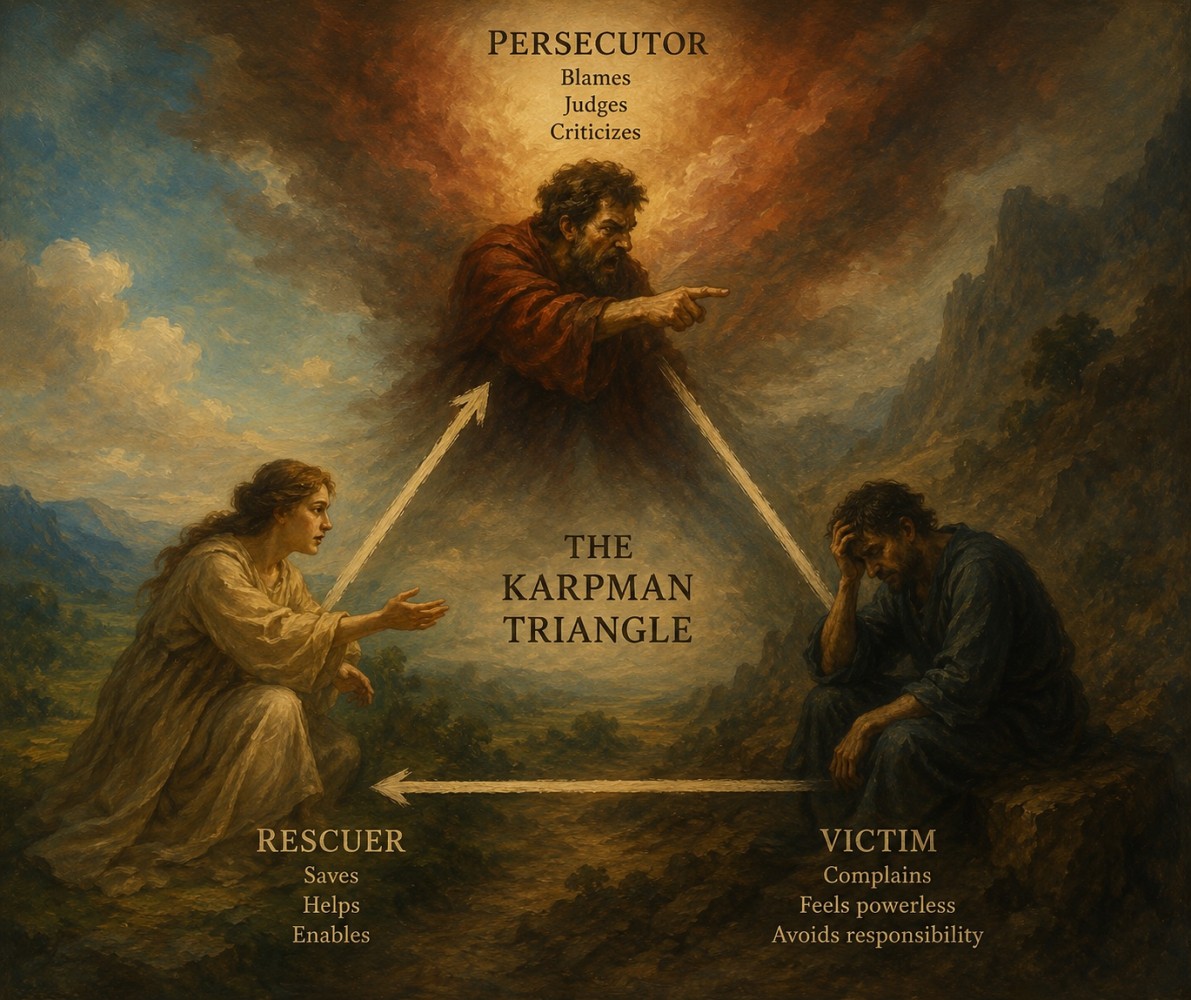
“There is no drama unless there is a switch in the roles.” — Stephen Karpman, Fairy Tales and Script Drama Analysis, 1968
In 1968, psychiatrist Stephen Karpman published a paper that gave the fable’s morals a formal structure. He called it the Drama Triangle. Three roles are sufficient to generate any drama: the Persecutor, the Rescuer, and the Victim. The crucial insight was not the roles themselves but their tendency to rotate. The Rescuer, Karpman observed, is secretly a Persecutor, enabling the game, deepening the dependency, and waiting, whether consciously or not, for the moment when the arrangement serves the helper’s interests more than the helped.
He named the game “I’m Only Trying to Help You.” When the Victim signals distress, the enabling Rescuer moves in. What neither party fully acknowledges is that the arrangement suits the Rescuer at least as much as the Victim. The Rescuer remains unfulfilled without someone to rescue. When the Victim recovers well enough to no longer need saving, the triangle rotates. The warmth that once revived you becomes the hand that finishes you.
You have seen this in workplaces, in families, in friendships: the helper who needs you to need them.
Boards and startup founders are particularly susceptible to the triangle's rotation.
Chairman, Landlord, Lender: Sears in The Shit
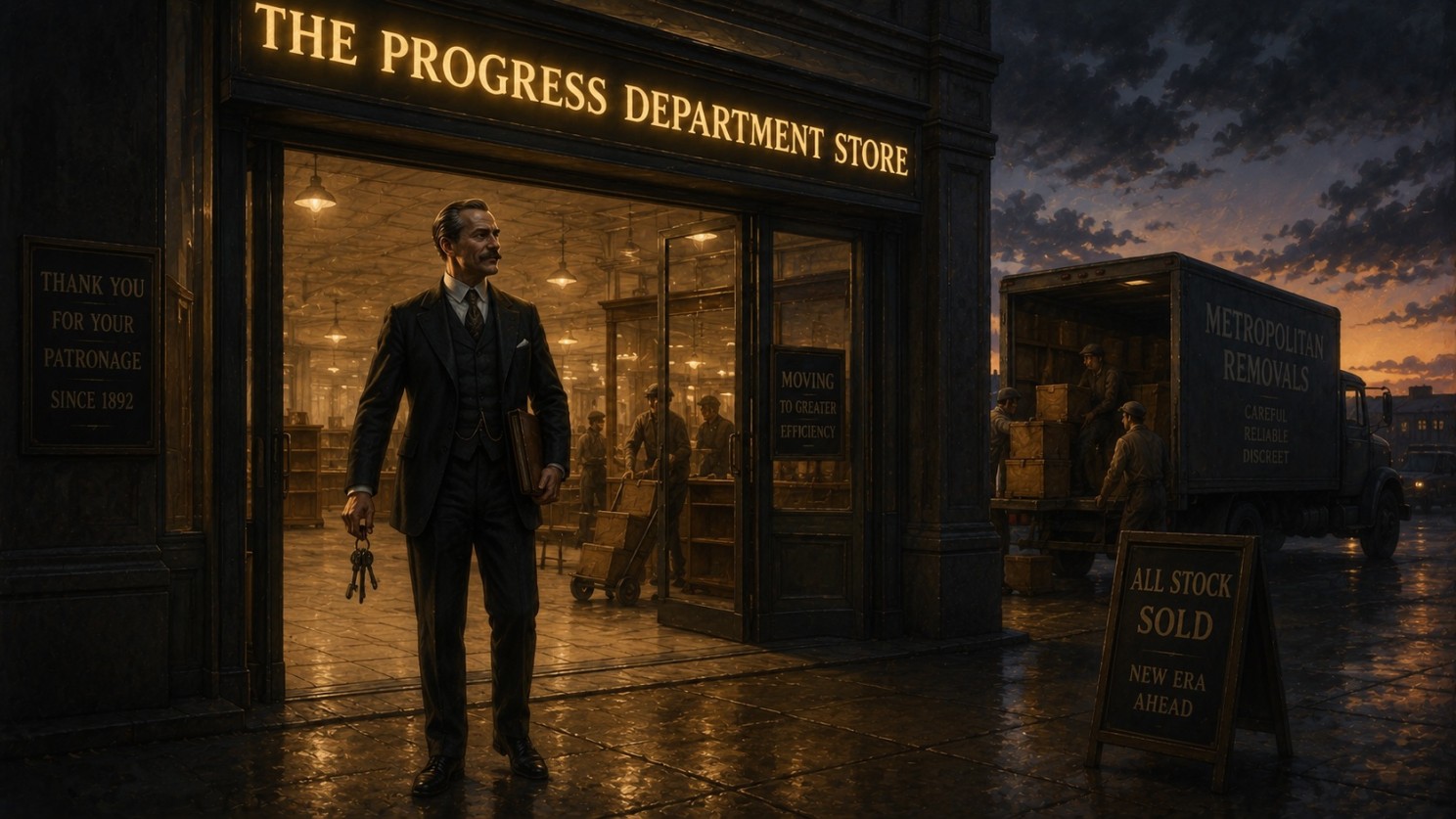
"The entrance strategy is actually more important than the exit strategy." — Eddie Lampert
Sears began in 1886 when a Minnesota railroad agent named Richard Sears sold a rejected watch shipment to fellow station agents for a profit and never looked back. Over the following century it became the largest retailer in America, so embedded in daily life that its catalogue effectively served as a national shopping list for several generations. At its peak in early 2007, Sears had a market capitalisation of nearly thirty billion dollars, almost twice what Amazon was worth at the time. By the late 1990s the catalogue business had collapsed, and the broader retail model was under pressure from every direction. Sears was struggling, cold, shivering in a steaming pile of dung.
In 2005, Eddie Lampert arrived. His hedge fund, ESL Investments, controlled Kmart, and Kmart acquired Sears in a nearly twelve billion dollar merger. Lampert positioned himself as the architect of renewal. What followed was a near-perfect illustration of Karpman's triangle in motion. He first appointed himself chairman, and then CEO in 2013. His hedge fund began lending Sears hundreds of millions of dollars, making the company financially dependent on him for basic liquidity. He then sold 235 profitable Sears stores to a real estate company he controlled and charged Sears rent on the buildings it once owned. As Institutional Investor's 2018 investigation found, and Eric Ries documents in Incorruptible, while the company lost eleven billion dollars, Lampert extracted nearly 1.4 billion dollars in fees.
Sears filed for bankruptcy in 2018.
In Karpman’s framework, Lampert entered the triangle as Rescuer. The moment Sears became dependent on his hedge fund for liquidity, the Rescuer and the Persecutor were indistinguishable. The company’s need for salvation had created the instrument of its destruction.
Retail disruption was the dung. The cat was named Lampert.
A Paradise for Children

History doesn't repeat but it rhymes, and the Toys R Us story follows the rhyme. This time it had multiple Rescuers with debt as the mechanism rather than rent.
Founded in 1948, Toys R Us had grown into one of America's most recognisable retail experiences. Its vast warehouse-style stores felt like a children's paradise.It would eventually become a rescuer’s one.
In 2005, three private equity firms, Bain Capital, KKR, and Vornado, acquired the company, positioning the deal as the kind of strategic rescue that distressed institutions dream about. They would provide professional capital, operational discipline, and a clear path to digitalisation.
What they actually did was saddle the company with 5.2 billion dollars of debt to finance their own acquisition. Toys R Us then had to use its profits to service loans taken out in its name, for the benefit of its new owners. As Ries documents in Incorruptible, that debt consumed precisely the resources that should have gone to e-commerce investment and store renovation, at the moment digital retail competition was intensifying most rapidly. In September 2017, the company filed for bankruptcy. By 2018, all US stores had been liquidated, eliminating thirty-three thousand jobs and ending an institution that had delighted several generations.
The Rescuers had walked in through the front door, handed the company a bill for the cost of their own entry, and waited for it to collapse under the weight of their presence.
Stratagem 33
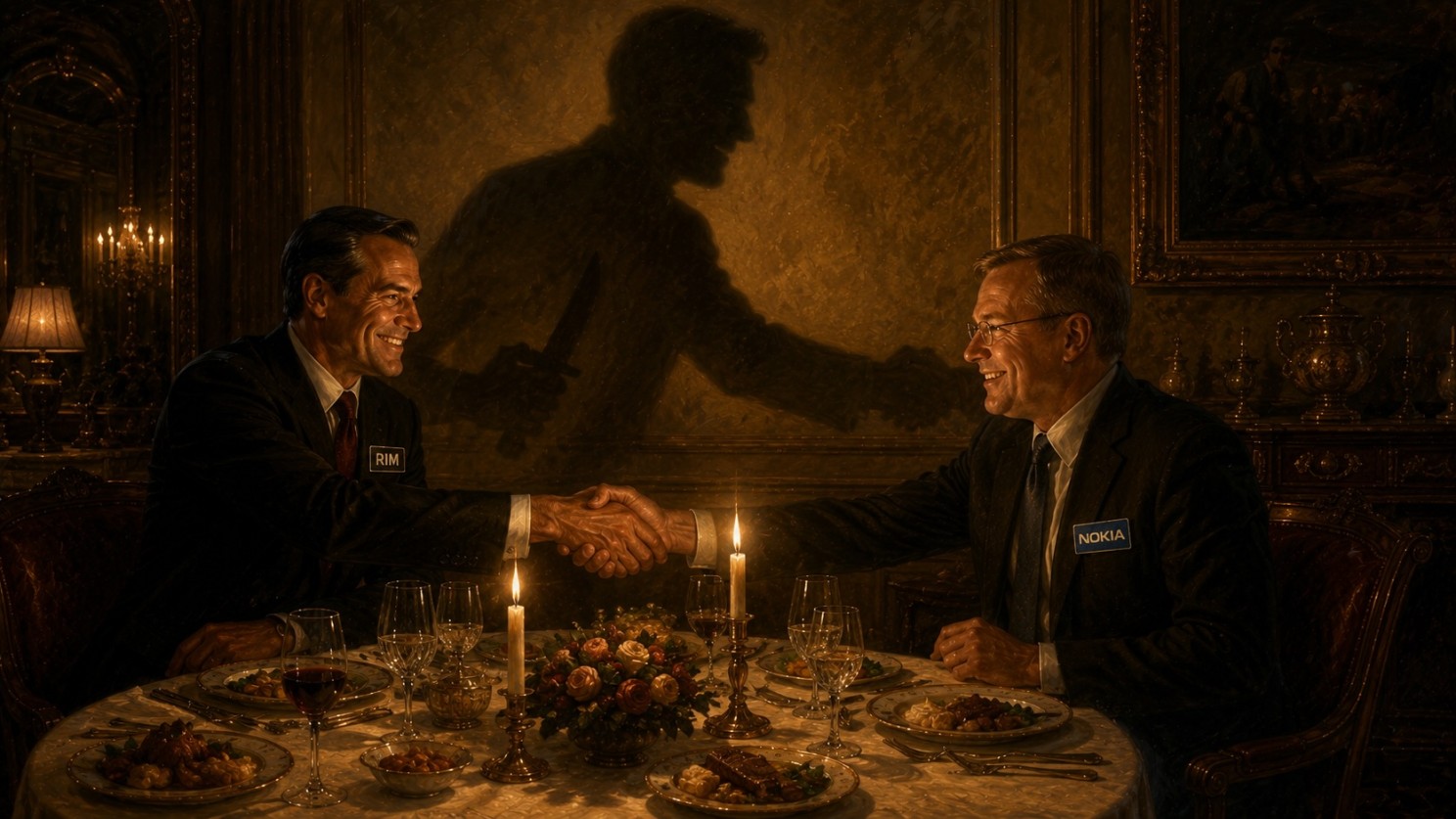
“Make the enemies trust you and thereby slacken their vigilance.” — The Thirty-Six Stratagems
While the financial cases above involve companies in distress, our final story involves a then-healthy company. The Drama Triangle does not require a Victim in crisis. It only requires a Victim who wants something badly enough to lower their guard.
In 2002, Nokia sought a shortcut into the US enterprise market, and Research In Motion appeared to offer one. BlackBerry Connect allowed handset makers to build BlackBerry email onto their own hardware in exchange for licensing fees. Nokia committed fully, believing the rescuer, and allocated years of engineering, millions in development, and a supply chain already moving toward factories.
What Nokia did not know was that BlackBerry Connect had been designed to keep them busy rather than help them. While Nokia’s engineers built around RIM’s system, they were too busy to build their own. While they waited on RIM’s software, their roadmap ran on RIM’s timetable. Delays mounted and code arrived late and incomplete. Nokia’s frustration escalated into a meeting at its Helsinki headquarters where an executive pointed to a world map and described the real cost of the delays: ships already heading to manufacturing plants, inventory soon to be Nokia’s problem to own, and still no usable software ready for the plant.
By the summer of 2004, Nokia was in a panic. One week before Nokia was finally about to launch its BlackBerry phone with Spanish carrier Telefónica, Nokia discovered RIM had not negotiated an agreement with the carrier to deploy the product. Without a deal, Telefónica would not let Nokia BlackBerry phones onto its network. Instead the Spanish carrier bought conventional BlackBerrys directly from RIM. Not a single Nokia Connect phone had been activated by September 1st, a huge disappointment for a handset maker that planned to sell 150,000 of the phones that year.
Nokia’s programme manager Panu Kuusisto eventually concluded the whole arrangement had been “a plot” and that Nokia had been “abused.” He admitted, with late-arriving clarity “We were so ignorant that they must have been just laughing at us.” The confession came in 2006, from a former RIM executive whom Kuusisto encountered at an industry conference. Kuusisto’s career at Nokia stalled after the fiasco. All he had left was some closure. “I was glad he confessed what was going on.”
Former RIM co-CEO, Jim Balsillie, in his own account to journalist Jacquie McNish, did not dispute it. He described the tactic as “a complete, pure bum steer,” a stealth move, pure Art of War, he said, that RIM needed to protect its core business. Call it justification or cognitive dissonance. Either way it came down to 'Show me how else.'
The cat, in this case, saw no shame in revealing what it was.
Singing in the Field

"It is on disaster that good fortune perches; It is beneath good fortune that disaster crouches."— Laozi, Tao Te Ching, Chapter LVIII, translated by D.C. Lau, Penguin Classics
The first lesson I try to teach my kids is that not everyone who makes things hard for you is your enemy. In their case, I tell them the coach or teacher who gives feedback, usually does so because they care.
For organisations, market disruption, competitive pressure, and hostile conditions can indeed be cow dung. When you are in the dung, it is uncomfortable and humiliating, but can be regenerative. Time in the dung forces adaptation. Companies that survive a genuine crisis often emerge having shed exactly the habits that were holding them back. The pressure can be the catalyst.
The second lesson is the one that costs institutions (and startups) alike. The arrival of a Rescuer, particularly a financially sophisticated one who comes with urgency and apparent authority, looks like relief. Karpman’s insight is that the Drama Triangle rotates whether you intend it to or not. The Rescuer who benefits from your dependency has an incentive to deepen their hooks. Their help is genuine in the early stages, but the help also serves the helper, and when those two interests diverge, the helper’s interests tend to win.
The third is the most counterintuitive.
The bird’s mistake was not surviving in the dung. When it emerged, it started singing. The dung was never the threat. The singing was.
There is a difference between solving a problem and performing the solving of it. Companies that announce turnarounds, publish rescue strategies, and make conspicuous public searches for capital or leadership are singing. They are broadcasting their vulnerability to exactly the audience they should not be broadcasting it to. Lampert arrived because Sears was visibly distressed and visibly searchable for a rescuer. The PE firms arrived because Toys R Us was publicly acquirable. The signal attracts the cat.
Companies that adapt quietly, rebuild internally, and present the market with results rather than intentions are not singing. The cat cannot eat what it cannot find.
Resolve and adaptation attract fewer predators.
Eric Ries has a word for what Lampert did to Sears, what private equity did to Toys R Us, what Balsillie did to Nokia. He doesn't call it mission drift or bureaucracy. He calls it corruption.
On this week’s Innovation Show he walks through why it happens, why most leaders are taught practices that accelerate it, and how to build what he calls a governance fortress. Those are the structural conditions that make extraction by apparent rescuers harder to pull off. He tells the story of Sol Price, the man Sam Walton named Walmart after, whose board locked him out of his own office one morning in 1975. And he asks the question a professor once put to him: is it even possible to build an incorruptible company, or is the rot inevitable? His answer, and the playbook behind it, is what Incorruptible is for. This episode is available on YouTube, Spotify, Apple Podcasts, Amazon/Audible, iHeart, Soundcloud, Stitcher, and the Innovation Show website.
For a deeper look at the BlackBerry Connect story and the human drama behind RIM’s rise and fall, you can also check out our earlier episode with Jacquie McNish, co-author of Losing the Signal.
A note from our partners
On Friday 5th June, Innovation Show partners Kyndryl are hosting an exclusive live broadcast with WIRED: Rethink AI — Becoming AI-Native. The 5-part session features keynotes and panels from some of the world’s leading thinkers in AI, including Benedict Evans, Clara Shih, and Google’s first Chief Decision Scientist, Cassie Kozyrkov. It is designed for business leaders looking for practical guidance on deploying AI at scale in complex, high-stakes environments. Free to register, 1.30–3.45pm UK, Friday 5th June 2026.
Register here: https://registration.rethinkai.wired.com/digital26