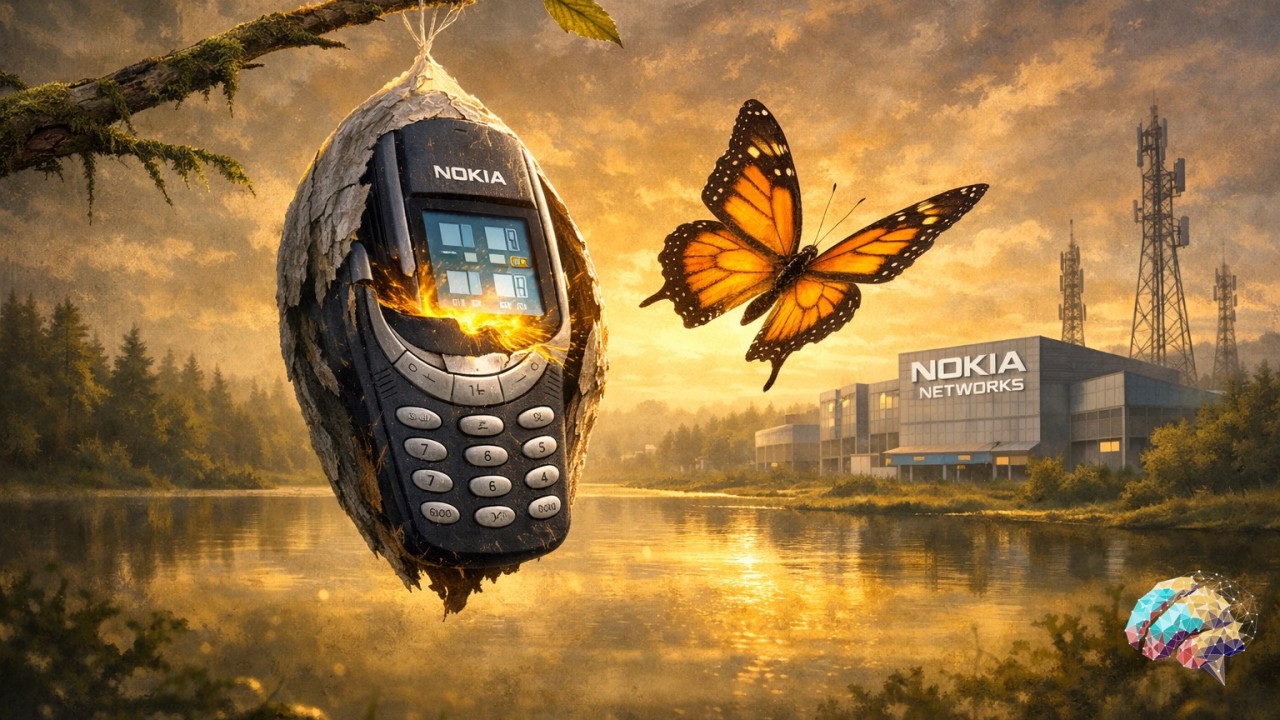
TL;DR: The hardest strategic decisions are rarely about knowing what to do. They're about releasing what used to be true. Nokia and Volvo both had to let go of the thing that made them famous. One sold phones. The other sold cars. Both decisions were gut-wrenching. Both were right, but that didn't make it easy.
In one of my keynotes (spoiler alert), the finale follows the metamorphosis of a caterpillar into a butterfly. When I first wrote about it in my book Undisruptable, I mapped the sequence: the egg hatching, the incremental growth of the caterpillar, the chrysalis (the cocoon moment or messy middle) and then the flight of the butterfly.
But there is a moment of the metamorphosis often overlooked.
Before it flies, it holds on.
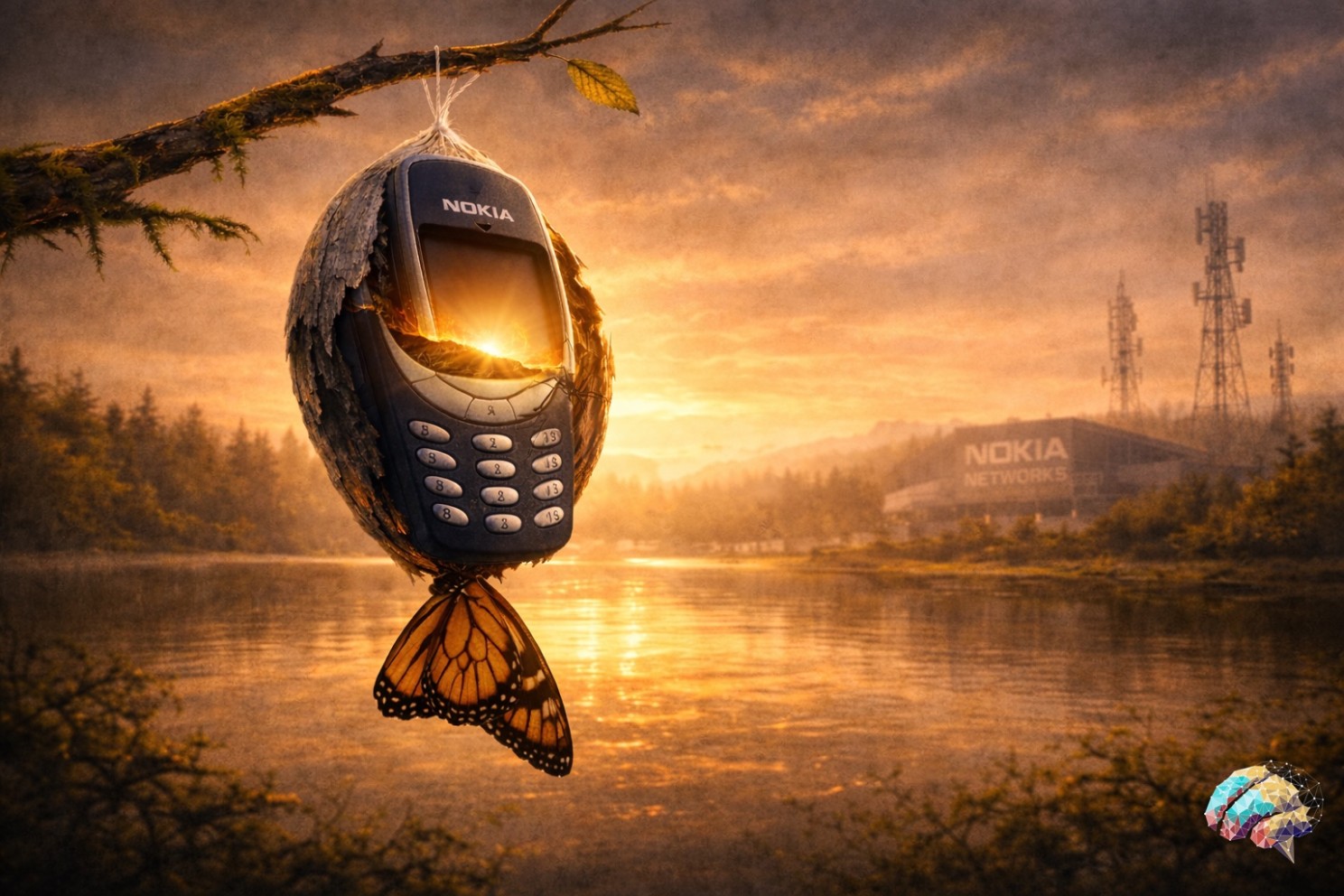
When the butterfly first emerges from the cocoon, it doesn’t fly off. It holds on for a while. When I saw it, it spoke to my own brief pause as I left my identity as a rugby player, a moment so many of us struggle with as we embark on a new odyssey.
As for the butterfly, she grips the cocoon tightly, gazing back into the remains of what she emerged from. As she does this, her wings fill with fluid so she can take flight, but I imagined it differently. I see it as a mixed gesture of both gratitude and grief. Grief as she leaves behind what she once was and gratitude that she can take flight into a new future.
There is a profound lesson hiding in that pause. Not so much in the flying, but in the holding on.
“We delight in the beauty of the butterfly, but rarely admit the changes it has gone through to achieve that beauty.” — Maya Angelou
Volvo learned this the hard way.
A Gut-Wrenching Decision

The late Ian Morrison, futurist, author of The Second Curve and a guest I was privileged to host on The Innovation Show, worked with Volvo on strategy in the mid-to-late 1990s. At the time, Volvo made around 100,000 cars a year. What most people didn’t know was that Volvo was also the second-largest producer of heavy trucks and buses in the world, second only to Daimler-Benz.
At one of their strategy retreats, facilitated by Ian, someone asked the question: where is the growth actually going to come from?
The answer was met with a cocoon-rocking silence.
"Not cars!"
The future was in trucks, buses and infrastructure. The trends pointed to an industrialising, urbanising world (especially emerging markets) and the growth would be in heavy vehicles.
So Volvo sold the car company.
Ian described it as a gut-wrenching decision. It was gut-wrenching because the car was who they were. The name on the door. The thing people said when you told them where you worked!
This is the cocoon moment in action. Do you cling on for as long as you can or do you let go and enjoy a new lease of life?
While Nokia is considered a poster child of disruption, Nokia executives made the brave decision to let go of the cocoon over a decade ago and they are reaping the rewards today.
A National Identity
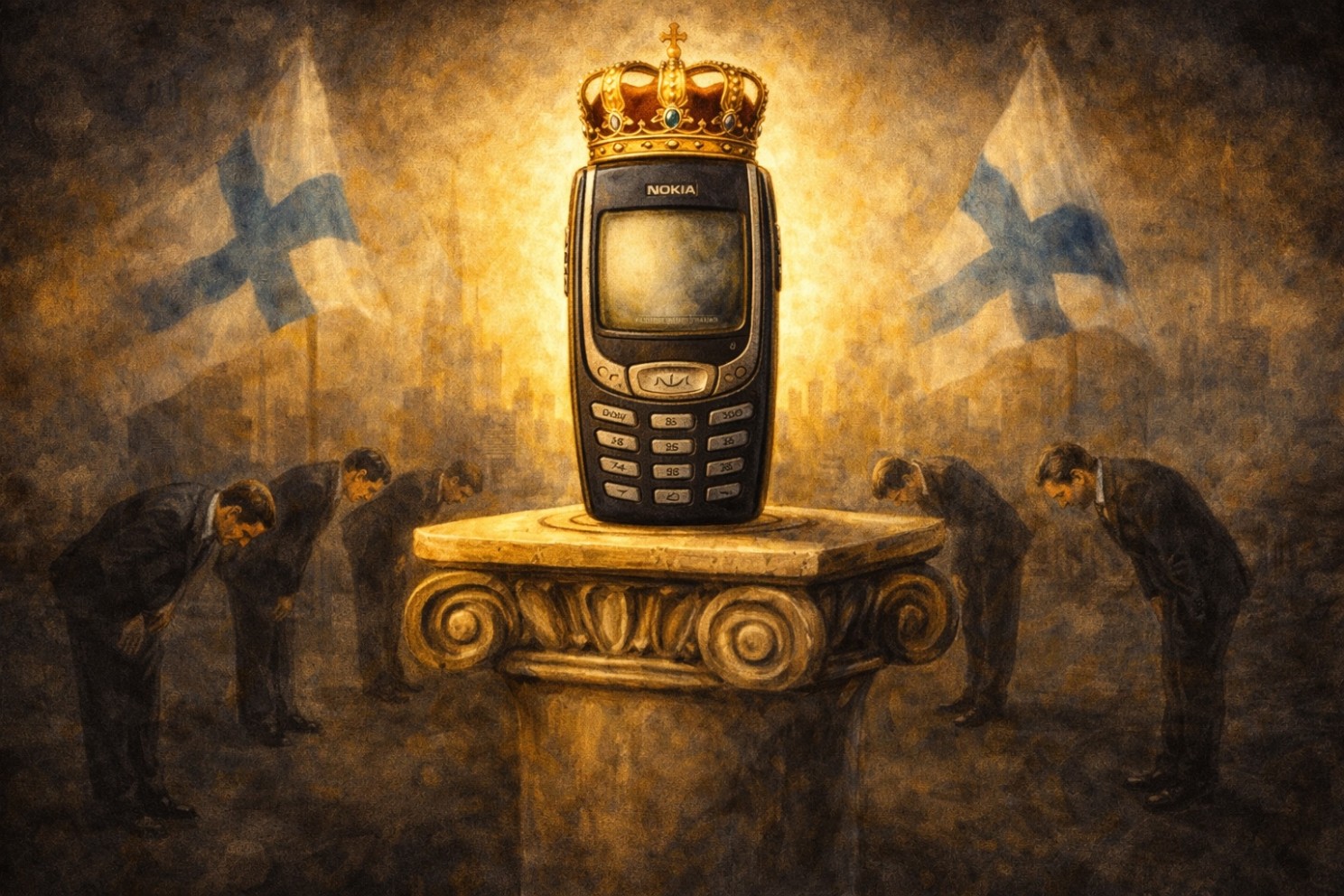
Nokia was not just a phone company. It was a national story and Finland’s champion in a way that is almost impossible to overstate. People who worked there were treated like local celebrities. If you had a Nokia badge, you had status.
At its peak around 2000 and 2001, Nokia accounted for approximately 4% of Finland’s entire GDP, contributed 21% of the country’s total exports and was responsible for 43% of all corporate research and development in Finland. It generated over a billion euros in annual tax revenue, directly employed 35,000 people and at one point accounted for 70% of the entire Helsinki Stock Exchange market capitalisation.
The phone was more than a product. It was the country’s identity. Which is precisely what made the question so unbearable when it finally arrived. By 2012, the Windows phone strategy was failing, the devices business was losing money (an operating loss of €590 million in 2013 alone) and Apple and Android had moved on.
Nokia was still clinging to the cocoon. At Volvo, someone dared to suggest the future was not in cars. At Nokia, that suggestion did not come from the innovation labs. It came from the CFO.
He was the first person to say out loud, what if we bought back the Nokia Siemens Networks (NSN) business and shed the phones? It was the least appealing idea in the room. NSN was struggling and the Nokia board had spent seven years trying to get rid of it. But once the idea was on the table, they had to look at it honestly. And that is where the real work began.
The Messy Middle
When I work with executive teams and they reach the messy middle, it is rarely a time of jubilation. In my experience, the aha moment in strategic change comes from a place of raw emotion, when leaders finally stop defending what they already know to be failing and let themselves feel the reality they have been secretly dreading. The analysis doesn’t lead to the eventual breakthrough, it just grants permission to feel the pain.
Most strategy narratives skip this part entirely and present the decision as though a spreadsheet made it, as if the rational case wins over the entire team. It never works that way.
Researchers Timo Vuori and Quy Huy spent years interviewing over 100 Nokia insiders to understand exactly how this shift happened. What they found was that the breakthrough came from a structured process that kept uncomfortable options on the table long enough for reality to become undeniable. Nokia’s leaders had the data of their decline for a long time. They all knew deep down their software wasn’t up to scratch, customers were rejecting their hardware and they were not able to be a fast follower this time. What they lacked was never the information, but the emotional permission to act on it.
That distinction, between avoiding and addressing, is the whole story.
32,000 Reasons It Was Possible

On September 3rd 2013, Nokia agreed to sell its Devices and Services business to Microsoft for €5.44 billion, a sale and a release at the same time.
People moved when the business did. Approximately 32,000 employees transferred to Microsoft, not abandoned but carried across. That didn't make it painless, but it made a gut-wrenching decision possible to make.
One of the Nokia executives who lived through it described standing backstage as the CEO prepared to announce the sale, and crying. Not from grief entirely, but from the weight of knowing that if the deal fell apart, “tens of thousands of people would lose their jobs”. By that point he had seen the numbers. He knew the smartphone business was in dire straits and that Microsoft gave it a fighting chance that Nokia alone could no longer provide.
The tears were not weakness, but proof that the work had been done, the data embraced and the reality felt enough to act on. When emotion and analysis finally converge, that is when a leader is ready to move.
Nokia didn’t become nothing after the sale. It became something narrower and more coherent, focused on networks, mapping and technology licensing. The Nokia Siemens Networks acquisition, completed just weeks before the Microsoft announcement, became the wings for a new company. Net cash reached €5 billion by the end of 2014 as Nokia flew into its future and more importantly, let go of its past.
The cocoon is never a failure, we must see it as nourishment.
What is your cocoon?
The product you can’t stop defending?
The strategy you’ve outgrown but keep polishing?
The identity that once fed you but now keeps you pinned to the past?
Hold it for a moment. Thank it for what it gave you…
Then let go.
If this piece resonated, the Innovation Show has gone deep on the Nokia story across four episodes. Timo Vuori and Quy Huy share the research behind the emotional dynamics of Nokia’s decision-making, based on interviews with over 100 insiders. And in the most recent episode, I spoke with Timo Partanen, the Nokia strategist who actually presented the iPhone threat document to Nokia’s leadership team in 2007 and watched what happened next. All four episodes are available now on The Innovation Show.
The Volvo story comes from my conversation with the late Ian Morrison, whose book The Second Curve remains one of the sharpest frameworks for understanding when to let go and when to leap. That episode is also available on The Innovation Show.
For Paid Subscribers
The Nokia and Volvo stories raise a question I keep coming back to. It is not enough to see the truth. The truth has to be able to travel. Nokia had the data. The iPhone document existed. People knew. But the signal could not move through the organisation freely enough, or fast enough, to change what needed to change.
That is exactly what Greg Satell explores in his work on Cascades and Mapping Innovation. Change does not spread because an idea is good. It spreads when the conditions allow signal to move without being drowned out by hierarchy, politics, noise, or self-protection.
I will be joined by Greg on March 31st to explore that question directly. Ahead of the session, I recommend his Fast Company article on mastering the three types of power needed to move ideas forward.
Next Tuesday March 31st 2026 4:00 PM Irish | 5:00 PM CET | 11:00 AM EST | 8:00 AM PST
If you’d like to join, just reply and I’ll add you to the list. (We have 3 places left).