
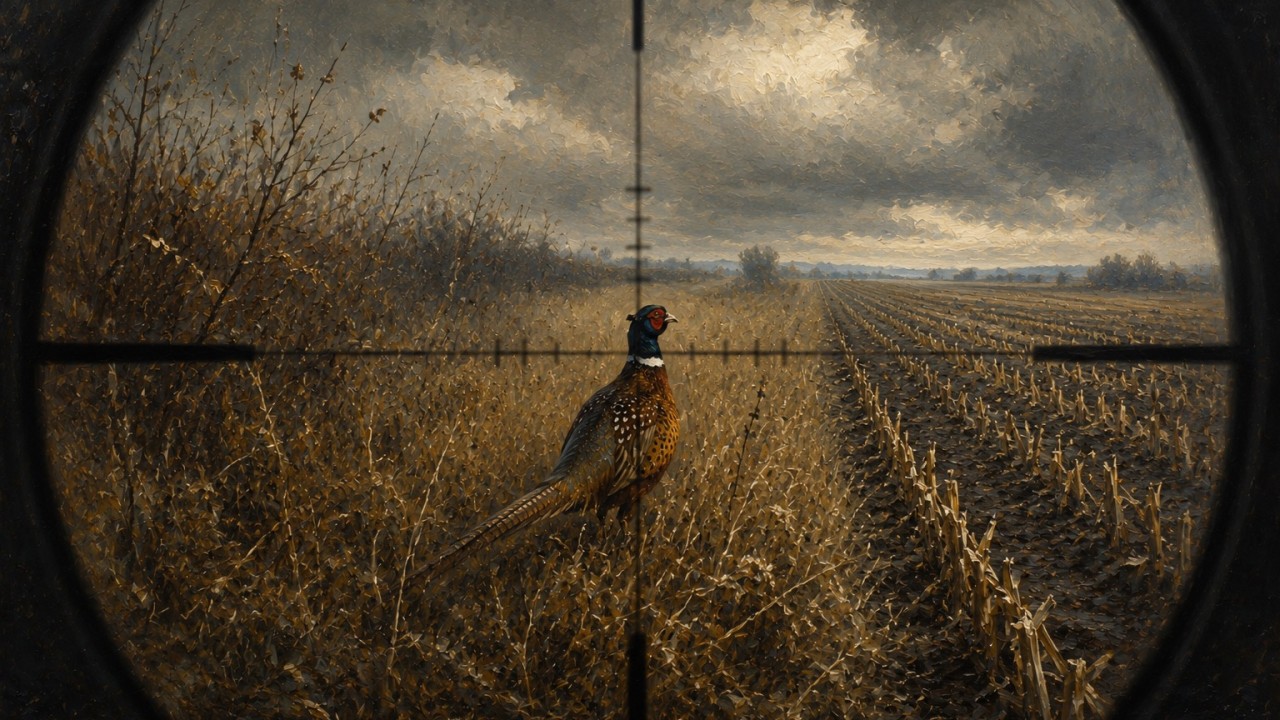
TLDR: Iowa lost its pheasants when farmers optimised every acre. Companies lose their innovators the same way. The problem is the loss of habitat, not the absence of talent. When every acre is optimised for yield, the pheasants disappear. Organisations do the same when they remove the messy margins where exploration, insight and serial innovators survive.
By Aidan McCullen , with Bruce Vojak
"In nature structure and function go hand in hand." — Dr Iain McGilchrist
An Empty Field in Iowa
On a misty December day in Iowa, a hunter stood in a soggy field, the barrel of his shotgun tilted toward the grey clouds, waiting for a bird, any bird. Hours later, dejected he proclaims, "All I want to do is see a bird at this point."
Over the previous 20 years, Iowa lost more than 1.6 million acres of habitat suitable for pheasants and other small game, roughly a nine-mile-wide strip running the width of the state. Out-of-state pheasant hunters fell dramatically from an annual average of 50,000 to under 9,000. In a nearby diner that was once packed during pheasant season, a waitress described having one mere table to wait on opening hunting weekend, a second order effect of the disruption.
The pheasants did not leave because of overhunting or predation, but because their habitat itself was hunted in the pursuit of optimisation. The brushy field borders had been chopped down to accommodate new crops as commodity prices rose and farmland values climbed. Precision farming also played a role. The pheasant is not a crop, but its habitat got the chop. A pheasant is the byproduct of an ecology, and that ecology was the collateral damage of every acre being squeezed for maximum output. As Alan Watts put it, "The relationship between the organism and the environment is transactional—the environment grows the organism, and the organism creates the environment."
Two Ways of Attending
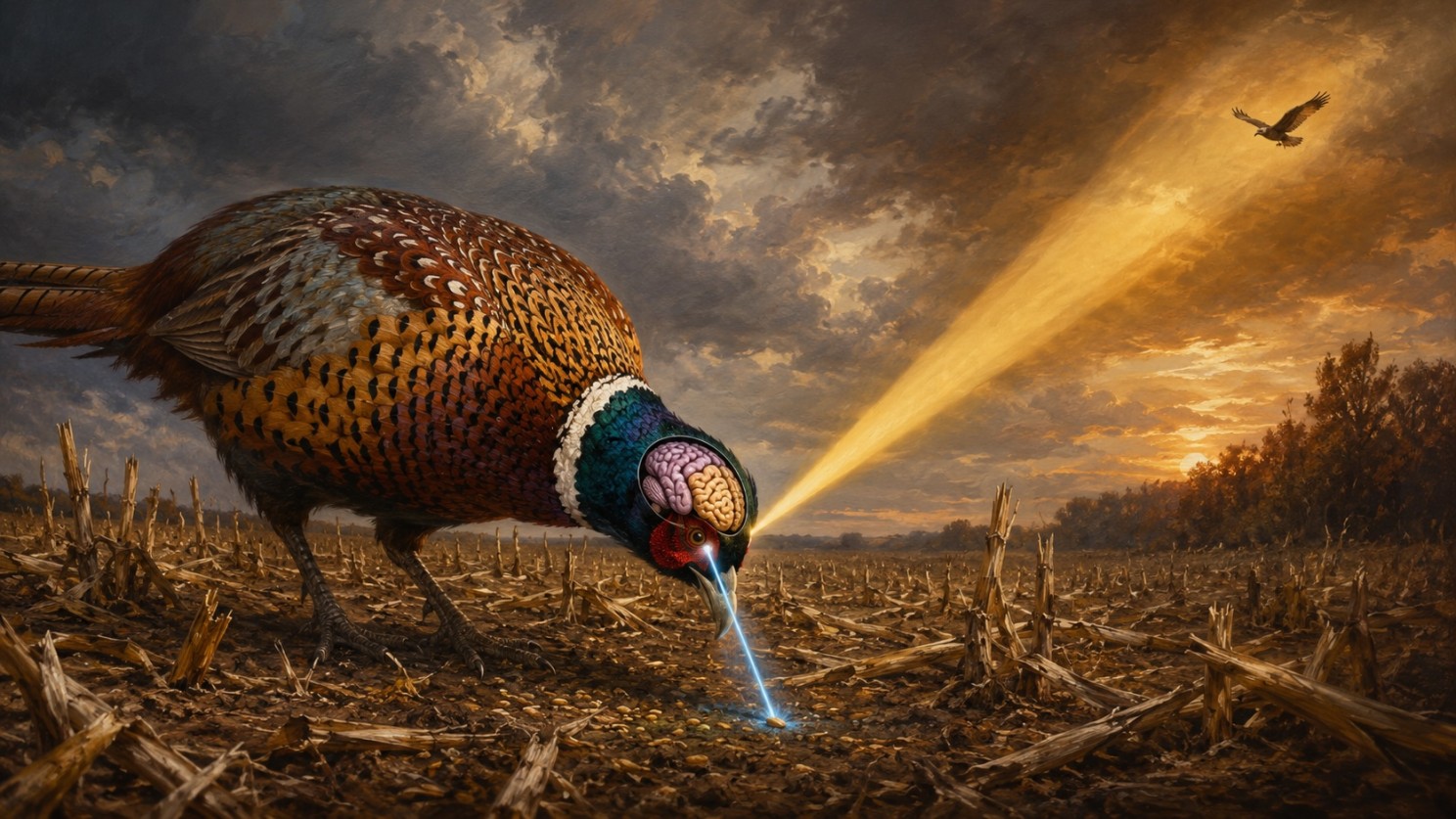
The pheasant in the Iowa field is solving a cognitive limitation that Iain McGilchrist argues drove the evolution of the divided brain itself. A bird in a field needs two kinds of attention at once. It needs a narrow, focused beam to pick the seed from the grit. And it needs a broad, sustained vigilance for the predator overhead, the change in the landscape, the thing that does not yet have a name and is therefore difficult to "grasp." No single consciousness can hold both at once, so the brain's solution was to split. The left hemisphere supplies the narrow-beam attention that grasps the seed and manipulates the world. The right supplies the broad attention that connects, contextualises, and notices what is missing. Both are required.
Across four conversations on this show, McGilchrist described how the two hemispheres do their work in distinct phases. After the explicit thinking the left hemisphere is built for, what he calls a fallow period must follow. The left hemisphere steps back, the right comes into play, and images and analogies do their work without the pressure of producing anything. The aha moment, when it arrives, comes out of that fallow period.
The trouble is that the fallow period rarely survives. A system that measures what it produces will favour the analytical phase, with its explicit, defensible outputs, over the fallow period, which produces nothing visible until it is over.
The Built-In Asymmetry
"Exploitation pays your salary while exploration pays your pension. Companies that survive do both." — Steve Blank
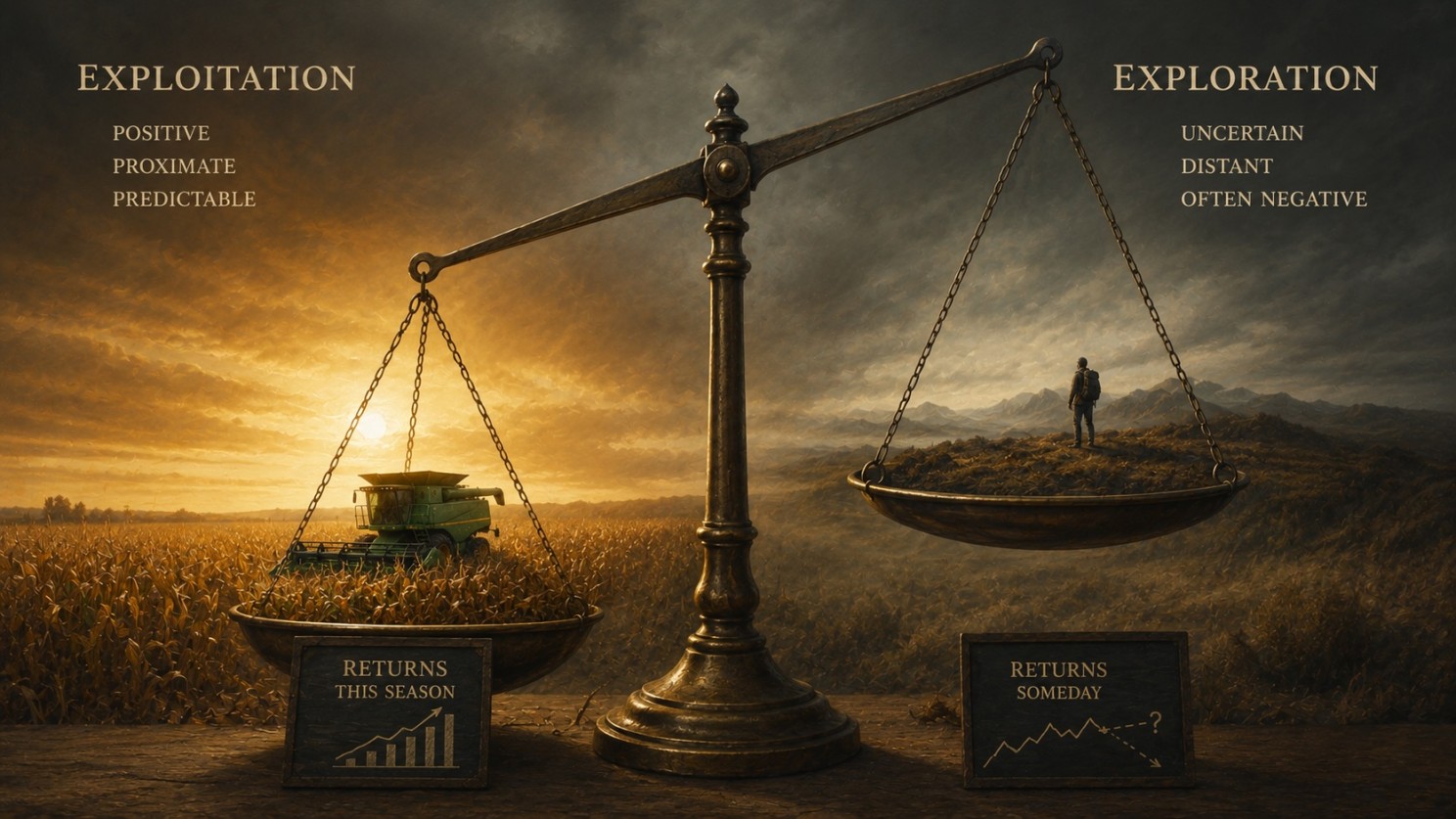
James March described this organisational asymmetry in his 1991 paper that has become the foundational text on this question of exploit and explore. Adaptive systems, he argued, refine exploitation more rapidly than they refine exploration, and the gap is built into the structure of the rewards. Returns from exploitation are positive, proximate, and predictable, while returns from exploration are uncertain, distant, and often negative. Each acre of brush converted to corn yields more this season; each hour of exploration converted to execution yields more this quarter. Any adaptive system drifts this way.
Headroom
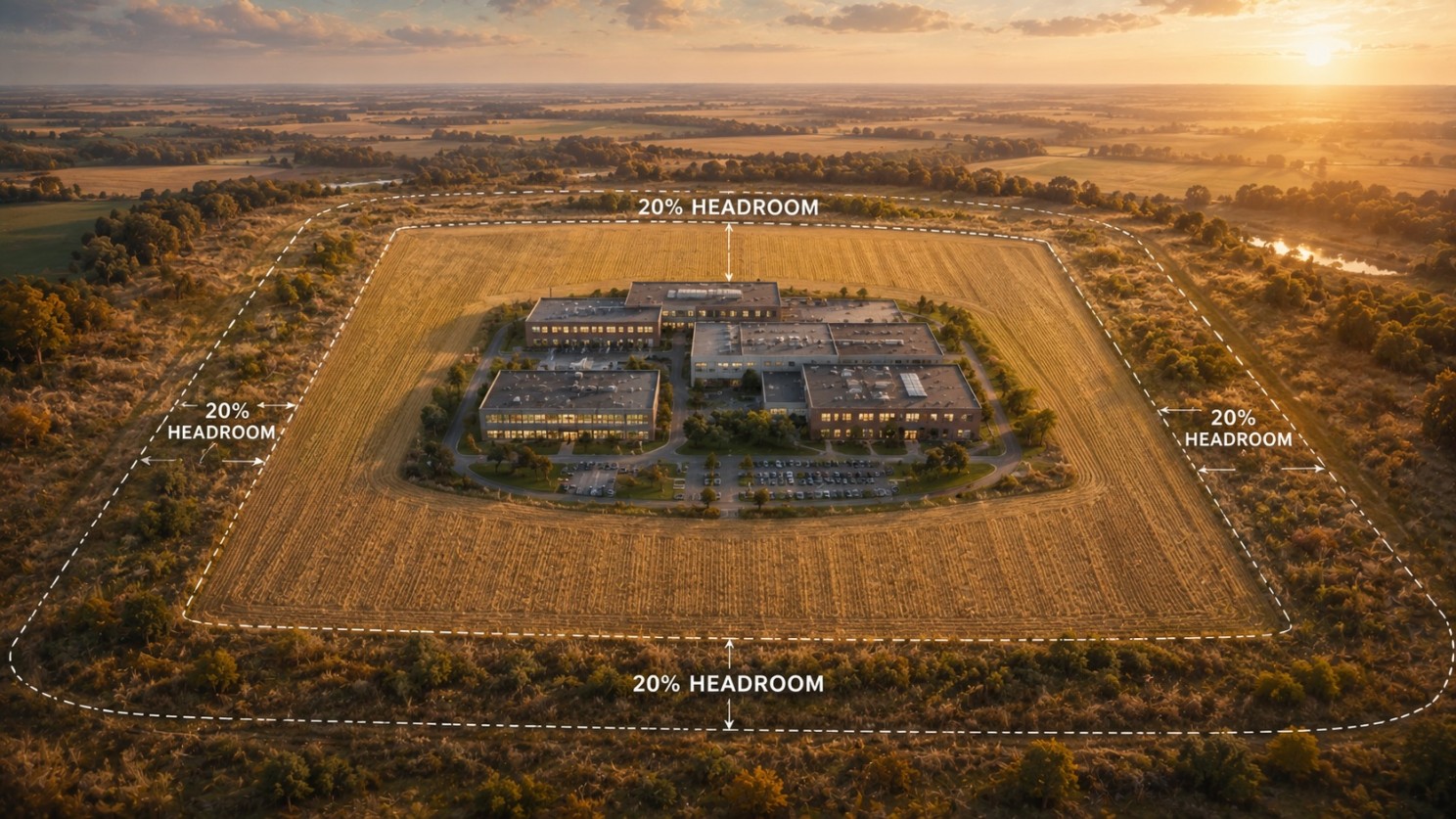
The fallow period the brain needs at the cognitive scale is the same thing an organisation needs to design in at the structural scale. Peter Compo calls it headroom. 3M's celebrated 15% time, where engineers are free to spend a portion of their working hours on projects of their own choosing, is headroom. Google's 20% time was the same idea. The unstructured hour between meetings, the budget line that funds curiosity rather than deliverables, the patch of switchgrass left between two corn rows, all of it is the same structural thing.
McGilchrist says, "You cannot make people creative to order." As a young graduate, he won a seven-year fellowship at All Souls College with no obligations whatsoever, and he credits that uninterrupted fallow stretch as the foundation of every book he has written since.
The corollary for organisations is just as blunt. You may lose twenty percent of output to people who do not produce, but if you instead micromanage everyone you lose a hundred percent of what was original. The pheasants are not in the corn; there is no room for them to explore.
The Corn Culture and the Brush Culture
"Organisations, by their very nature, are designed to promote order and routine. They are inhospitable environments for innovation." — Theodore Levitt
Building headroom in is harder than it sounds. Michael Tushman and Charles OReilly have spent decades studying organisational ambidexterity, and they are blunt about why. The culture required to run a productive exploit business is almost the opposite of the culture required to run an explore one. Exploit rewards efficiency, compliance, customer proximity, and getting the answer right. Explore rewards initiative, deviation, repeated failure, and the willingness to look wrong for a long time. When the two cultures share a building, the exploit culture tends to smother the explore one, because the exploit culture has the budget, the metrics, and the senior team's attention. It is the corn culture displacing the brush culture, structurally rather than maliciously.
The Cultural Cost
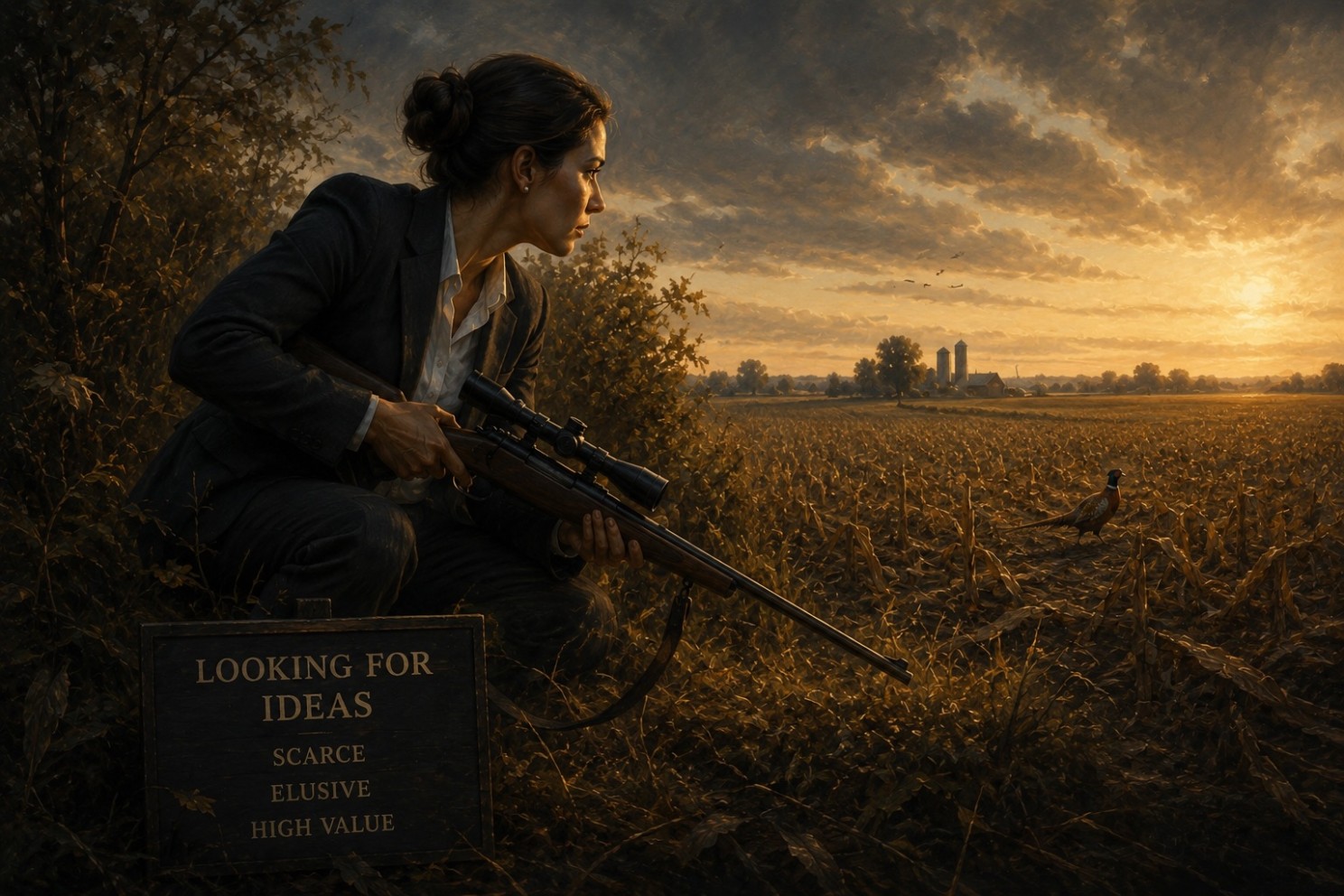
The cultural cost is the part we tend to under-count. The diner in Iowa did not just lose pheasant-hunting customers. It lost a season, a rhythm, a set of relationships that organised part of the year for the people who lived there. Kent Rupiper, who owns 170 acres of hunting land in Iowa, told the New York Times that he had taken to hunting pheasants out of state. "I'd rather support the local economy if I could."
Companies that have over-exploited their innovation habitat experience the same erosion. The senior people who knew how to build the next thing leave or stop trying. The graduate hires who joined for the chance to wander find themselves glued to roadmaps and never wander from the beaten path. The institutional memory of how breakthroughs actually happened thins until the people remaining genuinely cannot picture what working any differently would look like.
The problem is the loss of habitat, not the absence of talent.
The land in Iowa is still there. The fields are still being farmed. The yield per acre has never been higher, but the pheasants, and the hunters who came for them, are mostly gone. What survives the next round of optimisation depends entirely on whether the brushy margins are designed in or left to fend for themselves.
Nothing in the system will defend them on its behalf.
The conversations behind this piece:
Bruce Vojak's research on serial innovators is where this piece started. In our three-part series on his book Serial Innovators, co-authored with Abbie Griffin and Raymond Price, Bruce shares the most damning finding in their research: serial innovators themselves report, repeatedly, that they would be filtered out under their own companies' current hiring practices. The HR systems built to produce reliable hires are the same systems that screen out the people most needed for the next breakthrough. And now AI is pre-filtering CVs before they even reach a human.
The pheasant is not a crop, but its habitat got the chop.
Jeff DeGraff is the second voice that shaped this piece. In our conversation on his book The Art of Change, Jeff tells the story of asking a room of workplace architects, "are you designing places for people to hide?" One architect recognised the question and told him about a building his firm had been involved with that the company called ATS, short for Across the Street. That was where the real work happened. The formal building was for the explainable work; the across-the-street building was for the work that could not yet be explained.
Innovation has to leave the corn before it can come back.
Dr Iain McGilchrist is the cognitive scientist whose work runs through this piece. Across four conversations on this show, Iain has explored how the divided brain evolved to hold two kinds of attention at once: the narrow beam that grasps the seed, and the broad vigilance that sees the predator overhead. Iain calls the right hemisphere's contribution the fallow period: the time after explicit thinking when the left hemisphere steps back, and images and analogies do their work without the pressure of producing anything. "You cannot make people creative to order." Iain spent seven years at All Souls with no obligations whatsoever, and he credits that fallow stretch as the foundation of every book he has written since.
The fallow is the brush.
Peter Compo is the strategist whose concept gives this piece its language. In our conversation on his book The Emergent Approach to Strategy, Peter argues that good strategy combines commitment to a chosen path with room for what cannot yet be seen. He calls that room headroom. The 15% time at 3M, the 20% at Google, the patch of switchgrass between two corn rows, the brushy field border: all of it is headroom.
Without headroom, the corn fills the field.